Explore standard and customized industrial adhesive tapes manufactured in cleanroom environments for severe thermal, electrical, and mechanical environments.
A rigorous examination of synthetic molecular stabilization, adhesive carrier dynamics, and why tier-1 electronics enterprises partner with specialized China direct-manufacturers.
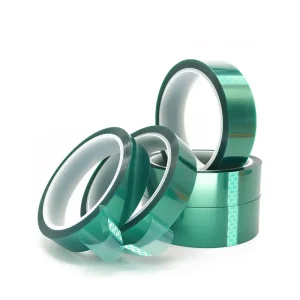
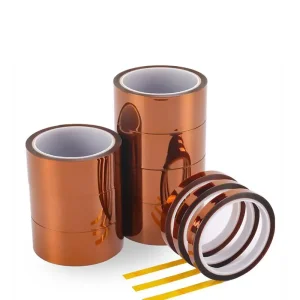
Polyimide adhesive tape—commonly referred to in industrial markets as Kapton tape alternative—is the gold standard substrate for critical insulation, surface masking, and thermal management in extreme environments. Synthesized through the polycondensation of aromatic dianhydrides and aromatic diamines, polyimide films boast extraordinary physical, mechanical, and dielectric stability from cryogenic temperatures (-269°C) up to persistent high operational thresholds exceeding 260°C, with transient resistance spiking to 400°C.
As the international electronic packaging sector accelerates toward sub-micron miniaturization, higher component density, and intense solder reflow environments, generic off-the-shelf tapes consistently lead to catastrophic failures such as outgassing, adhesive transfer residue, dielectric puncturing, and dimensional shrinkage. Navigating this challenge necessitates bespoke manufacturing configurations: custom thickness profiling (from ultra-thin 12.5μm to heavy-duty 125μm carriers), specialized pressure-sensitive cross-linked silicone or ultra-clean solvent acrylic systems, functional anti-static (ESD) surface coatings, and thermal conductive infills.
| Property Parameter | Test Standard (ASTM / IEC) | Silicone PSA PI Grade | High-Tack Acrylic PI Grade | ESD Low Static PI Grade |
|---|---|---|---|---|
| Carrier Thickness | ASTM D3652 | 25 μm (1.0 mil) / 50 μm | 25 μm (1.0 mil) | 25 μm (1.0 mil) |
| Total System Thickness | ASTM D3652 | 65 μm ± 3 μm | 55 μm ± 3 μm | 60 μm ± 3 μm |
| Temperature Rating (Continuous) | UL 510 / IEC 60454 | -40°C to 260°C (300°C Peak) | -20°C to 155°C (180°C Peak) | -40°C to 260°C |
| Dielectric Breakdown Voltage | ASTM D149 | ≥ 6,500 Volts (6.5 kV) | ≥ 5,500 Volts (5.5 kV) | ≥ 6,000 Volts (6.0 kV) |
| 180° Peel Adhesion (to Steel) | ASTM D3330 | 5.5 - 7.5 N / 25mm | 8.0 - 12.0 N / 25mm | 4.5 - 6.5 N / 25mm |
| Surface Resistivity (Coated Face) | ASTM D257 | Insulative (>10¹² Ω/sq) | Insulative (>10¹² Ω/sq) | 10⁶ - 10⁹ Ω/sq (Static Dissipative) |
| Flame Retardancy | UL 94 | V-0 Rated | V-1 Rated | V-0 Rated |
The strategic shift toward Chinese custom manufacturers is fueled by vertical raw material synthesis, responsive micro-slitting customization, and unmatched total cost efficiency.
From native aromatic dianhydride precursor production to biaxially oriented polyimide casting (BOP-PI) and in-house siloxane pressure-sensitive resin synthesis, Chinese factories have collapsed the upstream-to-downstream value chain. This eliminates multi-tier intermediate vendor markups and grants micro-level control over elongation parameters, cross-web gauge uniformity, and adhesive anchoring.
Global electronic component architectures frequently require high-complexity geometric configurations. Chinese production facilities utilize advanced optical rotary die-cutting, laser prototyping, and high-speed multi-axis slitting. Customized master rolls can be slit to non-standard widths (from 1.5mm up to 1050mm) or converted into tabbed, custom-kiss-cut sheets within 48 to 72 hours of CAD validation.
Industrial failure in PCB solder masking often stems from airborne particulate contamination during the adhesive coating phase. Established Chinese manufacturers utilize Class 1,000 to Class 10,000 cleanroom coating tunnels, backed by continuous online beta-ray thickness monitors and rigorous adherence to ISO 9001, UL 510 flame retardancy, and RoHS/REACH standards.
How tailor-made polyimide tapes safeguard mission-critical hardware against electrical arcing, thermal stress, and chemical aggression.
Lithium-ion cylindrical (21700, 4680) and prismatic cell modules experience intense electrochemical heat, mechanical vibration, and electrolyte exposure. Custom polyimide films serve as positive/negative tab insulation wraps, inter-cell barriers, and busbar insulating covers. Their zero-corrosion silicone chemistry resists dynamic electrolyte attack while maintaining breakdown strengths above 6 kV.
During automated printed circuit board assembly, exposed edge gold finger contacts and micro-via arrays must be shielded against aggressive flux chemicals and liquid wave solder bath surges exceeding 260°C. Custom polyimide tapes leave absolutely zero residue upon hot peel removal, preserving electrical pad contact without expensive solvent washdowns.
High-voltage traction motors, switch-mode power supplies, and aerospace inverters operate continuously in Class H thermal envelopes (up to 180°C) with spikes up to 200°C. Custom composite polyimide glass-cloth backing or high-bond cross-linked acrylic PI tapes provide phase-to-phase insulation, lead wire anchoring, and exceptional resistance to puncture during tight winding passes.
Static charges exceeding 50 volts can permanently breach sensitive CMOS microchips and high-frequency RF modules during tape unwinding and peeling. Specialized ESD polyimide tape incorporates an antistatic top coat and dissipative adhesive matrix, suppressing electrostatic tribocharging to below 20V at unroll speeds up to 30 meters/min.
How structural transformations across power electronics, automotive electrification, and environmental mandates shape adhesive tape specifications.
Silicon Carbide (SiC) and Gallium Nitride (GaN) wide bandgap power devices run at drastically elevated voltages, switching frequencies, and thermal thresholds compared to heritage silicon components. Global procurement teams now mandate polyimide formulations with enhanced partial discharge resistance, elevated Comparative Tracking Index (CTI > 600V), and superior corona resistance.
With stringently enforced environmental frameworks across the EU, North America, and Japan (such as REACH SVHC lists, RoHS Directive 2011/65/EU, and IEC 61249-2-21 halogen restrictions), tier-1 enterprises demand solvent-free or exhaustively cured high-solid adhesive lines. Chinese facilities lead this shift by investing in regenerative thermal oxidizer (RTO) solvent recovery and low-VOC water-based/radiation-cured systems.
Western procurement managers have shifted from single-source OEM brand dependency toward qualified direct factory partnerships in China. By collaborating directly with verified high-tech manufacturers, global converters and electronics OEMs achieve 30% to 45% bill-of-materials cost reductions while securing dedicated buffer stocks, custom slit logs, and localized engineering support.
Detailed technical answers for procurement officers, quality control engineers, and converting specialists.
Standard off-the-shelf polyimide tapes feature fixed configurations—typically a 25μm (1.0 mil) amber film paired with 35μm of generic pressure-sensitive silicone adhesive. Custom-formulated tapes from specialized Chinese manufacturers allow precise control over every functional layer: choosing high-purity ultra-thin carriers down to 12.5μm or robust 125μm films, swapping silicone for acrylic adhesives to prevent siloxane contamination in optical or vacuum electronics, applying anti-static coatings (surface resistivity 10⁶ to 10⁹ Ω/sq), or introducing release liners (fluorosilicone or PET) optimized for automated high-speed die-cut machines.
Silicone adhesive systems offer unmatched high-temperature survivability (-40°C to 260°C continuous, 300°C short-term) and exceptional chemical resistance, cleanly detaching without leaving adhesive residue after intense wave soldering cycles. However, silicone can outgas trace organosilicon molecules, which can cause contact failure on micro-switches or compromise optics. Acrylic adhesive systems are formulated for lower continuous operating temperatures (up to 155°C), offer higher initial tack and peel adhesion to high-energy substrates, and are completely silicone-free, making them mandatory in sensitive aerospace optical enclosures and automotive clean-assembly zones.
Adhesive residue (adhesive transfer) occurs when the chemical cohesive strength of the adhesive breaks down, or the chemical anchoring between the adhesive and the polyimide film substrate fails. Professional Chinese manufacturers prevent this by: (1) Plasma or chemical corona surface treatment of the base polyimide film to raise surface energy and anchor the primer, (2) Precise chemical cross-linking agents added to the siloxane polymer matrix, and (3) Complete thermal curing across multi-zone precision drying ovens, ensuring zero unreacted monomers remain that could liquefy and deposit on the copper or gold contact traces during wave soldering.
Yes. Custom manufacturing integrates precision fluorosilicone-coated release liners (typically 50μm or 75μm optical-grade clear PET film). The polyimide adhesive tape web is processed through multi-station rotary die-cutters, laser die-cutting stations, or flatbed presses to deliver custom shapes, pull-tabs, doughnut ring washers, and solder-mask discs with tolerances up to ±0.02mm, packaged on rolls or sheets for pick-and-place automated assembly lines.
For seamless global sourcing and integration into tier-1 supply chains, industrial polyimide tapes must comply with: (1) UL 510 flammability and electrical insulation safety listing, (2) EU RoHS Directive 2011/65/EU and 2015/863/EU restricting heavy metals and phthalates, (3) REACH (EC 1907/2006) Substances of Very High Concern (SVHC) testing, and (4) Halogen-free compliance according to IEC 61249-2-21. Audited third-party SGS/Intertek test reports should accompany each lot specification certificate of analysis (COA).
Broaden your technical sourcing options with our certified portfolio of single- and double-sided thermal, conductive, and structural tapes.