| Product Name | Model No | PET Film thickness (mm) | Total thickness (mm) | Adhesion to steel (KG/25mm) | Tensile strength (kg/25mm) | Elongation at break (%) | Temperature resistance (℃) | Voltage resistance (KV) |
|---|---|---|---|---|---|---|---|---|
| PET high temperature tape | HY600-1 | 0.025 | 0.04 | 0.3–0.4 | 185 | 110–120 | 180 | 5.0 |
| HY600-2 | 0.028 | 0.045 | 0.3–0.4 | 189 | 120–130 | 180 | 5.5 | |
| HY600-3 | 0.025 | 0.05 | 0.6–0.7 | 195 | 110–120 | 180 | 6.0 | |
| HY600-4 | 0.05 | 0.08 | 0.5–0.6 | 180 | 135–140 | 180 | 7.0 | |
| HY600-5 | 0.075 | 0.1 | 0.5–0.6 | 180 | 145–150 | 180 | 9.0 | |
| HY600-6 | 0.075 | 0.13 | 0.5–0.6 | 180 | 145–150 | 180 | 9.0 | |
| HY600-7TPP | 0.05 | 0.08 | — | 170 | — | — | — |
This is the main use of green tape. When aluminum profiles, mobile phone housings, notebook computer housings and other products are anodized, it is used to cover areas that do not need to be dyed or treated, such as screw holes, edges or specific identification areas.
Used to protect the non-plated surface and prevent metal deposition in the electroplating process of gold, silver, nickel and tin. Its excellent electrolyte penetration resistance can ensure that the edge is free from corrosion and coating accumulation.
Suitable for powder spraying or liquid baking process of refrigerators, washing machines, air conditioning shells and automobile interior parts.
In the process of high-temperature baking, the adhesive tape cannot fall off or remain glue, ensuring that the sprayed edge lines are clear and tidy.
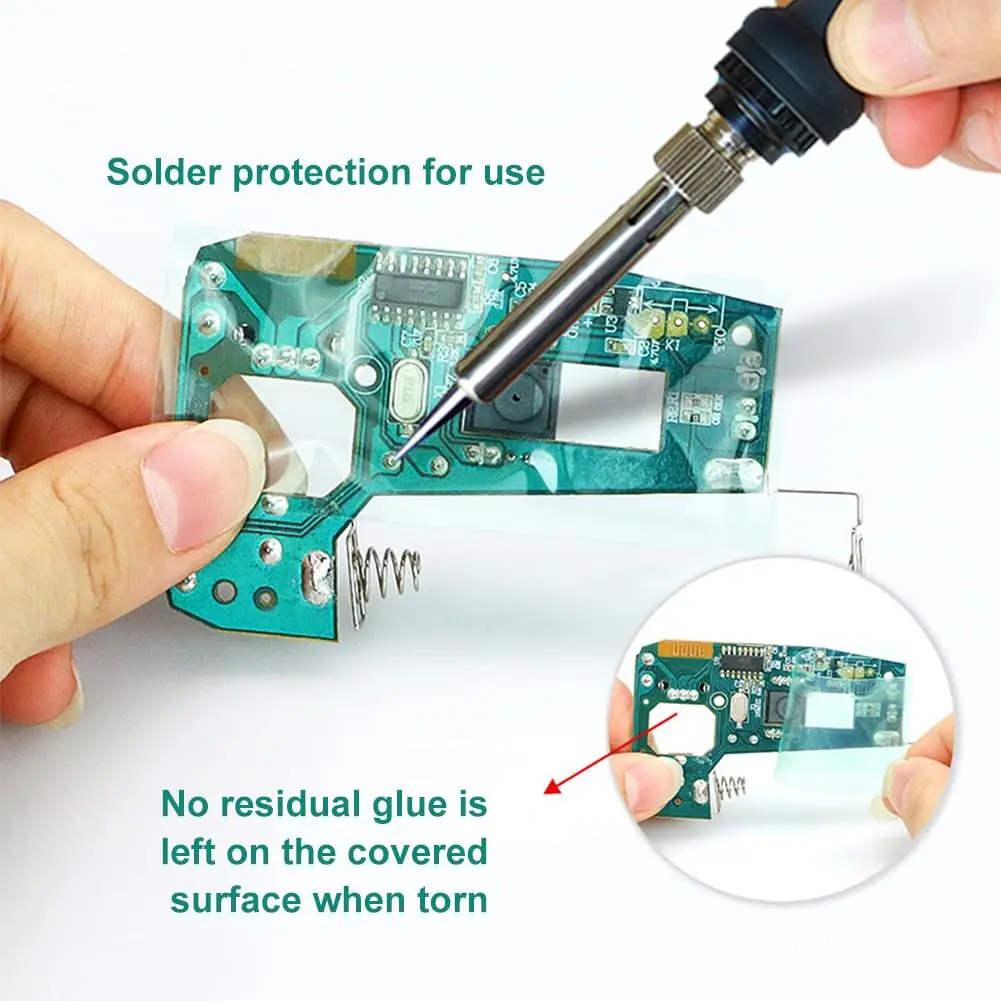
Used to protect the Finger, connector contact or screw hole position when PCB board passes through the tin furnace to prevent solder adhesion or flux corrosion.
Used to fix flexible circuit board (FPC) or shield sensitive components during SMT mounting.
Used for insulation wrapping and fixing of motors, transformers and coils in high temperature environment, replacing some application scenarios of Mara tape.
Some high-temperature resistant green tapes are used for insulation protection of lithium battery tabs or temporary fixation of batteries (with specific electrolyte resistance requirements).
Used to protect the pattern or text area when the metal surface is sandblasted or chemically etched (such as nameplate making).
It is cut into various shapes and used as insulating gasket or spacer in high temperature environment.
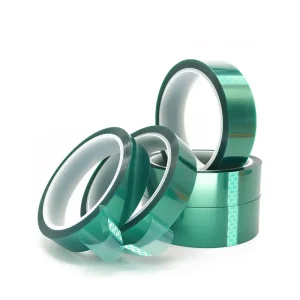
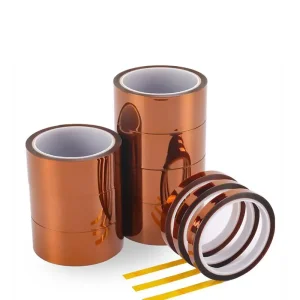
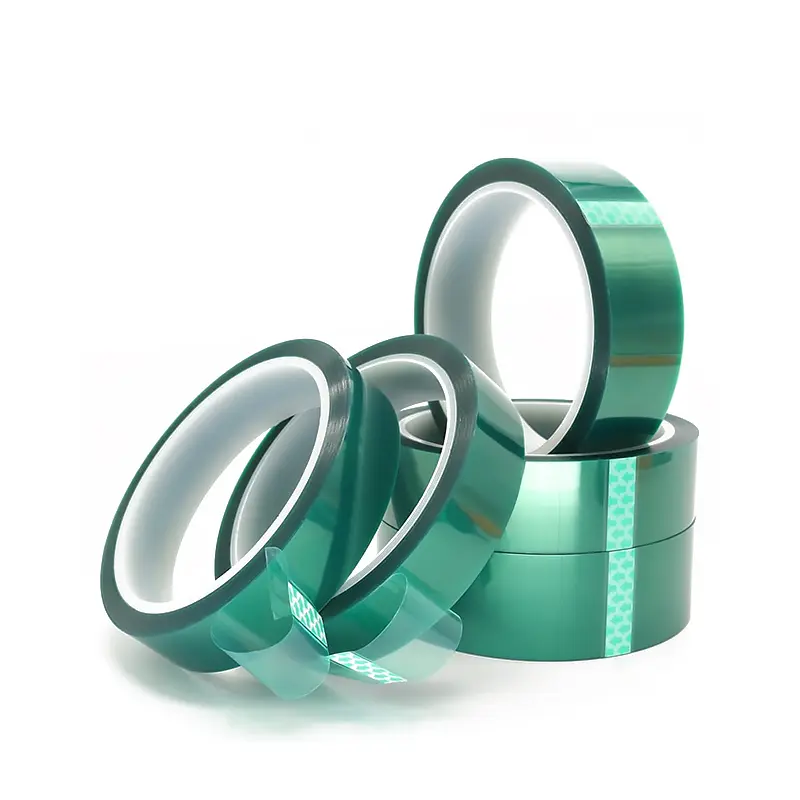
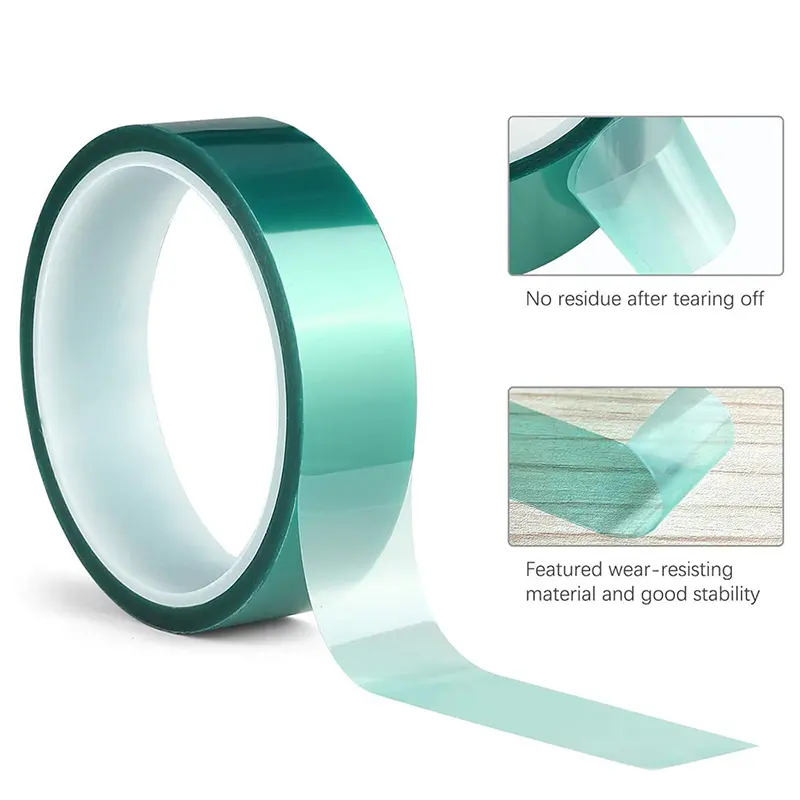
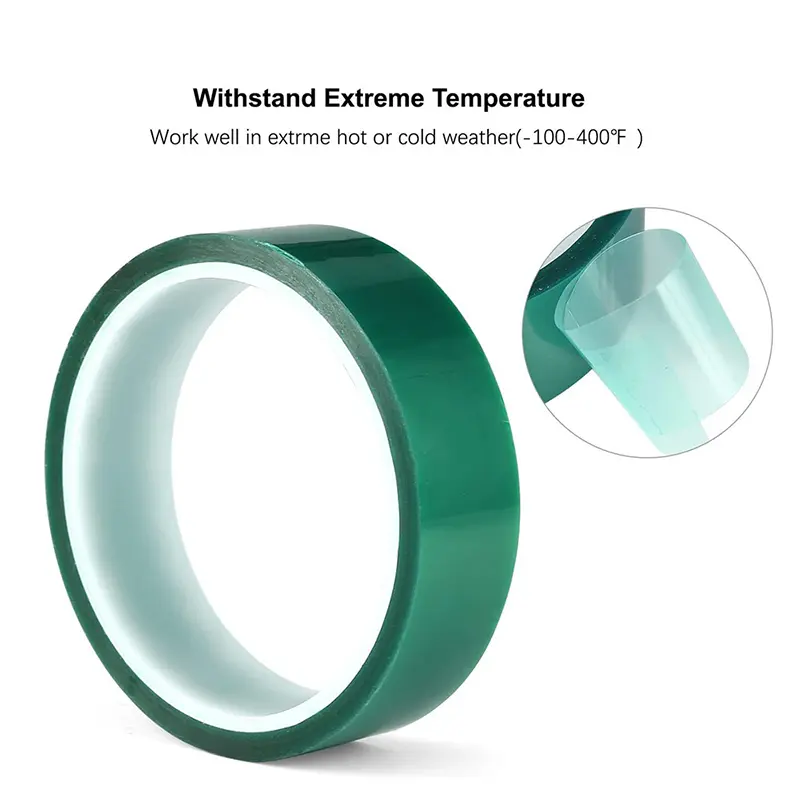
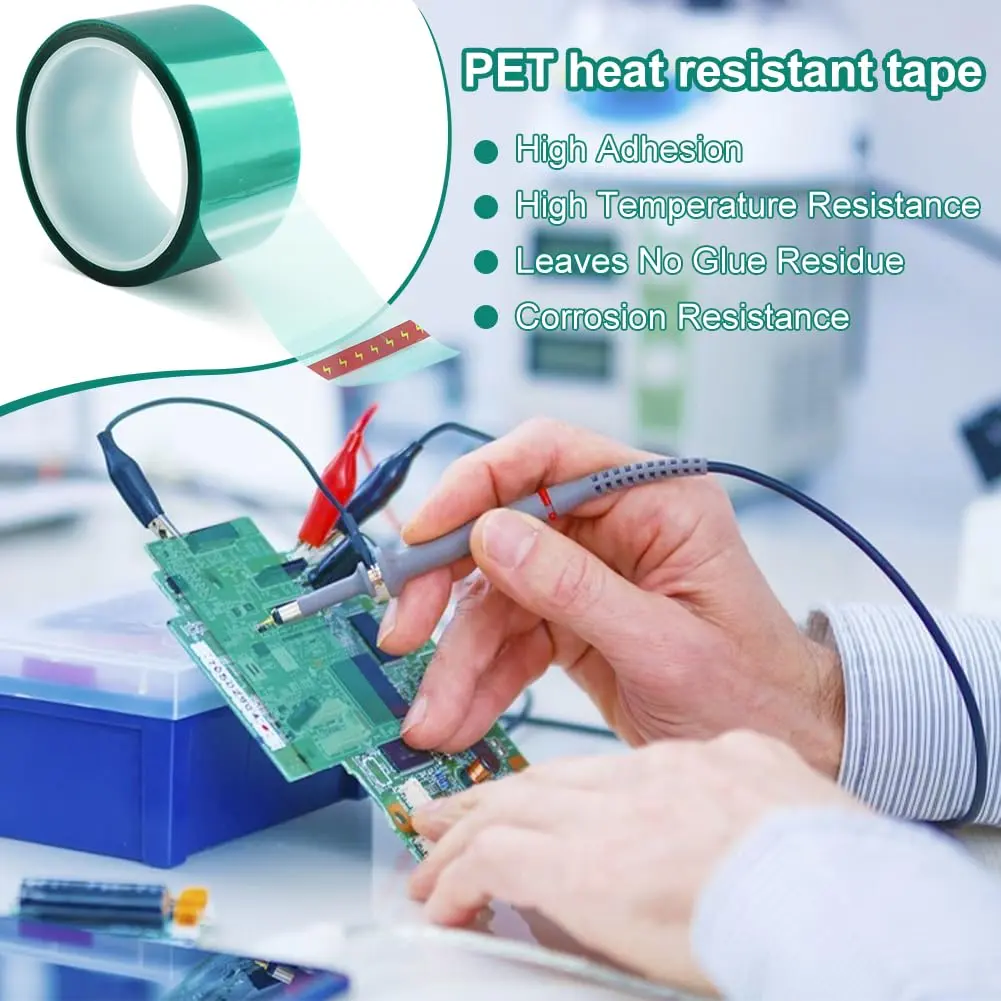
PET high-temperature green adhesive tape uses a polyethylene terephthalate (PET) film as its base material, coated with a high-temperature resistant silicone adhesive. This combination provides excellent dimensional stability, chemical resistance, and reliable adhesion even under sustained heat exposure.
Most models in the HY600 series can withstand continuous operating temperatures up to 180°C. The tape remains firmly bonded and leaves no adhesive residue after removal, making it suitable for baking, soldering, and anodizing processes.
Models HY600-4 and HY600-5 are commonly recommended for PCB wave soldering and reflow soldering applications due to their balanced combination of total thickness (0.08–0.10 mm), high tensile strength, and reliable 180°C temperature resistance, ensuring stable shielding throughout the soldering process.
Yes. PET high-temperature green tape is specifically engineered for anodizing masking applications. Its silicone adhesive system resists the acidic electrolyte solutions used in anodizing baths and peels off cleanly without leaving any adhesive residue on the aluminum surface after processing.
HY600-7TPP is a specialized variant with a PET film thickness of 0.05 mm and total thickness of 0.08 mm. Unlike the other models, several performance parameters (adhesion to steel, elongation at break, temperature resistance, and voltage resistance) are not specified, indicating it is designed for specific niche applications where standard benchmarks may not apply in the same way.
Yes, certain high-temperature resistant green tape models are used in lithium battery manufacturing for insulation protection of battery tabs and temporary fixation of battery cells. However, it is important to select a model with specific electrolyte resistance properties to ensure compatibility with the battery production environment.