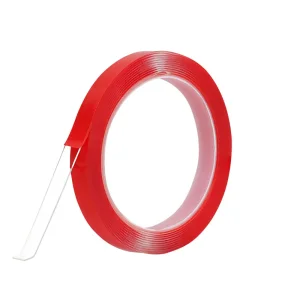
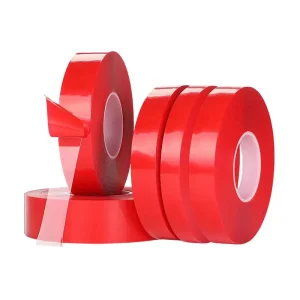
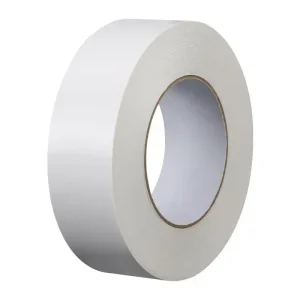
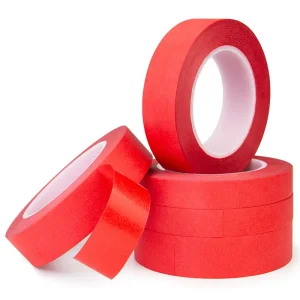
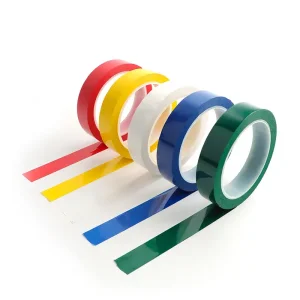
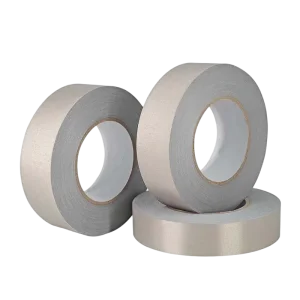
Explore our core selection of high-viscosity acrylic foam, carrier-free nano adhesives, and high-temperature PET structural tapes engineered for automated converting and heavy industrial stress bonding.
Industrial double-sided pressure-sensitive adhesive (PSA) tapes have moved from secondary packaging materials to critical engineering components that replace traditional mechanical fasteners like rivets, screws, and liquid glues.
Modern engineering assemblies in EV battery casings, aerospace composite panels, and building facades demand dynamic load distribution. Viscoelastic acrylic foam tapes continuously dissipate shear, peel, and tensile strains across the entire bond line, preventing the localized stress concentrations typical of mechanical rivets.
As miniaturized electronic modules and 5G/6G communication systems pack more processing power into smaller spaces, double-sided tapes now integrate ceramic fillers and electro-conductive mesh. This allows simultaneous heat conduction, dielectric insulation, and electromagnetic interference (EMI) shielding without adding mass.
Regulatory mandates such as REACH, RoHS, and ultra-low automotive interior VOC requirements (GB/T 27630) are driving the shift toward solventless, water-based, and UV-curable acrylic adhesive systems. These maintain high-peel cohesion without outgassing hazardous organic compounds in enclosed operational environments.
B2B buyers, tier-1 system integrators, and precision die-cutters assess double-sided tape manufacturers on long-term interface chemistry and batch stability rather than initial surface tack alone.
| Evaluation Parameter | High-Viscosity Acrylic Foam (VHB Series) | Differential Carrier PET Tape | Tissue / Oily Hot-Melt Tape |
|---|---|---|---|
| Primary Carrier Matrix | Viscoelastic closed-cell acrylic foam | 0.012–0.050mm optical-grade PET film | Ultralight non-woven cellulosic tissue |
| Surface Energy Adhesion (LSE/HSE) | Exceptional across metals, glass, polycarbonates | High tack on plastics, LSE requires corona | High initial grab on polar surfaces and foams |
| Thermal Endurance Threshold | -40°C to +150°C (Short term +200°C) | -30°C to +130°C steady state | -10°C to +80°C maximum threshold |
| Shear & Creep Resistance | Static shear > 10,000 mins (1kg @ 23°C) | Medium-to-high dynamic shear | Moderate holding power, prone to creep at 60°C+ |
| Die-Cutting Tolerances | Rotary die-cutting with release liner matching | Ultra-tight micro-tolerances (±0.05mm) | Standard rotary and flatbed kiss-cutting |
| Typical OEM Application | Automotive exterior trims, PV frame sealing | Smartphone display lenses, battery pack wraps | Appliance gasket fixing, leather lamination |
Our dual production facilities in Zhuhai and Zhongshan run dust-free coating lines and slitting bays to deliver application-matched bonding chemistries for industrial clients around the world.
Reinforcing structural bonding across lightweight composite body panels, battery cell envelope cushioning, sensory camera mounting, and weatherstrip lamination. Acrylic foam tapes absorb road vibration, damp acoustics, and eliminate bi-metallic corrosion between dissimilar alloys.
Thin-gauge PET double-sided tapes provide dimensionally stable bonding for camera bezel enclosures, touch panel glass grounding, and FPC (Flexible Printed Circuit) anchoring. These deliver high dielectric resistance, zero edge ooze, and clean reworkability during factory rework steps.
Structural glazing double-sided systems withstand extreme environmental conditions: wind shear, UV radiation degradation, thermal expansion mismatches, and rainwater ingress. Our VHB solutions maintain elasticity over decades of seasonal thermal cycles.
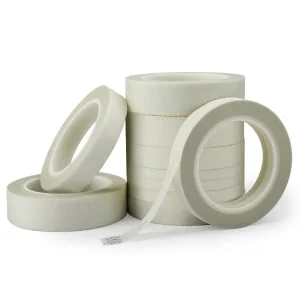
Combining high-strength glass cloth and Mylar polyester substrates with thermosetting cross-linking adhesives to provide Class B through Class H dielectric insulation. These tapes resist solvent impregnation, edge tearing, and heavy mechanical winding tension.
Operating an enterprise adhesive manufacturing footprint demands rigorous quality assurance, traceable raw material sourcing, and end-to-end export documentation.
Certified since 2013, our production bases in Zhuhai and Zhongshan run documented in-line inspection gates from monomer viscosity analysis to finished master log rewinding. Selected formulations hold UL94 flammability ratings and comply fully with EU RoHS, REACH, and Halogen-Free directives.
With direct logistics access via Shenzhen, Guangzhou, and our Hong Kong subsidiary (Huayuan International Technology, established in 2014), we run rapid sea container shipping, consolidated air freight, and door-to-door DDP services with custom barcoding and pallet packaging.
Beyond log roll and pancake slitting, our facilities offer precision multi-station rotary die-cutting, laser cutting, finger-lift release tab additions, and extended differential liner assemblies. We turn raw master tape into drop-in assembly components for surface mount production lines.
How Huayuan is engineering the next generation of pressure-sensitive adhesive materials to meet the demands of emerging technology industries.
Formulating renewable rosin tackifiers and bio-monomer acrylic backbones that cut reliance on petrochemical derivatives by 35%, while matching petroleum-based peel and holding power across automotive interiors.
Deploying boron nitride and spherical alumina-filled structural foam tapes yielding bulk thermal conductivity > 2.5 W/m·K. These provide simultaneous structural cell-to-pack bonding and rapid heat dissipation in electric vehicle battery trays.
Developing stimulus-responsive cross-linking polymers that trigger controlled, residue-free release when exposed to specific thermal cues, UV wavebands, or electrical currents—supporting circular economy recycling for consumer electronics and battery modules.
Comprehensive engineering and procurement answers based on two decades of adhesive manufacturing experience.
VHB acrylic foam tape uses a 100% solid viscoelastic acrylic polymer throughout its core, giving it exceptional dynamic stress absorption, high temperature resistance (up to 150°C+), and decades of outdoor weathering stability. PE foam tape uses a closed-cell cross-linked polyethylene core coated on both sides with adhesive. PE foam works well for gap filling, indoor signage, and light mounting, but will not handle sustained dynamic structural shear loads like acrylic foam.
High surface energy (HSE) substrates like copper, aluminum, and glass bond readily with standard acrylic adhesives. Low surface energy (LSE) materials like polypropylene (PP), polyethylene (PE), and powder-coated metals resist molecular wet-out. For LSE substrates, we formulate modified acrylic or synthetic rubber adhesives with specialized tackifiers, or recommend surface preparation via plasma treatment, corona discharge, or chemical adhesion promoters.
Our lab provides full PPAP documentation upon request, including static and dynamic shear tests (ASTM D3654), 180° and 90° peel adhesion curves (ASTM D3330), thermal shock cycling (-40°C to +125°C), humidity chamber aging, and VOC emission profiling according to VDA 278 and GB/T 27630 standards.
Yes. We support custom slitting from 3mm up to 1260mm master roll widths, alternative release liners (red PE film, silicone paper, fluorosilicone liners for clean differential release), and custom rotary die-cut shapes delivered on rolls or kiss-cut sheets.
Clean bonding surfaces with an isopropanol-water mixture (50:50) and ensure the application area stays above 15°C. Apply uniform pressure using a weighted roller (at least 15 psi / 100 kPa) to achieve complete adhesive wet-out. Viscoelastic acrylic foam tapes typically achieve 50% of ultimate bond strength within 20 minutes, 90% after 24 hours, and 100% full bond cure after 72 hours at 22°C.
Our ISO 9001 certified coating lines use automated continuous beta-ray gauge monitoring to measure adhesive coat weight in real time. We test every master jumbo roll for unwind tension, caliper tolerance (±3 microns), and retention strength before slitting, keeping automated tape application equipment running smoothly.
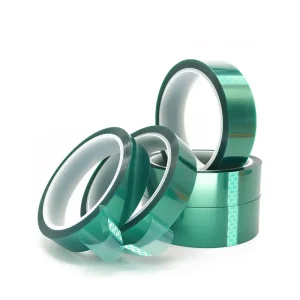
Explore our specialized industrial product lines, including high-temperature Mylar, electro-conductive EMI fabric tapes, green polyester masking tapes, and high-dielectric glass cloth solutions.