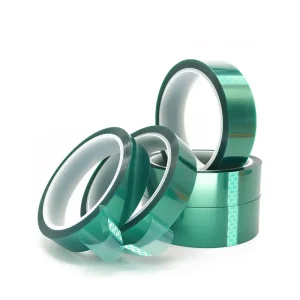
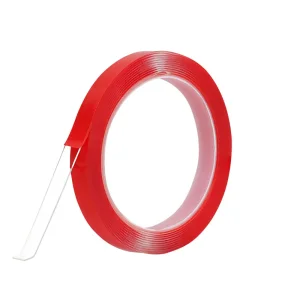
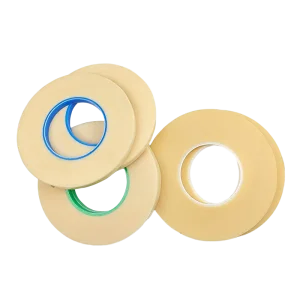
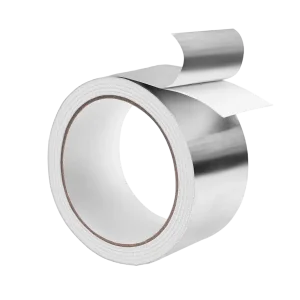
Direct factory production providing ultra-thin bonding, flame retardancy, viscoelastic shock absorption, and high-temp reliability.
In high-reliability industrial assembly, the choice of joining mechanisms has transitioned away from mechanical fasteners (rivets, screws, bolts) and wet-applied curing glues toward precision-engineered heat resistant double-sided adhesive tapes. Modern assemblies in automotive electrification, advanced photonics, aerospace sub-assemblies, and high-frequency power electronics operate under stringent thermomechanical stress envelopes. As operating temperatures exceed continuous thresholds of 150°C to 260°C, traditional adhesive matrix formulations undergo thermal chain degradation, plasticizer migration, shear thinning, and catastrophic interfacial cleavage.
Chinese tape manufacturing infrastructure, anchored by technical market leaders such as Zhuhai Huayuan Electronics Co., Ltd. (operating since 2007 across its Zhuhai and Zhongshan smart-manufacturing hubs), has fundamentally evolved. What once consisted of simple conversion lines now represents a vertically integrated ecosystem executing continuous-monitored slot-die polymer coating, proprietary cross-linking chemistry synthesis, viscoelastic acrylic foam foaming, and optical-grade cleanroom slitting. By integrating high-glass-transition-temperature (Tg) polyimides, woven silane-treated glass fabrics, oriented polyester (PET) carriers, and carrier-free acrylic foam cores, modern factories supply mission-critical bonding substrates designed for global OEM qualification.
Adhesive networks cross-linked via electron beam (EB) or multi-functional isocyanate agents prevent high-temp viscous slip and maintain peel adhesion through thermal excursions up to 260°C.
Viscoelastic acrylic cores dissipate shear forces caused by coefficient of thermal expansion (CTE) mismatches between bonded metals, ceramics, composite plastics, and glass.
Engineered to deliver high dielectric breakdown voltages (up to 7.5kV+), providing essential electrical insulation inside compact EV lithium batteries and high-voltage power conversion units.
Analyzing enterprise procurement requirements across high-stress industrial manufacturing sectors.
Battery module cell-to-cell thermal dissipation, busbar insulation wrapping, sensor fixation inside engine bays, and exterior decorative trim mounting resilient to UV and weather variations.
Ultra-thin double-sided PET and polyimide tapes for flexible printed circuits (FPC), OLED panel structural frame bonding, camera module assembly, and wave-soldering gold finger masking.
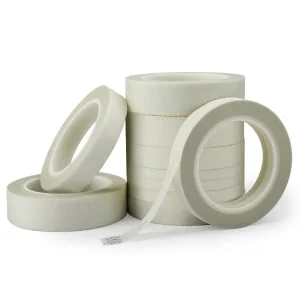
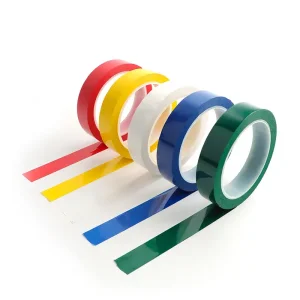
Class B (130°C) through Class H (180°C) electrical insulation involving PET Mylar and glass cloth tapes engineered to resist breakdown from mineral transformer oils and cyclic thermal degradation.
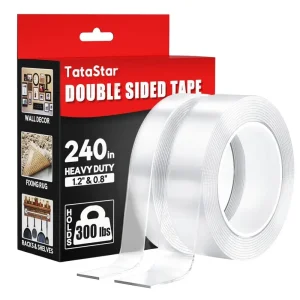
High-viscosity VHB acrylic foam tapes substituting mechanical clips in curtain wall architectural mullions, exterior illuminated signage panels, and elevator interior metal cladding.
The manufacturing complexity of industrial heat-resistant double-sided tapes hinges on micron-level precision during both wet-chemical formulation and thermodynamic curing. Facilities like Zhuhai Huayuan Electronics utilize Class 10,000 to Class 1,000 dust-free cleanrooms that eliminate airborne particulate contamination, which is paramount when manufacturing optical displays and semiconductor process films.
The technical foundation incorporates continuous web tension feedback controls, multi-zone convective drying tunnels that systematically extract solvent volatiles to achieve near-zero VOC outgassing, and real-time radiometric thickness measurement gauges. Whether formulating aggressive silicone adhesives that bond with low surface energy (LSE) materials or formulating pure acrylic foam matrices that distribute stress evenly under dynamic dynamic-shear environments, Chinese factories are setting global manufacturing standards.
Customizing polymer backbone crosslink densities allows our laboratory chemists to balance initial tack, ultimate peel adhesion, and high-temp shear resistance according to customer specs.
Equipped with high-speed automated rotary die-cutters, CCD visual inspection cameras, and laser slitting equipment ensuring clean-edge slitting down to millimeter micro-widths.
Internal laboratories execute 180°/90° peel tests (ASTM D3330), holding power creep assessments (ASTM D3654), dynamic shear tests, and dielectric breakdown characterization.
Navigating complex international certifications for tier-1 supply chain integration.
Certified since 2013 across our primary manufacturing plants, guaranteeing total traceability of chemical raw materials, base films, and finished jumbo batches.
Every industrial adhesive series undergoes rigorous SGS third-party laboratory verification, certifying absence of heavy metals, halogenated flame retardants, and SVHC compounds.
Selected high-temperature electrical tape series hold recognized UL component certifications, ensuring compliant implementation into export-bound consumer electronics.
Integrated supply operations centered in Zhuhai, Zhongshan, and supported via Huayuan International Technology (Hong Kong) ensure efficient air and sea ocean freight consolidation.
Strategic directions shaping the future of industrial bonding solutions.
Synthesizing anisotropic thermally conductive double-sided tapes embedding boron nitride and aluminum oxide ceramic particles to exceed 3.0 W/m-K bulk thermal conductivity.
Engineered acrylic matrices targeting total mass loss (TML) below 0.1% for vacuum semiconductor equipment and aerospace orbital camera packaging.
Thermally triggered debonding adhesive architectures allowing clean disassembly and separation at end-of-life cycles to facilitate EV battery pack module recycling.
Transitioning toward monomer feedstocks derived from renewable forestry by-products without sacrificing peel adhesion or thermal resistance parameters.
Clarifying engineering inquiries commonly raised by procurement directors and quality assurance managers.
Silicone adhesives offer maximum continuous temperature resistance (-40°C to +260°C) and clean, residue-free peeling from low surface energy (LSE) materials. Acrylic systems offer superior shear strength, chemical resistance, and permanent bonding endurance at temperatures between -40°C and +150°C (with modified formulations reaching 200°C for short cycles).
We supply free sample rolls or custom die-cut sheets for standard industrial grades. Simply share details regarding your substrates, expected continuous and peak operating temperatures, chemical exposure profiles, and mechanical shear forces. Our application engineers provide matching samples with formal TDS and SDS documents within 24 hours.
VHB acrylic foam tapes distribute dynamic and static stress along the entire joint line rather than concentrating forces at discrete drill points. They absorb thermal expansion mismatches, isolate galvanic corrosion between dissimilar metals, deliver an airtight and watertight seal, and streamline manufacturing line cycle times.
Yes. Operating our own precision rotary slitting and cleanroom die-cutting facilities, we deliver slit widths from 2mm upwards with tight tolerances (+/-0.1mm). We also support customized PET, glassine, or PE film release liners, pull-tabs for automated pick-and-place lines, and OEM private-label branding.
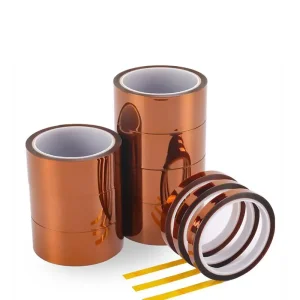
Polyimide (PI) film tapes coated with cross-linked thermosetting silicone adhesive are the industry standard for wave-soldering masking. They endure solder bath temperatures up to 260°C–300°C for short durations without charring, edge curling, or leaving adhesive residue upon removal from gold fingers.
Huayuan regularly facilitates comprehensive video audit conferences, on-site third-party factory verifications (such as SGS on-site audits), and supplies comprehensive quality control documentation, including incoming material COAs, in-line SPC charts, and final batch inspection reports.
Explore additional specialized tapes manufactured directly in our Guangdong cleanroom facilities.