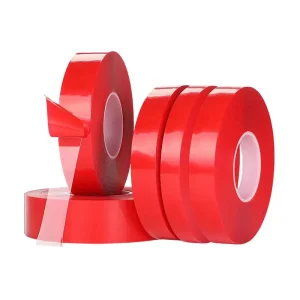
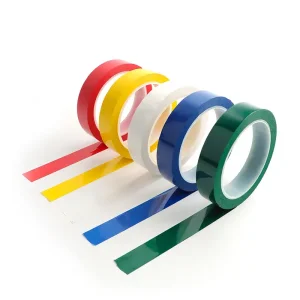
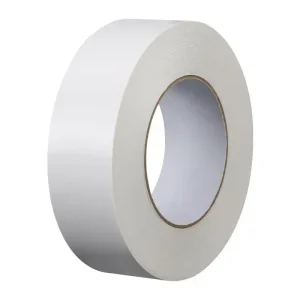
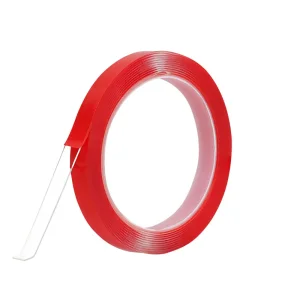
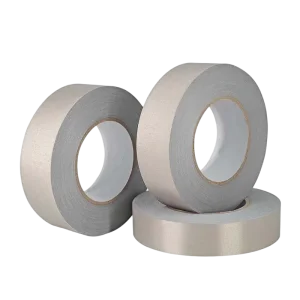
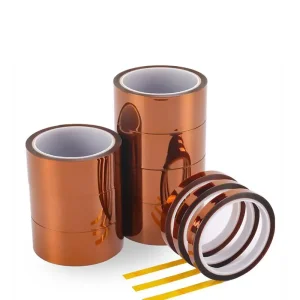
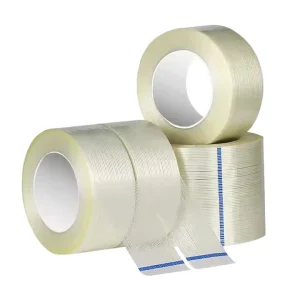
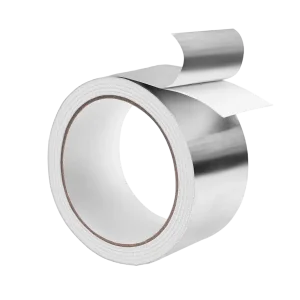
Explore our core adhesive and insulation carrier lines engineered directly at our ISO 9001 certified coating facilities. Click any product below to consult technical datasheets (TDS) and request free factory testing samples.
Fiberglass woven tape (also known in electrical engineering as glass cloth tape or E-glass electrical tape) is an industrial composite substrate manufactured by weaving fine, continuous alkali-free electrical-grade glass yarns into high-density plain or twill fabrics, subsequently impregnated and coated with advanced pressure-sensitive adhesives (PSAs). Unlike film-based tapes like PET polyester or unreinforced polyimide, the interlaced warp and weft matrix of woven fiberglass exhibits exceptional mechanical tensile strength, ultra-low elongation under mechanical tension (<3%), zero thermal shrinkage at elevated continuous operating temperatures, and superior puncture resistance against burrs on stamped transformer stampings or motor armature stator teeth.
Engineered with electrical-grade borosilicate glass filaments with electrical resistivity exceeding 10¹⁴ Ω·cm. Low alkali metal ion concentration (<0.8%) completely mitigates electrochemical corrosion and electrolytic pitting under continuous DC voltage stress, crucial for high-voltage energy storage systems.
Coated with cross-linked organosilicone resins for Class H (180°C) to Class C (220°C+) environments, leaving zero adhesive transfer or residue upon unmasking. Alternative thermosetting rubber/acrylic adhesive formulations maximize varnish absorption during Vacuum Pressure Impregnation (VPI) cycles.
The tightly controlled warp and weft weave distributes perpendicular clamping loads evenly across adjacent yarn bundles. This eliminates edge nicking, micro-cracking, and longitudinal splitting during high-speed automated tensioned winding over sharp conductor transitions.
From raw E-glass yarn filament drawing and air-jet shuttleless weaving to precision organosilicone coupling and cleanroom coating, Chinese manufacturing clusters in Guangdong offer an unbeatable ecosystem of scale, rapid customization, and stringent ISO 9001 compliance.
By controlling yarn twisting, desizing, silane coupling agent pretreatment, and polymer solvent synthesis within a unified supply chain radius, our Zhuhai and Zhongshan factory plants eradicate interfacial adhesion delamination between raw glass cloth and silicone adhesive coatings.
Equipped with high-precision imported circular knife slitters and CNC rotary die-cutting machines, we convert master jumbo rolls into widths as narrow as 3mm with a strict tolerance of ±0.2mm, completely free of edge fringing, loose threads, or telescope deformation.
Leveraging high-speed multi-zone automated drying tunnels and continuous dry-weight monitoring, our factory delivers wholesale volume pricing 30% to 45% more competitive than traditional Western brands, while meeting identical UL 510, RoHS, and REACH criteria.
Compare physical, electrical, and thermal parameters across our prime fiberglass tape series. Data reflects average values verified per ASTM D1000 and IEC 60454 test procedures.
| Grade / Product Code | Carrier / Weave Type | Adhesive Chemistry | Total Thickness | Tensile Strength (Warp) | Dielectric Breakdown | Thermal Index |
|---|---|---|---|---|---|---|
| HY-GC-180S (Standard Class H) | Alkali-Free E-Glass (Plain) | Thermoset Silicone | 0.18 mm ± 0.015 | ≥ 480 N / 25mm | 3.5 kV | 180°C (Class H) |
| HY-GC-200S (Heavy-Duty Dielectric) | High-Density E-Glass (Twill) | High-Crosslink Silicone | 0.22 mm ± 0.020 | ≥ 680 N / 25mm | 5.5 kV | 200°C (Class C) |
| HY-GC-155R (VPI Impregnation Grade) | Porous Alkali-Free E-Glass | Thermosetting Rubber | 0.15 mm ± 0.015 | ≥ 400 N / 25mm | 3.0 kV | 155°C (Class F) |
| HY-GC-130A (High-Tack Cost Saver) | Standard E-Glass Cloth | Solvent Acrylic | 0.13 mm ± 0.010 | ≥ 350 N / 25mm | 2.8 kV | 130°C (Class B) |
| HY-FGC-260 (PTFE Composite Glass) | Fluoropolymer Coated Glass | Pure Silicone PSA | 0.13 mm ± 0.010 | ≥ 550 N / 25mm | 7.0 kV | 260°C (Extreme) |
Our fiberglass woven tapes provide dielectric safety margins, flame barrier integrity, and mechanical anchoring under extreme mechanical resonance and thermal cycling conditions.
Secures high-voltage aluminum and copper busbar junctions, battery cell arrays, and junction boxes. Resists thermal runaway flames (UL 94V-0 compliant) and protects against mechanical vibration rub-through in electric vehicle powertrains.
Serves as high-tension outer coil bundling, interlayer insulation, lead-out wire anchoring, and end-turn strapping. Withstands continuous oil immersion without plasticizer leaching or chemical adhesive breakdown.
Anchors stator coils and winding slot wedges against intense centrifugal stress in locomotive traction motors, mining drives, and industrial wind turbine generators during full-cycle VPI epoxy impregnations.
Protects critical hydraulic lines, wire harnesses, and pneumatic tubing adjacent to aerospace turbine exhaust cowlings or heavy furnace heating zones. Inorganic glass fibers will not combust, melt, or produce toxic off-gassing.
Next-generation industrial electrification is demanding thinner form factors, lower VOC environmental footprints, and full robotic automation compatibility.
The miniaturization of silicon carbide (SiC) and gallium nitride (GaN) power electronics drives the requirement for sub-0.10mm fiberglass tapes that maintain the dielectric breakdown (>3.0kV) of conventional heavy fabrics in tightly packed planar transformers.
Stringent EU environmental directives and global automotive safety standards mandate the phaseout of halogenated flame retardants and volatile solvent carriers. Our research labs prioritize reactive 100% solids silicone and water-dispersed thermosetting polymers.
To eliminate frequent roll changeover in continuous transformer winding and automotive harness bundling lines, we produce continuous traverse-wound spool rolls up to 5,000 meters in length with automated tension release tensioning liners.
Procuring structural and electrical insulation materials demands rigid verification across batch repeatability, mechanical properties, and regulatory compliance.
Online radiometric beta gauge scanners must verify continuous dry adhesive coat weight across the entire width of the jumbo web to prevent dry spots, adhesive starvation, and inconsistent dielectric breakdown voltages.
For motor rebuilders and transformer OEMs, the backing weave must show controlled resin wettability so polyester and epoxy impregnating varnishes saturate the core without dissolving the pressure-sensitive adhesive layer.
Accelerated aging tests (e.g., 200°C for 168 hours) ensure the crosslinked adhesive matrix retains 180° peel adhesion without hardening, embrittling, turning gummy, or releasing hazardous condensable volatiles.
Cleanroom knife slitting prevents frayed micro-glass fibers from detaching during automatic winding, eliminating contamination hazards in sensitive cleanroom lithium cell assembly and high-voltage semiconductor enclosures.
Review our second tier of precision electrical tapes, polyimide sublimation films, and industrial double-sided adhesive solutions engineered for international OEMs and converters.
Technical inquiries answered by our senior chemical engineers regarding chemical resistance, thermal thresholds, certifications, and slitting limits.
Our engineering team in Zhuhai and Zhongshan evaluates your custom dielectric requirements, substrate characteristics, thermal classes, and slitting dimensions within 24 hours. Free qualification sample rolls are pre-dispatched via DHL/FedEx worldwide.