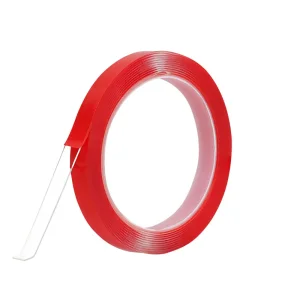
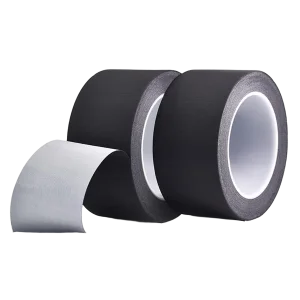
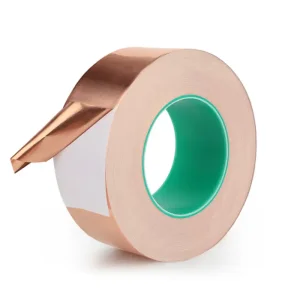
Explore our top-tier certified polyimide, PET thermal, copper foil EMI shielding, and structural adhesive tapes directly manufactured in our Guangdong cleanrooms.
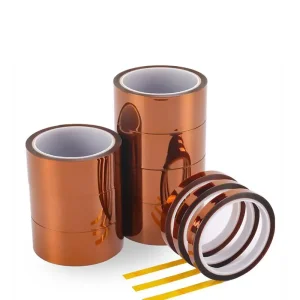
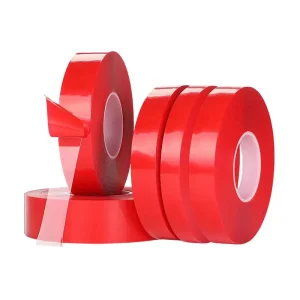
Polyimide (PI) tape—commercially recognized under generic trade names like Kapton—represents the gold standard in ultra-high performance pressure-sensitive adhesive (PSA) tapes for hostile environments.
Polyimide is synthesized via the condensation polymerization of aromatic dianhydrides (such as Pyromellitic Dianhydride, PMDA) and aromatic diamines (such as 4,4'-Oxydianiline, ODA). This creates a highly stable imide ring structure along the polymer backbone. As a result, China polyimide tape manufacturers produce backing films that demonstrate unmatched physical, chemical, and electrical stability across extreme thermal bands ranging from -269°C (-452°F) to +260°C (500°F) continuous, with short-term excursion tolerances peaking up to 400°C (752°F).
Unlike standard polyester (PET) or vinyl electrical tapes that soften, melt, or degas at elevated temperatures, polyimide maintains its mechanical integrity and tensile strength. It exhibits zero glass transition phase change within standard soldering regimes, making it indispensable for automated surface-mount technology (SMT) and wave soldering processes.
The operational capabilities of polyimide tape are dictated not only by the PI film backing but also by the cross-linked pressure-sensitive adhesive coating engineered in our cleanrooms:
| Property Parameter | Test Standard | Standard Silicone Grade (PI-50) | High-Temp Heavy Duty (PI-100) |
|---|---|---|---|
| Carrier Thickness (Film) | ASTM D3652 | 0.025 mm (1.0 mil) | 0.050 mm (2.0 mil) |
| Total Thickness (Film + Adhesive) | ASTM D3652 | 0.060 mm ±0.005 mm | 0.090 mm ±0.005 mm |
| Adhesion to Steel (180° Peel) | ASTM D3330 | 5.5 N / 25mm (20 oz/in) | 6.5 N / 25mm (24 oz/in) |
| Tensile Strength at Break | ASTM D3759 | 115 N / 25mm | 210 N / 25mm |
| Elongation at Break | ASTM D3759 | 50% | 65% |
| Dielectric Strength (Breakdown Voltage) | ASTM D149 | 6,500 Volts | 10,000 Volts |
| Insulation Class & Resistance | IEC 60085 | Class H (180°C) to 260°C Peak | Class H (180°C) to 260°C Peak |
Analyzing regional demand shifts, key purchasing factors, and why major global OEMs source high-grade polyimide tape directly from certified Chinese manufacturing hubs.
Demand in North America is driven by rapid electrification, defense-aerospace modernizations, and domestic EV battery gigafactory construction. Buyers prioritize strict compliance (UL 510 flame retardancy, ASTM testing validation, REACH/RoHS certification) and require precise die-cut parts to streamline automated assembly lines.
EU electronics assemblers and industrial OEMs demand ultra-low VOC (Volatile Organic Compounds) emissions and halogen-free adhesive matrix formulations. High-grade China polyimide tape factories providing verified SGS laboratory reports and full REACH/RoHS compliance are increasingly replacing costly traditional domestic European brands.
Accounting for over 65% of global polyimide tape consumption, the APAC region relies heavily on high-speed supply chains. Factories situated in Guangdong, China offer unmatched volume output, customizable log-roll slitting, and fast dispatch to assembly plants across Vietnam, Korea, Taiwan, and India.
Global tape procurement has evolved. Working directly with specialized Chinese tape manufacturers eliminates distributor markups, reduces lead times from months to days, and grants direct engineering access for custom adhesive formulations (e.g., custom tack levels, anti-static ESD treatment, liner release modifications, and precision die-cut shapes).
From micro-electronics masking to heavy industrial insulation, examine how polyimide tape protects vital components against extreme thermal stress, electrical breakdown, and chemical attack.
During wave soldering and automated surface-mount processing, delicate gold fingers, edge connectors, and sensitive surface components must be shielded from molten solder baths (reaching 260°C/500°F). Polyimide masking tape provides an impervious thermal shield. Its specialized silicone adhesive ensures zero solder bridging beneath the tape edge, removing cleanly after cooling without leaving sticky adhesive residues or ghosting on copper contacts.
In modern Lithium-ion EV battery packs (pouch cells, prismatic cells, and 2170/4680 cylindrical cells), die-cut polyimide tape is used for tab wrapping, busbar insulation, and inter-cell dielectric barriers. Polyimide prevents thermal runaway propagation, resists electrolyte chemical degradation, and provides Class H electrical breakdown protection (>7,000V) in ultra-thin 0.05mm space-saving formats.
In commercial aircraft, satellites, and spacecraft, space and weight constraints require thin insulation. Polyimide tape wraps high-density aircraft wire harnesses and sensor leads exposed to intense vibration and temperature shifts (-269°C to +260°C). It exhibits low outgassing characteristics under hard vacuum (conforming to NASA SP-R-0022A outgassing requirements), safeguarding optical payloads from contamination.
Polyimide tape serves as high-temperature phase insulation, coil outer wrapping, and cross-over wire bundling in Class H (180°C) and Class N (200°C) transformers, traction motors, and heavy-duty generators. Its high dielectric strength prevents arc flashing between adjacent copper windings under extreme voltage surges while maintaining mechanical tensile strength against electromagnetic forces.
In fused deposition modeling (FDM) 3D printing, polyimide film sheets and wide-format tape are applied to heated build plates. Its flat surface, high thermal conductivity, and heat endurance create an optimal print bed surface for high-temperature engineered thermoplastics like ABS, PEEK, and Nylon, preventing part warping during initial layer deposition.
Polyimide tape acts as an insulating carrier layer in flexible circuit manufacturing. In high-temperature sublimation heat transfer printing, heat-resistant polyimide thermal tape securely anchors sublimation graphics onto ceramics, metals, and fabrics without yellowing, softening, or transferring sticky residue under 200°C heat press conditions.
Inside cleanroom coating lines, automated optical inspection systems, and precision slitters that deliver consistent caliper tolerances and reliable peel performance.
Microscopic airborne dust particles during coating can compromise dielectric breakdown performance, leading to electrical short circuits in high-voltage applications. Modern China polyimide tape factories operate Class 10,000 dust-free cleanroom environments equipped with enclosed coater heads and real-time infrared thickness sensors, ensuring coating thickness uniformity within ±0.002mm across 1300mm web widths.
Equipped with high-precision CNC rotary knife slitting machines and automated flatbed laser die-cutters, factories can supply polyimide tape in micro-slitted widths starting at 2mm up to 1000mm. Complex die-cut geometry parts with pull-tabs, release liners, or split liners are supplied on rolls or sheets for high-speed automated pick-and-place mounting systems.
Tailoring adhesive mechanics, ESD protection levels, liner configurations, and thermal pathways to match exact client specifications.
Static charges generated during tape unwinding can instantly ruin ultra-sensitive CMOS sensors and integrated circuits. Anti-static polyimide tape features a triboelectric ESD-treated coating on both sides, ensuring unwinding and removal static voltage remains below 50 Volts.
Constructed with a central polyimide carrier film coated on both sides with high-temperature silicone or acrylic adhesive. Specified for bonding heating elements in aerospace, mounting flexible printed circuits, and securing thermal insulation pads under high temperature and mechanical vibration.
Combining polyimide film with a Fluorinated Ethylene Propylene (FEP) fluoropolymer overlay. Heat sealing creates a seamless pinhole-free moisture and chemical barrier used in submarine cabling, downhole oil well pump motors, and aerospace chemical conduits.
How Chinese R&D centers are pushing the boundaries of polymer chemistry to meet next-generation 6G communications, aerospace exploration, and green energy demands.
As wireless telecommunication transitions toward sub-terahertz frequencies (5G Advanced and 6G), traditional polyimide films introduce signal dielectric loss. Advanced Chinese R&D laboratories are deploying fluorinated polyimide matrices that achieve dielectric constants (Dk) below 2.5 and dissipation factors (Df) under 0.002, enabling low-loss high-speed flexible circuitry.
Future industrial manufacturing centers on sustainability. Chinese tape factories are replacing traditional organic solvents (NMP and toluene) with closed-loop thermal oxidizer systems and UV-curable solventless silicone adhesives, reducing carbon footprints while guaranteeing compliance with upcoming international environmental regulations.
Clear, precise technical answers regarding dielectric strengths, temperature limits, shelf life, and custom ordering directly from Chinese manufacturers.
"Kapton" is a registered trademark of DuPont for its specific brand of polyimide film. "Polyimide tape" refers to the generic material made from polyimide polymer film coated with pressure-sensitive adhesive. High-quality polyimide tapes manufactured in China utilize identical chemical polyimide structures (PMDA/ODA condensation), offering equivalent thermal endurance (260°C continuous), dielectric breakdown voltage, and tensile strength at a significantly lower cost.
For PCB wave soldering and SMT masking, a standard 1.0 mil (0.025mm) film with 1.5 mil (0.035mm) silicone adhesive (total 0.060mm) is recommended for flexibility and zero residue removal. For heavy industrial electrical insulation in high-voltage motors or EV batteries, a 2.0 mil (0.050mm) or 5.0 mil (0.125mm) polyimide film with thicker adhesive is specified to achieve dielectric breakdown strength exceeding 10,000 Volts.
High-grade polyimide masking tapes from reputable Chinese manufacturers use fully cross-linked silicone adhesives. When applied within recommended thermal parameters (up to 260°C for 30 minutes), the tape peels away cleanly without transferring adhesive or leaving ghosting marks on gold, copper, or FR4 PCB surfaces.
Polyimide tape should be stored in original packaging in a cool, dry environment between 20°C to 25°C (68°F to 77°F) and 50% relative humidity, away from direct sunlight. Under these controlled conditions, silicone-adhesive polyimide tape maintains its full peel strength, unwinding force, and dielectric performance for 24 months from manufacture.
Yes. Factories offer custom precision rotary and flatbed die-cutting services. Customers can submit CAD vector drawings (.DXF, .DWG, or .PDF), and parts can be produced with custom release liners, extended pull-tabs, or split backings packed on continuous rolls or individual sheets for automated robot assembly.
International buyers should ensure the supplier holds ISO 9001 quality management certification. For product-level compliance, request UL 510 flame retardancy listing, SGS laboratory test reports verifying RoHS 3.0 (Directive 2015/863/EU) and REACH SVHC compliance, and Halogen-Free test reports according to IEC 61249-2-21 standards.
Discover our comprehensive collection of electrical insulation tapes, transformer PET mylar films, high-viscosity VHB acrylic double-sided tapes, and EMI copper foil products.