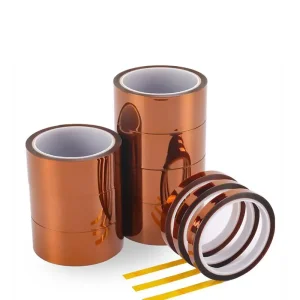
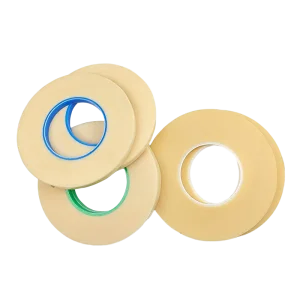
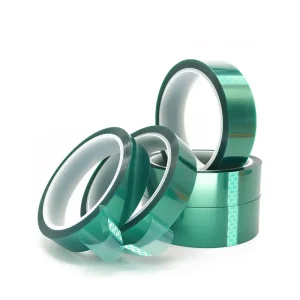
Direct from factory cleanrooms: examine our certified precision insulation and structural bonding adhesives engineered for severe thermal tolerances.
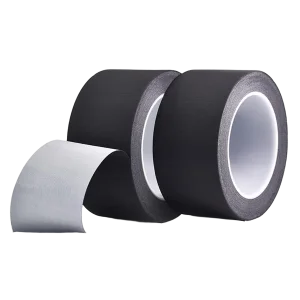
Evaluating commercial shifts, supply-chain resilience, and technological maturity across global electronics and automotive sectors.
Polyimide (often historically associated with the Kapton trademark) has evolved from an aerospace-restricted aromatic polymer into an indispensable foundation of modern solid-state electronics. Synthesized from dianhydrides and diamines, modern Chinese polyimide tape factories now synthesize ultra-thin, biaxially oriented PI films ranging from 12.5μm to 125μm, balancing extreme tensile modulus with exceptional dimensional stability under severe soldering environments.
Global original equipment manufacturers (OEMs) and contract electronics manufacturers (CEMs) face escalating pressures regarding material lead times, cost management, and raw material sovereignty. Tier-1 Chinese tape factories have established closed-loop polymer chains—spanning PI resin formulation, precision solvent coating, and dust-free slitting—delivering high-yield alternatives that meet or exceed legacy Western standards without supply volatility.
The primary point of failure in high-temperature applications is not typically the film backing, but the cross-linking stability of the adhesive matrix. Through thermally cured organopolysiloxane formulations and thermosetting acrylic chemistries, domestic manufacturing facilities provide pressure-sensitive adhesive tapes that exhibit zero silicone ghosting, zero edge bleeding, and ultra-low adhesive residue release after prolonged 260°C thermal exposure.
From cleanroom SMT production floors to high-energy traction battery packs, analyze how specialized polyimide tapes insulate and protect.
During selective and automated wave soldering operations, printed circuit boards encounter molten solder baths exceeding 250°C. Polyimide tape provides pinhole-free edge preservation for edge-connectors and micro-vias, guaranteeing zero solder infiltration, maintaining high electrical breakdown resistance, and lifting clean with zero residue after cooling cycles.
Modern battery manufacturing requires non-reactive, chemically inert insulation capable of withstanding corrosive organic carbonates in liquid electrolytes. PI tapes serve as critical dielectric barriers across pouch cell tabs, cylindrical cell cathode wrappers, and inter-cell busbar attachments, preventing internal shorts during thermal runaway scenarios.
In lead frame and wafer dicing operations, antistatic (ESD-treated) polyimide films discharge surface charges down to below 50V during peel-off. This eliminates electrical overstress (EOS) phenomena, keeping sensitive sub-micron microelectronic integrated circuits protected from triboelectric destruction.
Traction systems in high-speed rail, mining machinery, and aerospace drivetrains rely on Class H (180°C continuous) and Class C (220°C+) phase insulation. Polyimide tape provides extreme puncture strength and corona resistance, insulating armature coils, lead-wire connections, and transformer layer separations against severe inductive spikes.
A systematic perspective on where polyimide adhesive formulations and material architectures are heading over the next five years.
Conventional polyimide films behave as thermal insulators (~0.12 W/m·K). Leading-edge Chinese facilities now compound micro-boron nitride (BN) and aluminum oxide nanoparticles within the precursor polyamic acid matrix. This creates composite tapes achieving thermal conductivity values above 0.8 W/m·K, fulfilling dual obligations: high dielectric separation and efficient passive heat dissipation.
In precision optical coating and optoelectronic display manufacturing, volatile cyclic silicone oligomers risk contaminating active micro-cavities. Advanced factories are executing an aggressive transition toward proprietary cross-linked acrylic polymers rated for 200°C continuous service, eliminating trace silicone deposition entirely while guaranteeing clean peel characteristics.
Roll-format distribution is increasingly coupled with multi-axis automated flatbed and rotary die-cutting systems. Utilizing class-10,000 cleanrooms, manufacturers provide customized geometries down to 0.05 mm tolerances with non-stretch release liners, facilitating pick-and-place robotics on high-speed automated assembly lines.
A breakdown of rigorous quality verification, supply-chain transparency, and logistical speed engineered to de-risk overseas procurement.
Every commercial production run must undergo stringent verification according to ASTM D-3330 (peel adhesion), ASTM D-149 (dielectric breakdown strength), and UL 510 flame retardancy parameters. Accredited third-party verification through SGS confirms total alignment with EU RoHS and REACH directives, safeguarding overseas importers from regulatory liability.
From private labeling of custom core diameters to proprietary adhesive weight matching (15g/m² to 60g/m² coating thickness), China’s integrated manufacturing units act as specialized engineering extensions. Buyers collaborate directly with technical polymer chemists to match substrates, cure profiles, and conversion needs.
Positioned across major manufacturing hubs such as the Pearl River Delta (Zhuhai, Zhongshan) and neighboring export corridors, factories provide rapid turnaround on custom slitting, export-grade vacuum moisture-barrier packaging, and air/ocean fulfillment pathways directly connecting to European, American, and Asian transit hubs.
Authoritative technical and commercial responses to the key variables encountered when qualifying high-temperature polymer adhesives.
Kapton® is a registered trademark of DuPont designating their specific aromatic polyimide film formulation. "Polyimide tape" denotes the generic category utilizing identical polyimide condensation chemistry (PMDA/ODA-based polymers). Tier-1 Chinese tape factories utilize premium high-modulus PI film substrates that exhibit matching thermal endurance, tensile properties, and dielectric capabilities, offering an equivalent high-reliability specification profile at a distinct manufacturing cost advantage.
Silicone adhesive systems represent the standard for extreme heat, handling continuous service from -40°C up to 260°C (with short spikes to 300°C) and releasing cleanly from PCB gold fingers without residue. Acrylic adhesive formulations top out around 155°C–180°C continuous service, but deliver higher chemical resistance to specialized industrial solvents and eliminate the risk of trace silicone outgassing in sensitive optics, medical electronics, and semiconductor packaging environments.
Standard polyimide film can generate triboelectric potentials exceeding 5,000 volts upon rapid unwinding or peel-off. Anti-static or ESD-grade polyimide tapes incorporate a static-dissipative polymeric coating or carbon-nanotube dispersion on one or both faces, stabilizing surface resistivity between 10^6 and 10^9 ohms/sq. This prevents rapid discharge arc damage to sensitive CMOS semiconductors and microelectronics during automated surface-mount processes.
Adhesive transfer and edge lifting stem from improper chemical priming or incomplete curing. Rigorous Chinese manufacturing operations deploy in-line corona or plasma surface pretreatment on the raw polyimide film before applying the adhesive, coupled with multi-zone infrared thermal curing tunnels. This process secures an indestructible covalent anchor between the silicone adhesive matrix and the PI backing, ensuring consistent peel forces under extreme heat.
Yes. Equipped with high-speed automated flatbed and rotary laser die-cutting systems housed in Class-10,000 cleanroom environments, factory facilities convert polyimide rolls into complex custom shapes, discs, washers, and customized tabs with pull-tabs and extended fluorosilicone release liners according to customer CAD/DXF specifications.
Engineered for mission-critical electrical insulation, coil wraps, and industrial thermal barrier integration.