Precision-engineered pressure-sensitive adhesive tapes qualified for electrical insulation, PCB masking, high-viscosity structural mounting, and extreme thermal management.
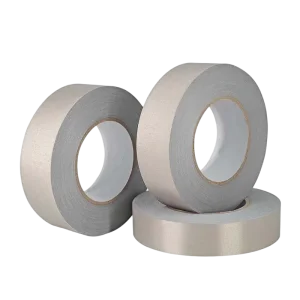
In modern power electronics, rail transit, renewable energy power generation, and electrified automotive powertrains, glass electrical tape (commonly known as woven glass cloth tape or fiberglass insulation tape) serves as the primary barrier against mechanical shear, high-voltage breakdown, and prolonged thermal degradation. Unlike conventional polymer dielectric films (such as BOPET or PVC), woven glass cloth exhibits zero longitudinal plastic elongation under high mechanical tension, making it indispensable for coil banding, slot wedge anchoring, lead wire fastening, and outer protective wrapping in high-torque electric machinery.
Historically dominated by Western legacy conglomerates such as 3M (notably 3M 69 and 3M 27 tape series), the global supply chain has undergone a profound geopolitical and technical transformation. Driven by heavy capital investments into high-precision cleanroom coating lines, silane-coupled E-glass weaving mills, and solvent-recovery synthesizing reactors, China’s glass electrical tape manufacturers have evolved from low-end commodity suppliers into premier tier-1 manufacturing partners for multinational OEMs across Germany, North America, Japan, and Southeast Asia.
A standard industrial glass electrical tape consists of high-purity electrical-grade E-glass woven cloth (50g/m² to 140g/m²), pre-treated with silane functional sizing agents to maximize inter-fiber matrix adhesion. The backing is precision coated with an engineered pressure-sensitive adhesive layer—ranging from Class B (130°C) thermosetting rubber, Class F (155°C) high-shear acrylic, to Class H (180°C) and Class N/R (200°C–260°C) polysiloxane adhesives.
Compare dielectric breakdown, temperature resistance classes, and mechanical elongation benchmarks across core electrical insulation carrier substrates.
| Insulation Substrate Type | Thermal Endurance Class | Continuous Operating Temp | Tensile Strength (N/cm) | Elongation at Break (%) | Dielectric Breakdown Voltage | Varnish Compatibility (VPI) |
|---|---|---|---|---|---|---|
| Woven Glass Cloth (Silicone Adhesive) | Class H / Class N (180°C–200°C) | -40°C to +200°C (Intermittent 260°C) | ≥ 260 N/cm | ≤ 5% (Zero elongation) | 3,000 V – 4,500 V | Exceptional (Maximum Absorption) |
| Woven Glass Cloth (Acrylic Adhesive) | Class F (155°C) | -20°C to +155°C | ≥ 240 N/cm | ≤ 5% | 3,000 V – 3,800 V | High Solvent Resistance |
| Woven Glass Cloth (Thermosetting Rubber) | Class B (130°C) | -10°C to +130°C | ≥ 250 N/cm | ≤ 5% | 2,500 V – 3,200 V | Moderate (Economical Choice) |
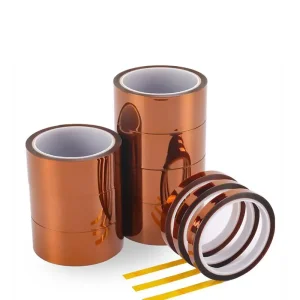
| Polyimide Film (PI / Kapton Tape) | Class H / Class C (180°C–260°C) | -50°C to +260°C | 45 – 65 N/cm | 50% – 85% | 5,500 V – 7,500 V | Low (Barrier film, non-porous) |
| Polyester Mylar Film (PET Tape) | Class B (130°C) | -20°C to +130°C | 40 – 55 N/cm | 70% – 110% | 4,500 V – 5,500 V | Low (Impenetrable surface) |
Discover where China-manufactured glass electrical tapes deploy across next-generation electrical, automotive, and energy conversion systems worldwide.
In high-power industrial motors, railway locomotive traction drives, and mining equipment, rotating armatures generate massive centrifugal stresses. Woven glass cloth electrical tape serves to hold armature coils in position, band end-turns, and insulate slot leads. Its high tensile modulus prevents centrifugal displacement, while its compatibility with vacuum pressure impregnation (VPI) epoxy systems creates a unified, void-free solid composite structure.
In modern distribution transformers and power substation transformers, glass electrical tape functions as phase-to-phase insulation, inter-layer wrapping, and terminal tap anchoring. Because glass cloth does not exhibit shrinkage or embrittlement under continuous thermal cycles up to 180°C (Class H), it ensures zero dielectric flashovers and prevents insulation delamination across 25+ years of operational service life.
EV 800V SiC (Silicon Carbide) inverters, hairpin stators, and lithium battery cell-to-pack (CTP) architectures demand non-flammable dielectric barriers. Glass cloth tape with silicone adhesive provides a critical flame-barrier barrier (UL 94 V-0 flame rating equivalent behavior) between prismatic battery cells, preventing cascading thermal runaway while insulating busbars against high-amperage short circuits.
Offshore wind turbine generators encounter severe temperature spikes and marine salinity. China-engineered fiberglass tapes with cross-linked silicone adhesives prevent moisture ingress and mechanical chafing between heavy-gauge magnet wire bundles inside high-capacity multi-megawatt nacelles, meeting stringent offshore durability standards without insulation cracking.
Due to its rugged woven fiberglass backing and high-adhesion silicone adhesive system, glass electrical tape is extensively utilized as a protective masking tape during industrial plasma spray coating, flame spray metallization, and grit-blasting operations in aerospace turbine repair facilities. It cleanly removes without gummy residue after high-heat processing.
In commercial avionics and high-altitude defense wiring harnesses, weight reduction and extreme fire retardancy are paramount. Glass cloth tapes are utilized to bundle wire looms adjacent to engine nacelles and hydraulic manifolds, offering zero toxic halogen off-gassing and complying with stringent FAR/JAR aerospace flame requirements.
Operating since 2007, Zhuhai Huayuan Electronics Co., Ltd. exemplifies the forefront of China's advanced adhesive tape manufacturing sector. With modern multi-zone manufacturing hubs located at Nanping Science & Technology Park in Zhuhai and Tanzhou Town in Zhongshan, our production plants integrate multi-head reverse roll and micro-gravure precision coating lines situated inside Class 10,000 dust-free cleanroom environments.
Our manufacturing operations are reinforced by Huayuan International Technology (Hong Kong) Co., Ltd., facilitating seamless cross-border currency settlement, global freight forwarding, and on-demand customer engineering support. Certified under ISO 9001 since 2013 and recognized as a National High-Tech Enterprise and Guangdong Specialized SME, Huayuan maintains complete closed-loop batch traceability from virgin E-glass yarn inspection to high-speed computerized slitting.
Every master roll produced by Huayuan undergoes rigorous quality validation to guarantee zero electrical conductivity in the adhesive layer and zero microscopic pinholes in the woven substrate. All tape formulations adhere strictly to:
How Chinese chemical synthesis and precision coating factories are reshaping electrical insulation standards to meet high-voltage silicon carbide and solid-state electrification demands.
As silicon carbide (SiC) and gallium nitride (GaN) power electronics drive operating frequencies beyond 100 kHz, electrical tapes must resist partial discharge erosion and high dielectric loss. Next-generation glass tapes combine nano-ceramic fillers within the adhesive matrix to retard corona breakdown.
Environmental regulations are prompting a transition from traditional aromatic solvent-borne silicone systems toward UV-curable and 100% solids hot-melt silicone formulations. This technological leap eliminates volatile organic compounds (VOCs) while boosting thermal aging stability past 220°C.
Demands for ultra-compact consumer electronics, micro-transformers, and EV sensor packages have catalyzed the development of sub-0.10 mm (down to 0.08 mm total thickness) woven glass cloth tapes with yarn tensile ratings comparable to standard 0.18 mm backings.
To combine the dielectric barrier puncture resistance of polyimide film with the mechanical tear resistance and varnish absorption of glass cloth, manufacturers are engineering laminated composite tapes (PI film backed with woven glass) for severe down-hole drilling and aerospace generator insulation.
Key technical checkpoints for procurement teams and design engineers transitioning away from expensive Western distributors to factory-direct Chinese manufacturers.
Confirm whether your application requires thermosetting rubber (cost-effective Class B 130°C), solvent acrylic (freon and oil-resistant Class F 155°C), or silicone adhesive (Class H 180°C–200°C with clean, residue-free removal). Avoid misapplying lower-temp adhesives into vacuum impregnation ovens where outgassing can rupture coils.
Leading China tape suppliers provide standardized direct-replacement equivalents for Western tape part numbers—such as Huayuan high-performance glass cloth tape substituting 3M #69 (Class H silicone) or 3M #27 (Class B rubber). Always verify peel adhesion to steel, tensile modulus, and breakdown voltage side-by-side on factory TDS sheets.
Tier-1 Chinese converters support both master log-roll shipments (ideal for local international converters with automated slitting equipment) and finished custom-slit rolls from 2 mm to 1000 mm widths with tight ±0.1 mm precision. Inquire about core types (plastic PE cores vs. standard dust-free paper cores).
Detailed technical answers addressing dielectric breakdown, shelf life, thermosetting curing profiles, and factory sample qualification.
The difference lies in continuous thermal endurance and chemical stability. Glass cloth tape coated with cross-linked silicone pressure-sensitive adhesive operates continuously at Class H (180°C) and can withstand exposure up to 260°C intermittently without adhesive carbonization or loss of holding power. Rubber adhesive glass cloth tape is rated for Class B (130°C) applications; it offers higher initial tack and lower unit cost, making it ideal for general coil bundling and economical transformer manufacturing where operating temperatures remain modest.
Yes. Leading manufacturers like Huayuan produce exact functional drop-in equivalents to 3M 69 tape. Both utilize an 0.18 mm (±0.02 mm) total thickness architecture, high-density woven white E-glass cloth backing, and a high-performance thermosetting silicone adhesive delivering ≥260 N/cm tensile strength and 3,000 V dielectric breakdown per ASTM D149. Full technical comparative data sheets (TDS) and RoHS/UL compliance certificates are provided for your engineering change order (ECO) verification.
Thermosetting adhesives achieve their maximum bond strength and solvent resistance after thermal curing. While the tape exhibits immediate pressure-sensitive tack for assembly, subsequent exposure to heat (for example, baking at 130°C for 2 hours or 150°C for 1 hour during varnish baking cycles) activates cross-linking catalysts within the polymer resin. Once cured, the adhesive layer becomes insoluble, preventing dissolution or adhesive transfer even when fully submerged in aromatic hydrocarbon solvents or hot transformer oils.
High-grade electrical fiberglass tapes utilize continuous filament E-glass yarns treated with polymeric sizing and silane coupling binders. This process bonds surface micro-filaments together, effectively eliminating stray fiber fuzz, particulate shedding, or dust generation during high-tension automatic coil winding operations. Operators handle the rolls with standard industrial safety gear without skin irritation.
When stored at 21°C (70°F) and 50% relative humidity out of direct sunlight in original cartons, our silicone and acrylic glass cloth tapes maintain a certified shelf life of 12 to 24 months from the date of manufacture. The high-purity polysiloxane adhesive system does not dry out, cross-link prematurely, or leach plasticizers over prolonged storage.
Yes. Huayuan operates precision slitting and multi-station rotary die-cutting cleanrooms. We supply tape slit to any non-standard width starting from 2 mm up to 1050 mm logs, laminated with fluorosilicone release film liners for kiss-cutting or continuous reel packaging. Custom die-cut shapes matching your engineering CAD drawings are routinely produced for stator slot liners and transformer terminal insulation.
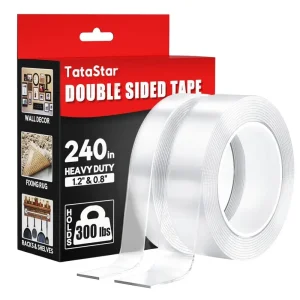
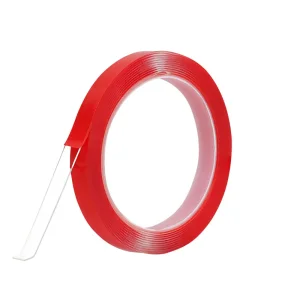
Browse our certified high-performance double-sided structural acrylic tapes, direct 3M 69 glass cloth equivalents, and heat-resistant PET insulation films.
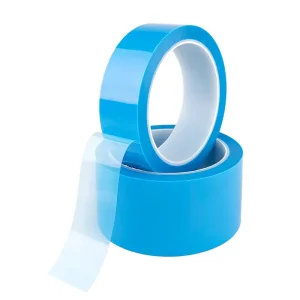
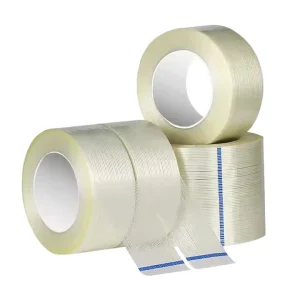
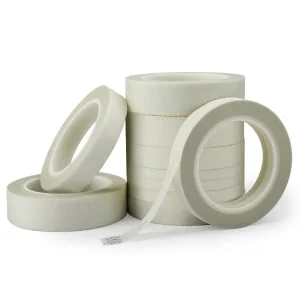
Connect directly with our application engineers in Zhuhai and Zhongshan. Receive matched sample rolls of glass electrical cloth tape, polyimide PCB masking tapes, and VHB acrylic foam for qualification on your production line within 24 hours.