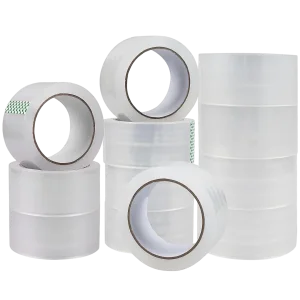
Explore our precision-formulated double-sided and specialty tape systems manufactured under certified dust-free cleanroom environments for high-stress industrial applications.
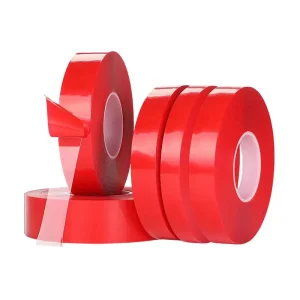
Understanding why closed-cell acrylic foam VHB tape has transitioned from a mechanical fastener substitute into an essential structural material across modern transport, architecture, and consumer electronics.
Across modern automotive, aerospace, building envelope, and clean-energy sectors, traditional joining techniques—such as spot welds, solid rivets, threaded bolts, and liquid paste adhesives—present critical engineering bottlenecks. Fasteners create localized stress concentrations, pierce protective anti-corrosive coatings, induce bi-metallic galvanic corrosion, and require extensive post-assembly finishing. Liquid chemical glues, while continuous, mandate lengthy cure schedules, release volatile organic compounds (VOCs), and demonstrate uneven bond-line thickness when manually applied.
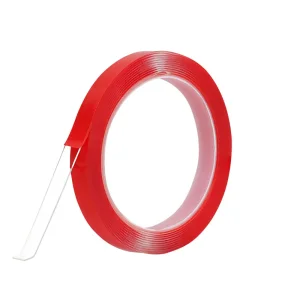
Wholesale Foam VHB (Very High Bond) Tape bridges this performance gap through advanced viscoelastic acrylic chemistry. Constructed from 100% closed-cell acrylic polymers without discrete paper or film backings, the entire thickness of a VHB tape core functions as an energy-absorbing, stress-dissipating dynamic damper. Under mechanical deflection, cyclic wind shear, or differential thermal expansion, the acrylic polymer chains slide past one another to disperse peak loads across the total surface area before returning elastically to their equilibrium state. Zhuhai Huayuan Electronics Co., Ltd., leveraging high-precision multi-layer coating lines across its Zhuhai Nanping Technology Park and Zhongshan Tanzhou manufacturing complexes, provides direct OEM/ODM conversion with fully traceable batch reproducibility.
Unlike mechanical fasteners that focus force around drilled holes, VHB foam distributes shear, peel, and tensile loads evenly along the entirety of the joint, preventing crack propagation in thin sheet metals and brittle composites.
Accommodates up to 300% elongation of tape thickness without cohesive split. Allows dissimilar structural substrates (e.g. Aluminum joined to Architectural Glass or Stainless Steel to Polycarbonate) to expand and contract freely across wide thermal ranges.
Closed-cell cellular foam geometry creates a complete, continuous moisture, vapor, and gas barrier simultaneously during bonding, protecting interior structural joints from oxidation, UV oxidation, salt spray, and water ingress.
A rigorous comparison of physical, mechanical, and operational parameters for engineering design authorities qualifying high-strength structural joint systems.
| Evaluation Parameter | Closed-Cell Acrylic VHB Tape | Solid Metal Rivets / Screws | Structural Polyurethane (PU) Adhesive |
|---|---|---|---|
| Load Distribution | Continuous, uniform across 100% of bond surface area | Point concentrated around drilled clearance holes | Continuous, dependent on manual bead uniformity |
| Dissimilar Substrate Joining | Excellent; isolates dissimilar metals, stops galvanic cell | Poor; encourages galvanic corrosion unless sleeved | Moderate; requires specialized primer treatments |
| Thermal Expansion Buffer | High; elongates dynamically up to 3× tape thickness | Zero; thermal shear buckles sheets or shears fasteners | Moderate; brittle over extreme continuous cold cycles |
| Immediate Green Handling Strength | Immediate 50% handling tack; 100% cure at 72 hrs | Immediate mechanical lock | Zero; requires jigs, clamps, and 24-48 hr cure time |
| Aesthetic Finish & Weight | Completely invisible bond line; ultra-lightweight profile | Visible protruding heads; adds cumulative hardware weight | Risk of bead ooze, irregular thickness, messy clean-up |
| Vibration Damping & NVH | Exceptional acoustic damping & viscoelastic shock absorption | Transmits vibrations; prone to loosening from back-out | Moderate vibration attenuation properties |
From Tier-1 electric vehicle battery packs to facade curtain walls, our custom-slitted and precision die-cut VHB foam tapes are qualified for demanding operating environments.
VHB acrylic foam tapes secure battery cell matrix structures, affix cooling plate heat-sinks, and bond composite top covers. Delivers electrical isolation, prevents electrolyte ingress, and dampens dynamic road shocks.
Used for stiffener bar attachment on aluminum composite panels (ACP), glass curtain wall structural glazing, and architectural cladding. Resists extreme hurricane wind loads, UV solar radiation, and continuous rain exposure.
Eliminates visible screw heads in channel letters, lightboxes, and electronic kiosks. Offers high initial tack on painted metals, acrylic sheets, and powder-coated steel with no surface bleed-through or shadowing.
Precision die-cut gasket frames for mobile phones, tablet bezels, camera lens modules, and smart displays. Provides hermetic IP68 ingress protection while enabling narrow-bezel industrial device styling.
Zhuhai Huayuan Electronics guarantees end-to-end regulatory adherence, providing overseas buyers with complete documentation packs for streamlined market entry across Europe, North America, and the Asia-Pacific.
Factory-operated under ISO 9001:2015 quality standards since 2013. Class 1,000 and Class 10,000 dust-free cleanrooms protect acrylic emulsion coatings from microscopic airborne debris. SGS factory audit records and mill test certificates (MTC) accompany bulk export shipments.
Zero halogen, low-outgassing formulations free of lead, cadmium, mercury, polybrominated biphenyls, and SVHC candidate substances. Full safety data sheets (SDS) and toxicological testing verify compliance with strict EU environmental directives.
Selected adhesive formulations meet Underwriters Laboratories UL 746C standards for polymeric adhesive systems used in electrical equipment assemblies. Guarantees long-term thermal endurance, electrical tracking resistance, and mechanical adhesion retention.
To ensure that every roll manufactured matches approved technical parameters, our Pearl River Delta testing laboratory conducts standardized ASTM and FINAT test procedures:
Strategic formulation advances addressing the evolving requirements of sustainability, rapid automated assembly, and extreme aerospace environments.
Development of bio-based acrylic polyols reducing carbon footprint by 35%. Introduction of thermally activated "command-debond" chemistries that enable clean dismantling of electronic assemblies and automotive displays for circular recycling.
Infusing high-aspect-ratio boron nitride and ceramic micro-spheres into the acrylic matrix. Achieving structural mechanical bonding alongside in-plane thermal conductivities exceeding 2.0 W/m·K for dense EV battery power electronics.
Integrating microencapsulated cross-linking chemistry that autonomously repairs micro-cracks induced by cyclic seismic and wind loads. Capacitive sensing layers integrated into tape cores to monitor joint stress in aerospace fuselages.
In-depth answers addressing viscoelastic chemistry, substrate surface energies, temperature aging, and wholesale customization parameters.
Standard polyethylene (PE) foam tape utilizes an extruded cross-linked PE foam carrier laminated on both surfaces with independent adhesive layers (rubber or thin acrylic). While cost-effective for indoor light-duty mounting, PE foam has low internal cohesive strength and is susceptible to UV photodegradation, cell collapse, and shearing.
In contrast, Foam VHB Tape features an integral 100% solid acrylic viscoelastic core. The adhesive polymer comprises the entire thickness of the tape rather than being a topical laminate. It contains no volatile plasticizers, does not dry out or embrittle with age, and maintains dynamic elasticity over decades of extreme weather exposure.
Adhesion relies on the liquid-like "wet-out" of the viscoelastic acrylic adhesive across the substrate surface. Materials are classified into High Surface Energy (HSE) such as copper, aluminum, stainless steel, and float glass (>45 dynes/cm), and Low Surface Energy (LSE) including polypropylene (PP), polyethylene (HDPE), powder-coated paints, and silicones (<36 dynes/cm).
Zhuhai Huayuan produces dedicated modified acrylic VHB formulations with specialized tackifying resins that bond directly to LSE plastics and powder coatings without the mandatory requirement of hazardous solvent-based adhesion promoters.
For optimum structural adhesion, surfaces must be clean, dry, and dust-free. The standard protocol involves wiping the joint with a 50:50 Isopropyl Alcohol (IPA) and water solution using a lint-free cloth. Because acrylic foam adhesive is pressure-sensitive, firm rolling pressure (minimum 15 psi / 100 kPa) must be applied across the entire tape surface using a calibrated rubber hand roller to displace micro-air pockets and initiate polymer wetting.
Unlike curing epoxies, VHB does not undergo a chemical reaction but experiences continuous mechanical wet-out. At standard room temperature (21°C / 70°F), approximately 50% of ultimate bond strength is achieved within 20 minutes of applied pressure, 75% after 1 hour, 90% after 24 hours, and 100% structural ultimate holding power after 72 hours. Gentle heating (up to 65°C for 1 hour) accelerates full wet-out instantaneously.
Yes. Equipped with imported high-speed slitting lathes and rotary die-cutters, our factory slits master jumbo rolls into widths from 3mm up to 1050mm with precision tolerances of ±0.1mm. For automated robotic assembly lines, we provide continuous traverse spool-wound rolls up to 1,500 meters in length. Custom kiss-cut gaskets on extended pull-tab liners are produced directly from customer CAD or DXF vector drawings.
Every shipment is backed by an ISO 9001 Certificate of Analysis (COA) specifying calibrated coating thickness, peel adhesion (N/25mm), and static shear time. We supply RoHS and REACH laboratory testing declarations from SGS, technical data sheets (TDS), safety data sheets (SDS/MSDS), and customized export carton packaging with moisture-barrier barrier bags and fumigated pallets.
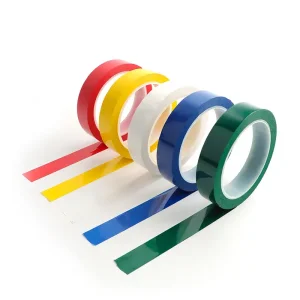
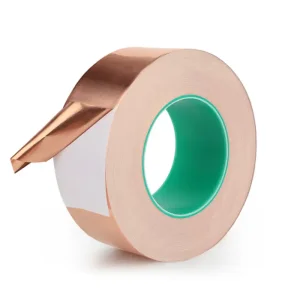
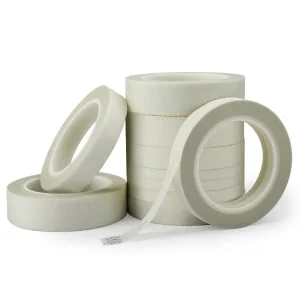
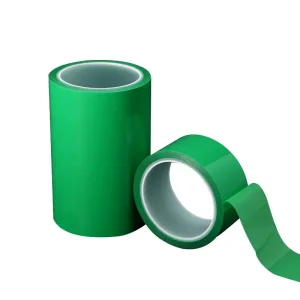
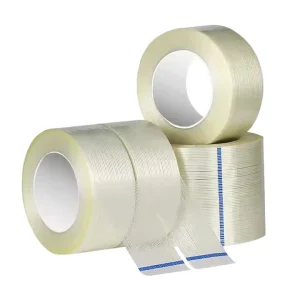
Browse additional specialized adhesive products developed in our Guangdong cleanroom facilities for high-temperature masking, packaging, and composite reinforcement.
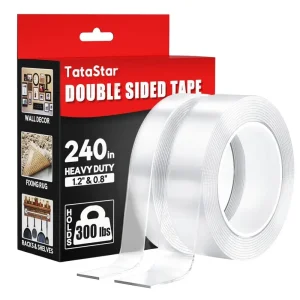
Our Guangdong application engineers collaborate directly with your R&D team to evaluate substrate surface energy, joint geometry, and shear fatigue requirements. Contact our Zhuhai or Hong Kong offices for free sample rolls and comprehensive TDS documentation within 24 hours.