Explore precision-manufactured functional films, high-tack silicone tapes, thermal management solutions, and specialized structural adhesive formulations directly from our Pearl River Delta manufacturing facilities.
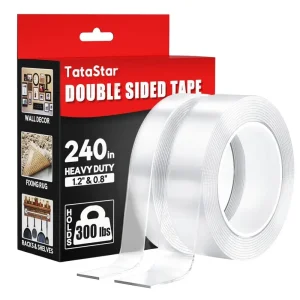
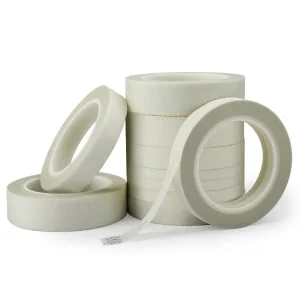
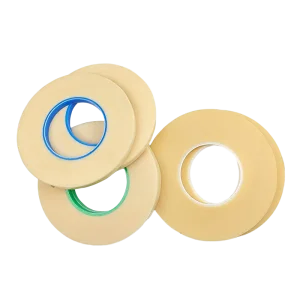
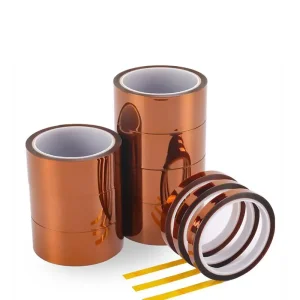
A comprehensive examination of viscoelastic behavior, dynamic stress dissipation, cross-linked molecular cohesion, and critical engineering metrics driving global enterprise procurement decisions.
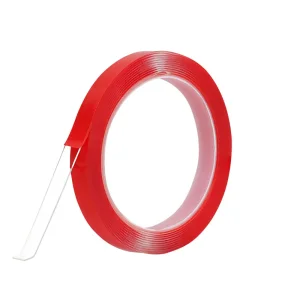
Across the landscape of modern structural engineering, the traditional reliance on mechanical fasteners—such as rivets, high-tensile bolts, structural screws, and spot welding—has encountered severe performance ceilings. In applications ranging from architectural curtain wall facades exposed to hurricane wind loads, to electric vehicle (EV) battery enclosures enduring thermal shock and road vibration, mechanical penetrations introduce critical failure modes: galvanic corrosion, localized mechanical stress points, moisture ingress paths, and permanent aesthetic degradation. China VHB heavy duty mounting tape manufacturers have redefined this paradigm through the mass synthesis and precision web coating of 100% closed-cell viscoelastic acrylic foam tapes.
Viscoelasticity represents the physical simultaneous manifestation of viscous liquid flow and elastic solid recovery under applied strain. When a structural shear, peel, or cleavage load is applied to a closed-cell acrylic foam matrix, the polymer chains uncoil and slide, dissipating mechanical kinetic energy internally through relaxation mechanisms. Upon stress reduction, the cross-linked covalent network snaps back elastically, preventing catastrophic delamination. This continuous polymeric dissipation allows our heavy-duty VHB tapes to absorb high dynamic and cyclical shock loadings that routinely shear metal rivets or crack brittle epoxy bonds.
Unlike rivets which create stress concentrations of up to 400 MPa directly adjacent to drill holes, viscoelastic acrylic foam distributes static and dynamic shear loads uniformly across the entire square millimeter of bonded joint surface area.
Different materials expand at vastly divergent rates (e.g., Aluminum CTE is ~23 × 10&supmin;&sup6;/K while Glass CTE is ~8.5 × 10&supmin;&sup6;/K). Viscoelastic foam can elongate up to 300% to compensate for thermal movement without delamination.
Because the core is an impermeable, non-fibrous closed-cell solid acrylic matrix, the tape provides an instant IP67/IP68 hermetic environmental seal against liquid water, moisture vapor, road brine, ozone, and chemical fumes.
How Tier-1 OEM manufacturing plants in automotive, structural architecture, electronic miniaturization, and renewable clean power deploy heavy-duty acrylic bonding tape lines.
In electric mobility, battery pack enclosures require strict thermal isolation, sealing, and damping. VHB foam systems secure cell-to-pack (CTP) side plates, busbar isolators, and aerodynamic underbody shields, withstanding road salt, motor vibration, and temperatures between -40°C and 120°C without creep failure.
Modern skyscraper architectural panels utilize heavy duty structural acrylic tape to bond aluminum composite panels (ACP), ceramic facade louvers, and curtain wall stiffeners. With certified ASTM C1184 and ASTM E330 wind load resistance, the bond absorbs structural building sway and wind buffeting without mechanical rattle.
Smartphones, foldable tablets, and optical displays demand adhesive profiles as thin as 0.15mm with aggressive peel strength. Ultra-thin PET double-sided and modified acrylic foam tapes deliver micro-die-cut tolerances (±0.05mm), shock impact drop damping, and anti-repulsion properties on curved OLED glass.
Utility-scale solar farms deploy bifacial PV panels bonded directly to galvanized torque tubes using UV-stabilized heavy duty mounting tape. This eradicates bolt torque maintenance across 25-year operational life cycles, resisting continuous solar UV radiation, desert sand abrasion, and high ambient temperature swings.
Heavy duty sign fabricators rely on high-viscosity VHB tape to bond cast acrylic, polycarbonate channel letters, stainless steel channel frames, and retroreflective highway overhead markers. The foam creates an invisible seamline, eliminating rivet heads and spot-weld discoloration while preventing weathering ingress.
Modern washing machines, smart refrigerators, and commercial ovens utilize high-strength double-sided bonding tape to fasten control console glass, door handle escutcheons, and vibration-damping perimeter gaskets. The tape provides immediate handling strength, accelerating continuous conveyor throughput.
Quantitative ASTM, FINAT, and ISO evaluation parameters demonstrating the mechanical superiority and long-term durability of closed-cell acrylic structural tapes.
| Evaluation Parameter | VHB Closed-Cell Acrylic Tape | Mechanical Fasteners (Rivets/Bolts) | Polyurethane Liquid Adhesives |
|---|---|---|---|
| Stress Distribution Profile | ✓ 100% Uniform Surface Area | Localized Peak Stress Concentration (>350 MPa) | Moderate (Subject to bead unevenness) |
| CTE Differential Compensation | ✓ Up to 300% Shear Elongation | Zero (Causes panel buckling or hole shear) | Limited (50% - 100% before bond break) |
| Galvanic Corrosion Prevention | ✓ Complete Dielectric Isolation | High Risk (Dissimilar metals in contact) | Moderate (Depends on chemical formulation) |
| Immediate Green Tack / Handling | ✓ Instant (50% bond on contact) | Instant (Requires drilling & clamping) | Slow (Requires jigs & 24-48 hr cure) |
| Environmental Barrier (Hermetic) | ✓ Integrated Waterproofing IP68 | None (Holes create active leak vectors) | Good (When applied without voids) |
| Vibration & Acoustic Damping | ✓ Viscoelastic Tan δ > 0.4 | Zero (Transmits resonance & vibration) | Moderate damping performance |
| Total Assembly Labor Speed | ✓ High-Speed Die-Cut / Roll Feed | Labor intensive (Drill, deburr, fasten) | Messy dispensing, cleanup, long cure |
When drafting mechanical drawings or tender specifications, engineering procurement directors must evaluate six core adhesion characteristics:
Optimal structural bonding requires a fundamental understanding of critical surface tension (γc):
Copper, Aluminum, Stainless Steel, Glass. Acrylic adhesives wet out spontaneously within 72 hours.
Polycarbonate, ABS, Rigid PVC, Acrylic, Polyesters. Excellent adhesion without specialized surface treatment.
Polypropylene, Polyethylene, PTFE, Powder Coated Finishes. Requires our specialized LSE modified acrylic adhesive or adhesion promoters (silane primer).
Inside our ISO 9001 certified manufacturing infrastructure: state-of-the-art closed-loop solvent recovery, multi-layer coating lines, and micron-grade automated slitting.
Founded in 2007 in Zhuhai's Nanping Science & Technology Park, our operational footprint expanded in 2025 with our second high-capacity manufacturing base in Tanzhou Town, Zhongshan. Our dual facility matrix provides robust supply chain continuity and massive multi-shift production agility.
Contamination by airborne particulates can compromise structural adhesive surface wet-out. Our automated coating tunnels, thermal curing bays, and log-roll rewinding lines operate under positive-pressure, HEPA-filtered Class 10,000 cleanroom environments, preventing surface defects.
We slit custom log rolls from 3mm up to 1200mm with edge tolerances within ±0.1mm. Our precision rotary and flatbed die-cutting units convert rolls into complex engineered pre-forms, kiss-cut gaskets, easy-peel finger-lift tabs, and extended liners designed for high-speed automated robotic pick-and-place lines.
Vertical Integration Advantage: Many overseas traders simply buy commercial jumbo rolls and convert them. As a certified National High-Tech Enterprise and Guangdong Province Specialized and Innovative SME, our R&D team designs monomer formulations in-house. We synthesize acrylic prepolymers, formulate photoinitiators and crosslinkers, control foaming density via microsphere injection, and manage web tension through dynamic servo-driven coaters. This deep vertical control enables us to deliver 100% equivalent alternatives to expensive multinational brands at significant unit-cost savings.
Pioneering advancements in low-emission UV-polymerization, bio-renewable acrylate monomers, high-temperature thermal dissipation matrices, and circular disassembly technologies.
Eliminating organic solvents through high-intensity ultraviolet cross-linking technology. This reduces factory carbon footprint while eliminating outgassing fogging inside automotive interiors and clean optical devices.
Synthesizing acrylic acid fractions derived from renewable bio-feedstocks (palm oil fatty acids and agricultural biomass), achieving over 45% bio-carbon content while matching structural tensile and shear thresholds.
Infusing high-purity ceramic micro-fillers (aluminum oxide and boron nitride) into the acrylic foam matrix to achieve structural bonding combined with 1.5 to 3.0 W/m·K through-plane thermal conductivity for battery and LED heat sinks.
Developing next-generation reversible cross-linking mechanisms triggered by specific high-temperature thermal pulses or electro-magnetic radio frequency fields, facilitating high-yield circular battery recycling and electronics repairability.
Ensuring complete product safety, environmental conformance, and rapid ocean and air shipping gateways connecting Zhuhai and Zhongshan to world markets.
Certified since 2013. Comprehensive digital traceability covering incoming film resins, adhesive batch reactors, coating thickness beta-gauges, and lot retention records.
Selected industrial formulations rigorously tested under UL standard 746C for polymeric material safety in electrical equipment, electrical tracking resistance, and thermal endurance.
100% compliant with EU RoHS and (EU) 2015/863 amendments. Stringently verified free of Lead, Mercury, Cadmium, Hexavalent Chromium, PBB, PBDE, and phthalate plasticizers (DEHP, BBP, DBP, DIBP).
Monitored regularly by independent accredited test laboratories (SGS). Every raw ingredient adheres to the latest European Chemicals Agency (ECHA) Substances of Very High Concern candidate list.
To provide multinational procurement buyers with frictionless commercial operations, international trade, contract execution, and foreign currency settlements are administered via our corporate entity: Huayuan International Technology (Hong Kong) Co., Ltd. (founded in 2014). Production runs out of our Zhuhai and Zhongshan plants benefit from immediate proximity to deep-water shipping terminals: Shenzhen (Yantian/Shekou), Guangzhou (Nansha), and Hong Kong International Air Cargo Terminals. We supply custom barrier vacuum packaging, desiccants, heavy duty export-grade double-corrugated cartons, and fumigated plastic pallets designed to endure multimodal ocean freight humidity and mechanical handling.
Crucial engineering considerations, surface preparation directives, substitution validation, and OEM ordering mechanics answered by our application support team.
Our closed-cell acrylic foam tapes are formulated to match or exceed the mechanical property envelopes of legacy 3M VHB grades (such as 4910, 4941, 4950, and 5952). By utilizing identical cross-linked acrylic foam chemistry, high-tack acrylic adhesives, and precision silicone release liners, we achieve equivalent ASTM D3330 peel values, ASTM D1002 shear values, and UV weatherability, providing a drop-in qualification with substantial 30% to 50% procurement cost reductions.
For standard substrates, clean with a 50:50 Isopropyl Alcohol (IPA) and water mixture using a lint-free cloth to eliminate oils and dust. On heavily contaminated metal surfaces, degrease with acetone or MEK followed by IPA. Apply firm pressure (minimum 15 psi / 100 kPa) with an application roller to ensure intimate microscopic surface wet-out. Initial bond strength reaches ~50% immediately, ~90% after 24 hours, and 100% full cross-linked strength at 72 hours (at 21°C).
Tape thickness is determined by substrate flatness and thermal mismatch. As a baseline: for smooth, planar surfaces (e.g., glass to smooth aluminum), a 0.5mm or 0.8mm tape is optimal. For mismatched, textured, or large exterior panels requiring thermal expansion compliance, choose 1.1mm, 1.5mm, or 2.0mm. A key engineering rule of thumb: specify tape thickness at least twice the maximum thermal expansion mismatch across the joint.
Standard rubber-based or low-grade adhesives degrade rapidly when applied to flexible vinyl or PVC due to plasticizer migration (phthalates migrating into the adhesive, liquefying the bond). Our modified acrylic foam formulations feature cross-linked polar copolymer resins specifically formulated to resist plasticizer extraction, maintaining high holding power and cohesive integrity over decades of exposure.
Yes. We offer turnkey OEM/ODM services. Master jumbo rolls (1200mm width × 500m length) can be slit to any custom metric or imperial width (e.g., 6mm, 12mm, 19mm, 25mm) with zero slitting burrs. We offer custom red PE film liners, printed paper release liners with your corporate branding, branded core inserts, individual polybagging, and private-label master shipping cartons.
When maintained in original climate-controlled packaging at 20°C ± 5°C and 50% ± 10% relative humidity, our VHB acrylic foam products possess a guaranteed factory shelf life of 24 months from the date of manufacture. Once applied correctly to properly prepared substrates, the cross-linked acrylic matrix resists oxidation, UV aging, and plastic deformation for a design service life exceeding 15 to 20 years.
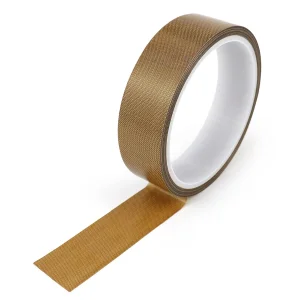
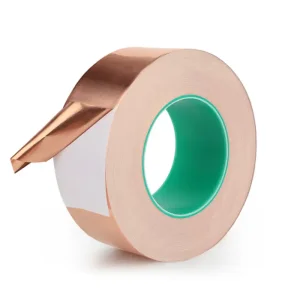
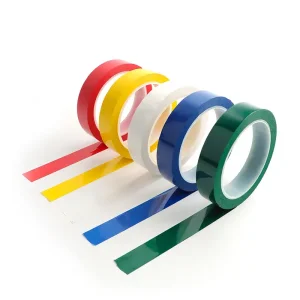
Browse our precision portfolio of PTFE fiberglass, EMI copper foil, transformer Mylar insulation, and high-viscosity structural mounting tapes engineered for global manufacturing qualification.