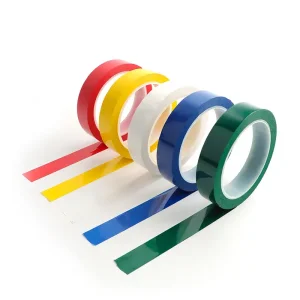
Direct manufacturer specifications: UL 94 V-0 flame retardancy, low-outgassing cross-linked silicones, and solvent-resistant die-cut substrates designed for harsh electronics and industrial shielding.
An in-depth technical analysis for global procurement teams, materials scientists, and quality assurance engineers navigating pressure-sensitive adhesive supply chains.
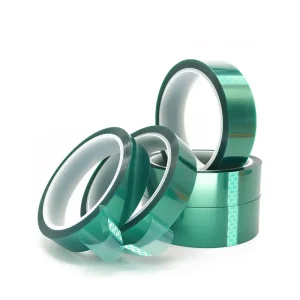
High-temperature polyimide (PI) tape, recognized globally across electronics manufacturing by industrial trade names such as Kapton® alternatives, represents the pinnacle of high-reliability masking and electrical insulation. The substrate consists of poly(4,4'-oxydiphenylene-pyromellitimide), an aromatic polymer matrix synthesized via the polycondensation of pyromellitic dianhydride (PMDA) and 4,4'-diaminodiphenyl ether (ODA). This rigid ladder-like macromolecular architecture imparts exceptional chemical inertia, outstanding ionizing radiation resistance, and thermal dimensional stability ranging from -269°C up to intermittent spikes exceeding 400°C.
The operational distinction of modern Chinese manufacturing lies in the proprietary balancing of the adhesive boundary layer. Premium China tape factories utilize synthesized polymethylsiloxane (silicone) or heat-curable crosslinked polyacrylate systems. The silicone pressure-sensitive adhesive (PSA) relies on controlled platinum-catalyzed addition or benzoyl peroxide (BPO) free-radical crosslinking. This ensures the thermodynamic surface energy of the adhesive cleanly wets low-energy surfaces (such as PCB solder masks, copper leads, and battery aluminum casings) without experiencing cohesive failure during reflow soldering tunnels at 260°C.
Chinese coating factories in the Greater Bay Area benefit from upstream polyimide master roll synthesis, in-house silicone emulsion processing, and closed-loop solvent recovery systems. By cutting multi-tier distribution margins, Tier-1 OEM suppliers deliver a 30% to 55% reduction in landed Bill-of-Materials (BOM) costs without compromising ISO 9001:2015 process repeatability.
Handling critical narrow-width slit coils (from 2mm for transformer winding to 1200mm log rolls) requires micro-optical shaft rewinders operating in dust-free Class 1,000 to Class 10,000 enclosures. Edge waviness, telescoping, and pinhole inclusions are monitored using laser scanning micrometer heads, ensuring edge tolerance within ±0.1mm.
Export-focused Chinese suppliers operate strictly within global non-toxic and low-outgassing guidelines. Every production run is independently certified by SGS or TÜV for EU RoHS 2.0, REACH SVHC, Halogen-Free (IEC 61249-2-21), and UL 510 flame retardancy classifications, securing zero friction during customs clearance and final product testing.
A rigorous side-by-side engineering comparison designed to help procurement managers evaluate polyimide vs. traditional dielectric substrates.
| Substrate Material | Base Thickness | Adhesive Formulation | Thermal Resistance (Continuous / Peak) | Dielectric Breakdown | Tensile Strength (N/25mm) | Primary Industrial Use-Case |
|---|---|---|---|---|---|---|
| Standard Polyimide (PI) | 0.025 mm (1.0 mil) | High-Performance Silicone | -40°C to +260°C / 300°C | ≥ 6.5 kV | ≥ 115 N | SMT Reflow Masking, Wave Soldering, Tab Insulation |
| Anti-Static (ESD) Polyimide | 0.025 mm (1.0 mil) | ESD Crosslinked Silicone | -40°C to +260°C / 280°C | ≥ 5.5 kV | ≥ 110 N | Static-Sensitive BGA Rework, Cleanroom Electronics Assembly |
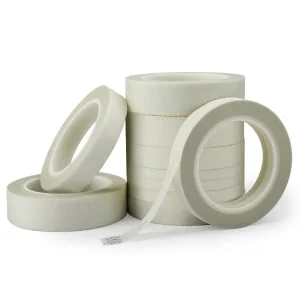
| Glass Cloth Tape (Class H) | 0.130 mm (5.1 mil) | Thermosetting Silicone | Up to +180°C / 200°C | ≥ 3.0 kV | ≥ 400 N | Traction Motor Lead Binding, Heavy-Duty Transformer Wrapping |
| Polyester (PET) Mylar Tape | 0.025 mm (1.0 mil) | Flame-Retardant Acrylic | Up to +130°C / 150°C | ≥ 5.0 kV | ≥ 85 N | Cost-Effective Class B Switch-Mode Power Transformer Coils |
| Electrolyte LIB Tape | 0.028 mm (1.1 mil) | Special Acrylic (Solvent Resistant) | Up to +130°C / 150°C | ≥ 4.5 kV | ≥ 95 N | Prismatic & Cylindrical Lithium Battery Cell Core Termination |
From advanced semiconductor packaging to electric vehicle powertrain integration, explore how specialized polyimide formulations solve acute mechanical and thermal vulnerabilities.
During automatic wave soldering and hot air solder leveling (HASL), polyimide tape protects gold contact fingers against aggressive molten solder flux alloy wash (SAC305 at 260°C). Our custom-cured silicone layer ensures clean peel with zero adhesive transfer, eliminating secondary chemical wiping cycles.
Polyimide acts as a vital dielectric insulator inside high-energy lithium-ion battery packs. Used for cell pouch boundary wrapping, tab insulation, and thermal interface sensor attachment. It provides sustained resistance against chemical corrosion from aggressive carbonate solvents and lithium hexafluorophosphate (LiPF6) electrolytes.
Aerospace avionics require light-weighting alongside uncompromising fire retardance. Our thin-film polyimide backing offers exceptional flame retardancy meeting FAA and UL 94 V-0 criteria. It prevents arc tracking in high-density aircraft wire bundles exposed to dramatic pressure and temperature swings in unpressurized avionics bays.
In advanced chip packaging and back-grinding protocols, polyimide serves as a high-tensile carrier tape. Its ultra-flat surface profile, exceptional tensile shear rating, and minimal thermal contraction prevent silicon die micro-cracking and warp during high-heat epoxy molding encapsulation phases.
Strategic technological evolutions accelerating high-performance converting and sustainable manufacturing over the next five years.
Stricter carbon emission directives and green manufacturing mandates are transforming Chinese adhesive synthesis. Factories are migrating toward high-solids and solventless thermal-curing silicone systems, achieving dramatically reduced volatile organic compound (VOC) emissions while retaining peel adhesion parity up to 260°C.
As consumer electronics, foldables, and ultra-thin laptop hinges advance toward maximum miniaturization, the demand for 0.0125mm (0.5 mil) polyimide film has tripled. Chinese extrusion specialists are pioneering ultra-uniform sub-mil casting lines that maintain high dielectric breakdown strength exceeding 4.0 kV at half the thickness.
Manual tape roll application is rapidly giving way to high-speed robotic picking and automated surface mount tape placement. Converting plants now deliver continuous rotary kiss-cut polyimide gaskets on extended release liners with pre-aligned optical fiducial registration for robotic Pick-and-Place equipment.
A procedural roadmap for international OEM supply chain directors seeking dependable procurement partnerships in China.
Verify continuous holding power tests conducted at 200°C+ under 1 kg static shear loads according to ASTM D3654 / PSTC-107 standards. Ensure the technical data sheet indicates specific adhesion to stainless steel and copper substrates.
Confirm that coating, laminating, and slitting take place in a certified Class 1,000 to Class 10,000 cleanroom. Optical contaminants or airborne particulates directly lead to pinhole dielectric breakdowns during high-voltage transformer operation.
Request ASTM E595 Total Mass Loss (TML < 1.0%) and Collected Volatile Condensable Material (CVCM < 0.1%) laboratory reports when qualifying polyimide tapes for vacuum electronics, space optics, and hermetically sealed relays.
Insist on dust-free plastic cores (rather than standard paper cores that generate shedding fibers) and vacuum shrink-wrapped PE foil barrier packaging to prevent moisture adsorption and edge oxidation during trans-oceanic shipping.
Authoritative answers addressing common engineering inquiries, test standards, and custom OEM manufacturing protocols.
Polyimide film features an aromatic heterocyclic polymer structure that remains dimensionally stable from -269°C to 260°C continuous (with peaks to 400°C), showing no softening point or glass transition state (Tg). Polyester melts near 250°C and softens above 130°C, making polyimide the essential standard for wave soldering, powder coating ovens, and Class H electrical insulation.
Residue occurs when internal cohesive strength fails or bonding between the film and adhesive breaks. Our factories apply atmospheric corona discharge surface pre-treatment or specialized silane anchoring primer coats to the polyimide base film. Combined with precise thermal post-curing ovens, this crosslinks the silicone matrix completely, ensuring 100% clean peel from copper and gold contacts.
Yes. Direct Chinese factories feature CNC rotary die-cutting, laser cutting, and precision high-speed slitting stations. We supply narrow micro-rolls down to 2.0 mm widths, or custom die-cut shapes (such as circular dots, connector masks, and multi-layer release tab gaskets) packaged in roll format for high-speed automated dispensing systems.
Each batch undergoes comprehensive testing based on ASTM D3330 / PSTC-101 (Peel Adhesion), ASTM D3759 (Tensile Strength & Elongation), ASTM D149 (Dielectric Breakdown Voltage), and ASTM D3654 (High-Temperature Holding Shear). Factory compliance documentation including RoHS, REACH, and UL 510 certification reports are provided with every master delivery lot.
Explore our complete manufacturing portfolio covering high-viscosity VHB bonding tapes, fiberglass electrical insulation, composite paper masking, and advanced Mylar transformer films.