Engineered to satisfy JIS C 2107 compliance, Class H/F electrical insulation standards, and ultra-clean surface residue-free peeling requirements.
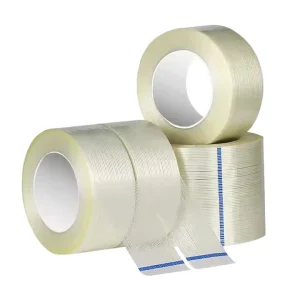
Ultra-reinforced bidirectional woven fiberglass carrier designed for heavy-duty coil bundling, magnetic core strapping, and high-tensile export packaging in Japanese logistics lines.
View Product Specs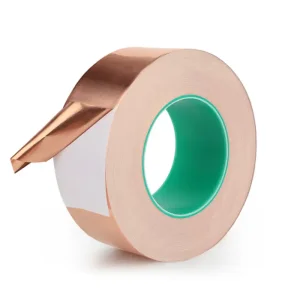
High-purity rolled/annealed copper foil coated with conductive acrylic adhesive, offering attenuation exceeding 80 dB across 10 MHz–3 GHz for Japanese sensor arrays and servo drives.
View Product Specs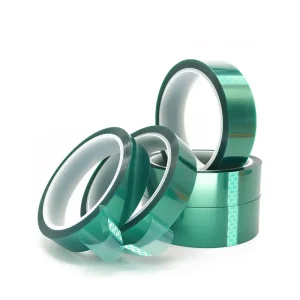
Engineered with low peel fluctuation and zero solvent seepage, specifically tailored for Japanese powder coating workshops, PCB gold-finger chemical plating, and aerospace masking.
View Product Specs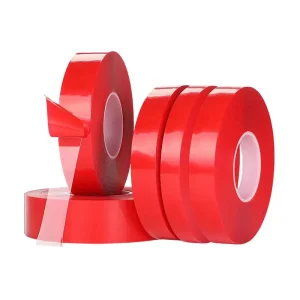
Micron-calibrated transparent polyester carrier coated with low-VOC modified acrylic adhesive, optimized for rapid laser die-cutting in Japanese digital camera and automotive OLED cockpit modules.
View Product SpecsHow the restructuring of Japanese electronics giants, the electrification of the Chubu automotive cluster, and Kyushu's semiconductor resurgence are redefining adhesive tape procurement.
For decades, Japanese manufacturing was defined by vertical keiretsu networks, wherein tier-1 automotive suppliers (Denso, Aisin, Hitachi Astemo) and consumer electronics powerhouses (Panasonic, Sony, Murata) sourced raw materials almost exclusively from domestic chemical suppliers such as Nitto Denko, Dexerials, and Sekisui Chemical. However, intense global cost pressures, combined with accelerating product lifecycle velocities in electric mobility (xEV), advanced robotics (Fanuc, Yaskawa), and semiconductor microelectronics (JASM Kyushu hub), have forced Japanese corporate procurement departments to execute dual-sourcing strategies.
Japanese procurement directors today balance the uncompromising quality principles of Kaizen and Poka-Yoke with the commercial necessity for cost reduction and supply chain resilience. The vulnerability of single-source domestic pipelines—exposed by recent natural disruptions and raw material shortages—has propelled certified Chinese ISO 9001 manufacturers with cleanroom precision coating capabilities into mainstream vendor qualification programs across Tokyo, Osaka, Nagoya, and Fukuoka.
On a global scale, the industrial pressure-sensitive adhesive (PSA) tape sector is undergoing massive technological transformation. The global structural adhesive and functional tape market is projected to exceed $85 billion USD by 2030, pushed by three unstoppable megatrends:
Full conformance with IMDS (International Material Data System) submission, PPAP Level 3 documentation, and JASO (Japanese Automotive Standards Organization) flame resistance requirements.
Equipped with computerized beta-ray thickness monitors and reverse-roll coating heads that keep coating weight deviations within ±0.5g/m² across wide jumbo rolls.
Custom precision slitting from narrow 2mm micro-rolls up to 1060mm log rolls, with high-speed rotary die-cutting capabilities for precision kiss-cut gaskets.
Combining Pearl River Delta raw chemical synthesis clusters with world-class polymer engineering to deliver exceptional reliability and rapid cycle execution.
While Japanese domestic tape producers face soaring electricity tariffs, aging labor demographics, and elongated lead times (often 8 to 16 weeks for custom slit widths), Huayuan’s production hubs in Zhuhai and Zhongshan operate in high-density industrial ecosystems. Directly connected to leading synthetic resin, silicone release agent, and monomer synthesis producers in Guangdong, Huayuan achieves rapid chemical batch blending, thermal cure adjustment, and high-speed multi-stage slitting.
For Japanese trading houses (Sogo Shosha) and Tier-1 engineering teams, this structural advantage translates into significant competitive gains:
| Evaluation Parameter | Huayuan Direct Engineering Spec | Traditional Japan Domestic Brand | Procurement Impact for Japanese Buyer |
|---|---|---|---|
| Base Film & Adhesive Purity | Optical-grade PET / DuPont Kapton grade PI + Sol-free Silicone | Proprietary Japanese polymer blend | Equivalent 1:1 Replacement |
| Dielectric Breakdown Voltage | ≥ 6.5 kV (Polyimide) / ≥ 5.0 kV (PET Mylar) | 5.5 kV – 6.5 kV | Fully Certified to JIS C 2107 |
| Thermal Endurance (Continuous) | Class H (180°C) to Class R (260°C Peak) | Class H (180°C) | Superior Margin for SMT Reflow |
| Sample Dispatch Lead Time | 24 – 48 Hours via DHL/FedEx to Japan | 2 – 3 Weeks domestic coordination | 90% Faster R&D Turnaround |
| Minimum Slit Width Tolerance | ±0.1 mm with automated circular shear slitters | ±0.1 mm – ±0.2 mm | High-Speed Automated Dispenser Ready |
| Hazardous Substances Compliance | RoHS 3.0, REACH SVHC, Halogen-Free, PFOS/PFOA Zero | RoHS / REACH Compliant | Full SGS & CTI Test Reports Included |
From the smart robotics manufacturing cells of Kansai to the automotive battery gigafactories of Chubu and Kyushu's semiconductor foundries.
Japanese automotive suppliers in Aichi and Shizuoka implement our Class H Glass Cloth Tape and High-Voltage Polyimide Films for IGBT module encapsulation and cylindrical 4680 cell tab wrapping. Resists continuous vibrations, ethylene glycol cooling fluids, and dielectric stresses up to 1,000V DC working voltage.
With the rapid expansion of wafer fabrication lines across Kumamoto and Fukuoka, our Zero-Residue Green PET Silicone Tape is extensively qualified for lead frame masking, wafer dicing holding, and chemical acid-bath gold finger electroplating, leaving zero ionic contamination on delicate gold/copper traces.
Precision six-axis robot arms manufactured in Osaka and Kyoto require tight signal isolation. Our Dual-Conductive Copper Foil Tape lines the interior housing of servo controllers and sensor feedback channels, eliminating parasitic noise and electrostatic discharge (ESD) during ultra-high-speed operations.
Tier-1 automotive electronics integrators deploy our Optically Clear PET Double-Sided Tapes to laminate front decorative bezels, capacitive touch switches, and acoustic dampeners, maintaining bubble-free visual clarity even under severe cyclic thermal shock (-40°C to +105°C).
Replacing traditional spot welding and structural rivets in Tokyo transit cabins and architectural curtain walls, our Viscoelastic VHB Acrylic Foam Tapes distribute shear stress evenly across large aluminum honeycomb panels, dampening acoustic vibration and sealing out moisture.
Specified by Japanese electrical machinery contractors, our Flame-Retardant Yellow Mylar Tape (130°C Class B) provides boundary wrapping for toroidal inductors and flyback transformers, offering UL94 V-0 flame extinction within 5 seconds without toxic halogen smoke generation.
Anticipating the technological transitions that will dominate high-reliability manufacturing throughout the next decade.
While silicone adhesives deliver superb high-temperature resistance up to 260°C, low-molecular-weight siloxane outgassing poses severe risks of micro-switch contact failure and optical lens clouding in precision Japanese optics. Huayuan is at the forefront of synthesizing high-cohesion, cross-linked thermosetting acrylic and hybrid polyacrylate adhesive systems capable of enduring 200°C for 60 minutes with absolute zero siloxane migration, solving a major quality headache for automotive LiDAR and optical camera module engineers.
Japan's Ministry of Economy, Trade and Industry (METI) and European environmental regulations are tightening the limits on VOC emissions in vehicle passenger compartments. Traditional solvent-borne adhesives are rapidly being supplanted by 100% solvent-free hot-melt extrusion and UV-curable acrylic chemistry. Huayuan’s cleanroom lines utilize specialized UV photo-initiator curing systems that emit negligible formaldehyde, benzene, and toluene, meeting the stringent interior air quality standards of Japanese automotive OEMs.
With high-frequency 5G/6G RF circuits operating at millimeter-wave spectra, device assemblies suffer from concurrent thermal runaway and electromagnetic noise. Next-generation adhesive systems pioneered by Huayuan combine copper foil or carbon nanotube conductive matrices with thermally conductive ceramic micro-fillers (boron nitride and aluminum oxide), providing transverse thermal conductivity > 1.5 W/m·K and EMI shielding effectiveness > 70 dB in a single, ultra-thin 0.05 mm package.
Every shipment destined for Japanese ports adheres to full traceability, statistical process control, and comprehensive laboratory documentation.
Full testing on 180° peel strength, holding power (creep under shear at elevated temperatures), dielectric breakdown voltage, and electrolytic corrosion factors according to Japanese Industrial Standards.
Annual third-party SGS/CTI testing covering 10 RoHS substances, PFOS/PFOA compliance, Halogen-Free certification (Cl < 900ppm, Br < 900ppm, Total Halogens < 1500ppm), and full chemSHERPA v2 XML data exchange.
Barcoded master rolls recorded with coating temperature curves, adhesive viscosity logs, and tension metrics. Retention samples stored in climate-controlled archives for 24 months post-dispatch.
Share your required tape width, substrate material, operating temperature, and application drawings. Our technical sales engineers provide matched samples with full TDS & SDS within 24 hours.
Complete precision coverage for transformer rewinding, structural mounting, PCB wave-soldering, and ultra-durable industrial joining.
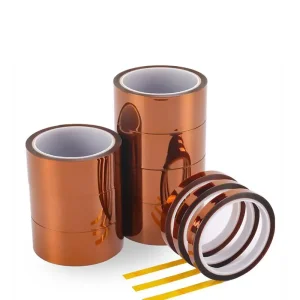
Ultra-thin polyimide film coated with crosslinked silicone adhesive for SMT wave-solder gold finger masking, semiconductor packaging, and high-voltage lithium battery tab insulation.
View Product Specs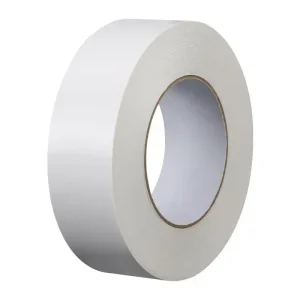
High-tack non-woven tissue carrier coated with solvent-based acrylic or synthetic rubber, engineered for foam lamination, leather bonding, and automotive interior door card assembly.
View Product Specs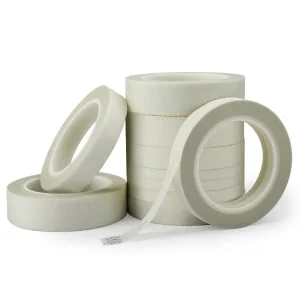
Woven insulating glass cloth backing coated with thermosetting silicone adhesive, delivering superior mechanical abrasion defense and thermal endurance for Japanese electric motors and transformers.
View Product Specs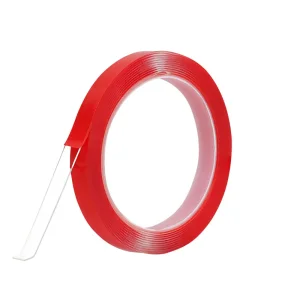
Closed-cell acrylic foam tape engineered to withstand high wind loads, differential thermal expansion, and mechanical vibration, replacing screws and rivets in automotive trims and architectural facades.
View Product Specs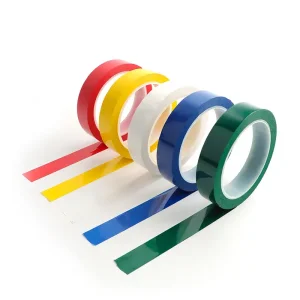
Flame-retardant PET film carrier coated with pressure-sensitive acrylic adhesive, offering high dielectric withstand voltage, solvent immersion resistance, and optimal insulation in power supplies.
View Product Specs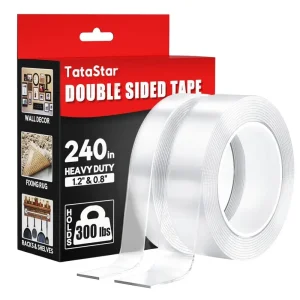
Ultra-elastic, high-adhesion PU/acrylic nano-gel formulation providing residue-free removal, water washability, and powerful instantaneous bonding for cleanroom fixtures and commercial hardware.
View Product Specs
Precision-manufactured with self-extinguishing flame-retardant chemistry, specifically qualified for Japanese telecommunication relays, high-frequency flyback coils, and industrial power transformers.
View Product Specs
Direct alternative to 3M 69 featuring exceptional tensile strength, zero edge fraying, and non-corrosive silicone adhesive, suited for high-amperage Shinkansen electrical cabling and induction furnaces.
View Product SpecsDetailed engineering, regulatory, and logistics answers for Japanese procurement executives and global supply chain directors.
Our state-of-the-art testing laboratories in Zhuhai and Zhongshan are calibrated specifically to Japanese Industrial Standards (JIS). Every production lot can be accompanied by an official Inspection Certificate (Kensa Seisekisho) documenting 180° peel adhesion to stainless steel, tensile strength, elongation at break, holding power under elevated thermal loads, and breakdown voltage. Comparative test reports against equivalent domestic Japanese grades are provided upon request.
Yes. We operate imported computerized circular-knife and razor-blade slitting equipment in dust-controlled cleanrooms. We slit rolls to custom tolerances as narrow as 2.0 mm up to 1060 mm, with width deviations strictly held within ±0.1 mm. Furthermore, we provide clean plastic core inserts (1-inch, 1.5-inch, and 3-inch) to ensure zero cardboard dust contamination during automated cleanroom tape dispensing.
Because our production hubs in Zhuhai and Zhongshan are adjacent to Hong Kong, Shenzhen, and Nansha ports, sea freight maritime transit times to Tokyo, Yokohama, Nagoya, and Osaka-Kobe typically require only 3 to 5 days. For urgent engineering trials or critical line shortages, express air freight (via DHL, FedEx, or SF Express International) delivers directly to customer receiving docks across Japan within 48 to 72 hours.
We synthesize cross-linked, high-molecular-weight acrylic adhesives and specialized addition-cure silicone resins that minimize volatile monomer residues. For semiconductor dicing and high-temperature masking, our tapes undergo thorough thermal curing in high-efficiency drying tunnels, achieving residue-free peeling from polished copper, polyimide, aluminum, and glass surfaces even after exposure to 200°C–260°C reflow profiles.
Yes. We routinely supply chemSHERPA-AI (articles) and chemSHERPA-CI (chemicals) data sheets for Japanese automotive and electronics supply chains. Full test certificates for RoHS 3.0 (10 substances), REACH SVHC candidate list substances, Halogen-Free analysis, and non-conflict mineral declarations (CMRT) are renewed annually through certified third-party testing partners like SGS and CTI.
We follow a structured 4-step APQP/PPAP-aligned qualification route: (1) Technical discovery where your engineers provide application parameters and target benchmark TDS; (2) Immediate free sample dispatch of matched grade standard slit widths; (3) Customer trial evaluation and collaborative formula adjustment if fine-tuning of tack or unwind tension is needed; (4) Pilot batch trial accompanied by complete Initial Sample Inspection Reports (ISIR) and batch traceability records.
Connect with our English- and Japanese-speaking application engineering division to request custom rolls, technical data sheets, or a comprehensive factory audit consultation.