Direct from our certified dust-free workshops in Zhuhai and Zhongshan: custom coated, precision slit, and engineered for high-temperature masking, structural lamination, and heavy-duty industrial bonding.
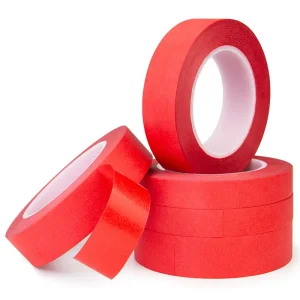
Crepe paper carrier with premium heat-resistant adhesive for precise paint lines without adhesive residue.
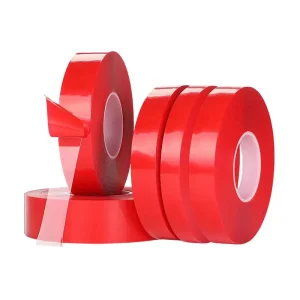
Ultra-thin polyester core coated with solvent acrylic for high shear strength in LCD displays and mobile devices.
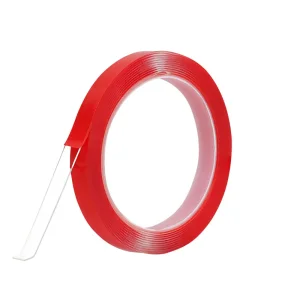
Viscoelastic core distributing mechanical stress for exterior architectural panels and automotive body components.
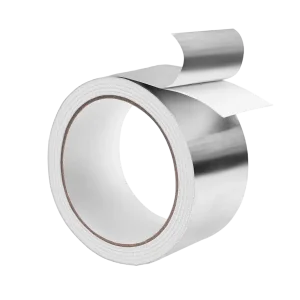
Dead-soft aluminum backing for thermal dissipation, moisture sealing, and robust electromagnetic interference attenuation.
Resistant to UV degradation, thermal cycling, and solvent exposure in outdoor architectural cladding and signs.
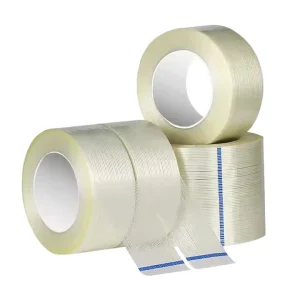
Cross-weave filament reinforcement engineered for heavy-duty bundling, pipe-wrapping, and pallet stabilization.
Replaces rivets and liquid adhesives on bare metals, powder-coated finishes, and engineered composite substrates.
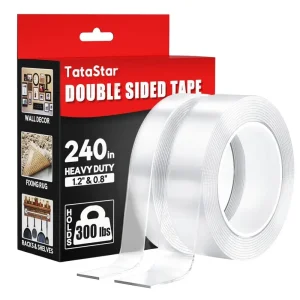
Carrier-free PU/silicone gel adhesive offering residue-free clean peeling, high elastic memory, and reusability.
In modern industrial assembly and automated converting lines, hot melt double-sided tissue adhesive tapes have evolved into one of the most high-throughput, economically optimized, and ecologically sound pressure-sensitive adhesive (PSA) solutions globally.
Hot melt pressure-sensitive adhesives rely on 100% solids formulations based on styrene-isoprene-styrene (SIS) or styrene-butadiene-styrene (SBS) block copolymers. When cross-compounded with hydrogenated hydrocarbon resins and specialized plasticizers, the adhesive demonstrates immediate molecular flow and rapid mechanical interlock upon contact with porous and non-porous substrates.
Unlike carrier-free transfer adhesives or elastic film cores, tissue tape uses a lightweight 12 to 18 gsm porous non-woven mulberry or synthetic wood pulp tissue. The open fibrous mesh permits deep, bi-directional adhesive penetration during hot-melt slot-die coating, delivering exceptional dimensional stability and clean hand-tearability.
Solvent-based adhesive coaters face surging VOC abatement, thermal oxidation, and carbon taxation costs. In contrast, 100% solid hot melt coating lines eliminate hydrocarbon solvents, dry ovens, and volatile hazardous chemicals. The resulting double-sided tissue tapes lower operational carbon footprints by up to 42%.
Choosing the optimal double-sided tissue tape formulation requires balancing initial tack, shear holding power, environmental resistance, and converting speeds. Examine how hot-melt synthetic rubber compares with water-based and solvent acrylics.
| Evaluation Parameter | Hot Melt Double Sided Tissue (SIS/SBS) | Water-Based Acrylic Tissue Tape | Solvent Acrylic Double Sided Tissue | Solvent Rubber Tissue Tape |
|---|---|---|---|---|
| Primary Polymer System | Synthetic block copolymer (100% Solid) | Aqueous polyacrylate emulsion | Polyacrylate in organic solvent | Natural / synthetic rubber in heptane |
| Initial Tack (Ball Tack #) | ≥ 14 - 20 (Superior) | ≥ 8 - 12 (Moderate) | ≥ 10 - 14 (Good) | ≥ 16 - 22 (High) |
| 180° Peel Adhesion (N/25mm) | 16 - 24 N (Rapid wet-out) | 12 - 18 N (Builds over 24h) | 15 - 22 N (Crosslinked network) | 18 - 26 N (Aggressive grab) |
| Service Temp Range (°C) | -10°C to +70°C (Short peak: 85°C) | -20°C to +100°C | -40°C to +150°C (Extended) | -15°C to +80°C |
| Substrate Versatility (LSE) | Outstanding (PP, PE, Foams) | Low on raw untreated olefins | Moderate to High (Specialized) | High on untreated surfaces |
| Aging & UV Stability | Moderate (Antioxidants required) | High (Non-yellowing) | Superior (Outdoor durable) | Moderate to Poor |
| Unit Cost / Economic Efficiency | Most Cost-Effective | Economic (Slow dry cycle) | Premium (VOC recovery fees) | Mid-to-High |
Zhuhai Huayuan Electronics Co., Ltd. operates dual manufacturing bases in Guangdong with over 30 coating and finishing machines, delivering custom master rolls, precision slit coils, and spool-wound long rolls directly to global distributors and OEM converters.
Our computerized slot-die extrusion coating heads apply molten hot melt adhesive at temperatures from 145°C to 175°C with micro-metric cross-web grammage uniformity (±1.0 gsm). Real-time beta-gauge sensor arrays continuously scan web thickness to eliminate dry patches, voids, or edge-bead buildup across master rolls up to 1260mm wide.
Release liner performance dictates whether an automated high-speed applicator functions smoothly or jams. Huayuan provides tailor-made liner pairings, including 65gsm–120gsm yellow/white supercalendered glassine paper, poly-coated kraft (PCK) papers for humidity stability, and solventless silicone-coated PET films for optical precision and ultra-low die-cut dust.
To eliminate costly splicing downtime on continuous automated extrusion lines and envelope fabrication systems, our plant specializes in traverse spool winding (bobbin rolls) holding continuous single-strand lengths up to 5,000 meters. Slitting tolerances are held strictly within ±0.2mm on imported CNC razor and shear slitting machinery.
From high-volume commercial printing plants in North America to precision electronics contract manufacturers in Southeast Asia, discover how engineering teams deploy hot melt tissue adhesives.
Interior automotive tier suppliers require fast lamination of open-cell polyurethane sound-deadening foams, microcellular felt, and synthetic leather covers. Hot melt tissue tape instantly anchors onto low-surface-energy backings without migrating through permeable foam pores or stiffening the hand-feel.
In high-speed paper manufacturing and rotogravure publishing, web changes happen at full line velocity. Hot-melt tissue tapes deliver the aggressive initial wet-out required for zero-speed and flying web splices, preventing mill-stopping web breaks and waste.
E-commerce unboxing, luxury cosmetic rigid boxes, and heavy-duty corrugated mailers demand fast sealing flaps that resist tension pop-open. Hot melt tissue provides immediate fiber-tear adhesion on varnished, UV-lacquered, and laminated paperboards.
Huayuan Electronics operates an ISO 9001:2015 quality management system verified on-site by SGS. Every master roll of hot melt double-sided tissue adhesive undergoes a complete mechanical and environmental qualification battery before international dispatch.
Our in-house analytical lab validates every production batch against internationally accepted test standards, issuing detailed Certificates of Analysis (COA) with shipment documents:
Our raw material chemistry adheres strictly to the target market environmental laws of North America, the European Union, Japan, and the United Kingdom:
Exporting from the Pearl River Delta industrial hub (Zhuhai/Zhongshan) adjacent to Hong Kong and Shenzhen deepwater ports provides our global partners with streamlined freight routes and supply security:
As sustainability directives tighten globally and robotic end-effectors increase assembly speeds, Huayuan's adhesive chemistry laboratory focuses on three next-generation technological vectors.
Transitioning from petrochemical hydrocarbon tackifiers to 60%+ bio-based hydrogenated rosin esters derived from pine pulp byproducts, reducing cradle-to-gate carbon intensity while increasing low-temperature flexibility down to -25°C.
Introducing 100% solid, solvent-free acrylic hot melt polymers crosslinked by in-line UV-C radiation units post slot-die extrusion. This creates high-temperature holding power up to 140°C while preserving the eco-friendly and cost advantages of hot melt coating.
Co-developing micro-fibrillated cellulose (MFC) tissue substrates that completely disintegrate in standard hydropulper paper recycling loops under PTS and ATICELCA criteria, enabling single-stream recyclable packaging structures.
In-depth responses covering shear strength, adhesive bleeding, storage stability, and custom OEM die-cutting conversions.
Hot-melt tissue tape offers significantly higher initial tack, faster bond establishment on low-surface-energy (LSE) materials like PP/PE, and a more economical cost profile with zero solvent emissions. However, solvent-acrylic tissue tape exhibits higher long-term resistance to direct UV exposure, chemical plasticizers, and high operating temperatures (>100°C). For indoor assembly, packaging, paper splicing, and general foam lamination, hot-melt tissue provides optimal cost-to-performance efficiency.
Because hot-melt adhesives rely on thermoplastic synthetic rubber networks, storage at 15°C to 25°C (59°F to 77°F) with a relative humidity between 40% and 60% is recommended. Rolls should remain in their original polyethylene moisture-barrier wrap away from direct sunlight and heat sources. When stored properly, our hot-melt tissue tapes retain full tack and peel characteristics for at least 18 months from the date of manufacture.
Yes. For manual packaging operations, envelope sealing, and fast hand-assembly lines, we engineer finger-lift (flush-edge) liners where the release paper width exceeds the adhesive-coated tissue width by 3mm to 6mm. This creates a non-sticky overhang edge that peel operators can instantly grab without knives or tweezers.
Our non-woven tissue carrier functions as an internal structural skeleton that arrests lateral adhesive flow under die-cutting compression. Furthermore, we optimize the resin glass-transition temperature (Tg) and molecular weight distribution to maintain clean die shearing without stringing or adhesive gumming on cutting tools, even at speeds above 150 strokes/minute.
Our standard master jumbo rolls are coated at usable widths of 1020mm, 1040mm, and 1240mm with continuous lengths of 1000m, 1500m, and 2000m. For slitting converters, we supply log rolls (e.g., 50m to 100m) or precision slit coils as narrow as 3mm packaged in shrink-wrapped master cartons with multi-layer wooden pallet stacking.
Explore our specialized electrical insulation, electromagnetic shielding, and high-tack tissue adhesive tapes, manufactured under ISO 9001 quality controls for automotive, transformer, and electronic sub-assemblies.
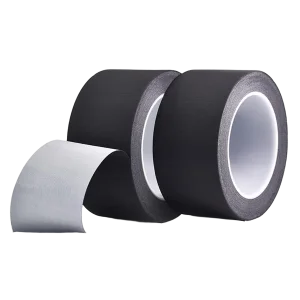
Flexible woven acetate fabric with high varnish absorption for electric motors, coil wrapping, and harness bundling.
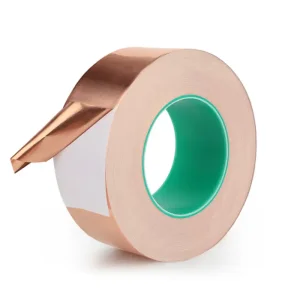
Pure electrolytic copper backing with conductive acrylic adhesive for PCB grounding, shielding, and craft protection.
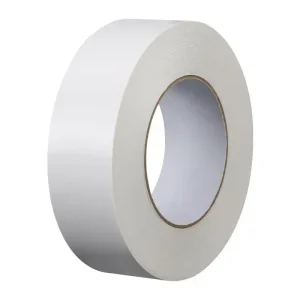
High-tack tissue tape manufactured with hot-melt, water-based, or solvent oily adhesives for diverse bonding substrates.
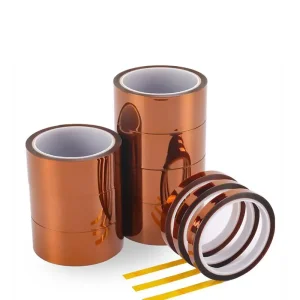
Kapton-equivalent amber polyimide film with silicone adhesive, designed for wave solder masking and battery tab insulation.
Continuous glass fiber filaments provide high tensile resistance to snapping during steel coil bundling and heavy carton closure.
Solid closed-cell acrylic foam construction with viscoelastic shock absorption, sealing moisture and vibration dynamically.
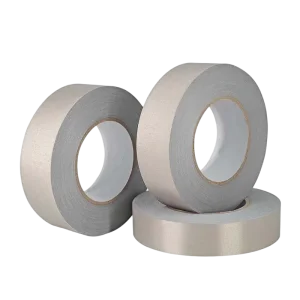
Nickel-copper metallized polyester woven fabric delivering flexible EMI attenuation and grounding in automotive wire harnesses.
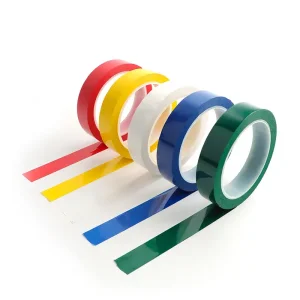
Flame-retardant PET backing with cross-linked acrylic adhesive for interlayer transformer insulation up to 130°C.