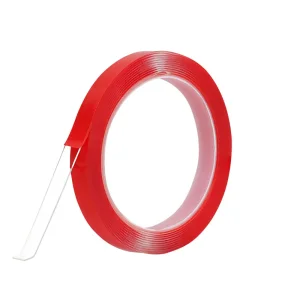
Direct manufacturer supply for demanding industrial insulation, high tack lamination, and severe operational bonding.
Mechanical fasteners, rivets, welds, and liquid polyurethane adhesives are rapidly being engineered out of cutting-edge manufacturing lines in favor of viscoelastic acrylic foam bonding systems.
Very High Bond (VHB) tapes do not rely on standard pressure-sensitive coatings. They are formulated from 100% closed-cell acrylic foam matrixes where the adhesive and core form a continuous, homogeneous viscoelastic polymer body that absorbs high dynamic stress and distributes shear evenly across entire substrates.
In electronic enclosures, curtain walls, and automotive EV battery trays, differential thermal expansion between dissimilar metals (e.g., aluminum to stainless steel or glass) causes mechanical fasteners to loosen and stress crack. Acrylic foam relaxes internal stresses while maintaining a permanent structural bond.
Unlike liquid adhesives that suffer from voiding, run-off, or shrinkage during curing, high bond acrylic tapes create an immediate, hermetic seal against salt mist, solvent exposure, moisture ingression, UV aging, and vibration fatigue, fulfilling stringent IP67/IP68 industrial containment ratings.
How top-tier original equipment manufacturers (OEMs) and tier-1 converters are optimizing procurement economics without compromising mechanical yield.
Over-reliance on single Western conglomerate brands has introduced severe lead-time bottlenecks, allocation quotas, and inflated unit pricing. Establishing qualified Chinese industrial tape manufacturing partners enables Tier-1 enterprises to fortify supply chain resilience with direct factory formulations that mirror or outperform legacy western standards.
By shifting to direct-from-source manufacturers equipped with cleanroom extrusion, precision solvent coating, and high-speed automated log slitting in Guangdong, global engineering firms reduce material acquisition expenditures by 25% to 45% while preserving critical shear strength and chemical resistance specifications.
Global assembly lines rarely utilize generic master rolls. Advanced precision slitters and rotary die-cutting cleanrooms allow China very high bond suppliers to deliver custom kiss-cut pads, engineered pull tabs, and complex geometric gaskets directly integrated into automated surface mount or robot pick-and-place lines.
From high-temperature electronics packaging to structural exterior façades, explore how viscoelastic foam chemistry performs across high-stress environments.
Permanent attachment of battery cooling plates, module exterior dampening, side molding trim, and lightweight composite roof panels, absorbing road vibrations and preventing galvanic corrosion between aluminum and steel frames.
Used extensively in commercial architectural cladding, exterior aluminum composite panels (ACP), and structural glass stiffeners where wind-load shear stress resistance and continuous weatherproofing against heavy rain are compulsory.
Ultra-thin viscoelastic acrylic foam tapes anchor touch displays, lens bezels, camera modules, and internal structural brackets in smartphones, ruggedized tablets, and wearables, delivering certified IP68 water sealing and shock drop dissipation.
Eliminates unsightly rivets and screw heads on commercial LED totem displays, architectural signage, and appliance fascia plates (refrigerators, induction cooktops), providing smooth, unblemished surface aesthetics that resist thermal cycling.
High bond tapes engineered to meet the strictest international quality registries and hazardous material restrictions.
Every industrial production run is backed by comprehensive Technical Data Sheets (TDS), Safety Data Sheets (SDS/MSDS), Certificate of Analysis (COA), and third-party laboratory verification for European Union RoHS Directive 2011/65/EU and REACH (SVHC) chemical safety compliance.
Our on-site QA cleanroom laboratories strictly benchmark adhesion metrics using ASTM D3330 (Peel Adhesion for Pressure-Sensitive Tape), ASTM D3654 (Shear Adhesion / Holding Power), ASTM D897 (Tensile Cleavage Strength), and FINAT test methods to verify lot-to-lot consistency before global export dispatch.
We provide localized engineering support covering critical substrate surface energies. From recommending low-surface-energy (LSE) adhesion promoters and primers for polyolefin plastics to plasma pre-treatment consulting for anodized metals, we help converters optimize bond line integration.
Anticipating the technological requirements of electrification, sustainability, and ultra-high-density circuitry.
Development is pivoting toward hot-melt UV cross-linkable acrylic formulations and bio-based resin systems that drastically eliminate volatile organic compounds (VOCs) during factory line application, supporting corporate Scope 3 decarbonization commitments without lowering glass transition temperatures (Tg).
Next-generation high bond tapes integrate ceramic boron nitride or aluminum oxide micro-fillers directly into the acrylic foam matrix. This creates specialized structural tapes offering simultaneous bonding, electrical dielectric isolation (>5 kV breakdown), and high thermal conductivities (up to 2.5 W/m·K) for EV power modules.
Driven by strict Right-to-Repair legislation and circular economy mandates in consumer hardware, our engineers are actively validating thermally and electrically triggered debond-on-demand high bond polymers that preserve structural adhesion through normal service life but cleanly release on specified stimuli.
Authoritative guidance for chemical engineers, sourcing specialists, and process automation leads.
Conventional PE (polyethylene) or EVA (ethylene-vinyl acetate) foam tapes feature an open or semi-closed cellular core coated on both sides with a separate layer of acrylic or rubber adhesive. Under sustained dynamic shear or peel loads, PE/EVA cores suffer internal cellular splitting (cohesive core failure). In contrast, true Very High Bond tape is composed of a 100% solid, closed-cell, viscoelastic acrylic polymer matrix where the adhesive is integrated throughout the core. It dissipates mechanical stress via viscoelastic relaxation, resists water migration, and exhibits extreme resistance to plasticizers, chemical solvents, and high UV radiation.
To ensure 100% wet-out and prevent bond degradation, surfaces must be thoroughly cleaned using a 50:50 Isopropyl Alcohol (IPA) and water mixture using lint-free wipers to remove oils, dust, and oxidation. For high-energy surfaces (bare aluminum, stainless steel, glass), standard cleaning is sufficient. For Low Surface Energy (LSE) materials such as polypropylene, polyethylene, santoprene, or powder-coated paints, a dedicated adhesion promoter (silane primer for glass or polyolefin primer for plastics) must be wiped on before tape lamination. Furthermore, pressure must be applied (typically a minimum of 15 psi via roller or pneumatic clamp) to initiate polymer contact.
Because acrylic polymers are viscoelastic liquids that flow slowly into the microscopic peaks and valleys of substrates, bond strength builds gradually over time at room temperature (21°C/70°F). Immediately after application under roller pressure, the tape achieves approximately 50% of its ultimate bond strength. At 20 minutes, it reaches ~60%; at 24 hours, ~90%; and at 72 hours, it reaches 100% full structural cross-linked adhesive cure. Applying moderate heat (e.g., exposing the assembled parts to 65°C for 1 hour) accelerates flow, achieving 100% bond strength within a fraction of the time.
Yes. Tier-1 China very high bond suppliers operate in-house slitting and converting divisions equipped with high-speed rotary die-cutters, CCD visual inspection systems, and cleanroom packaging facilities. Tapes can be customized in caliper thickness (standard ranges from 0.25mm, 0.4mm, 0.64mm, 0.8mm, 1.1mm, to 3.0mm), delivered with clear filmic PET, siliconized paper, or heavy-duty PE film release liners, and fabricated into precise geometric kiss-cut parts on roll spools or individual die-cut sheets.
Cross-specification begins with matching the adhesive family, core density, and carrier color. For example, replacing a modified acrylic system (3M 5952 family for powder paints) requires an acrylic foam tape formulated for medium-to-low surface energy adhesion. Replacing general-purpose multi-purpose acrylic (3M 4941) requires high conformability gray acrylic foam. Equivalence is validated through side-by-side empirical testing: 90° and 180° peel adhesion (ASTM D3330), static shear holding power at room temperature and 70°C (ASTM D3654), dynamic tensile strength (ASTM D897), and accelerated heat-humidity cycling (85°C / 85% RH for 500 hours).
Explore our complete manufacturing spectrum for high-viscosity structural mounting, electronics isolation, and industrial packaging.