Explore high-temperature electrical insulation, thermal masking, and conductive shielding solutions fabricated in ISO 9001 certified cleanroom environments.
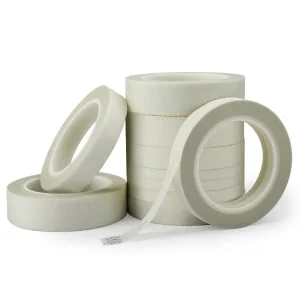
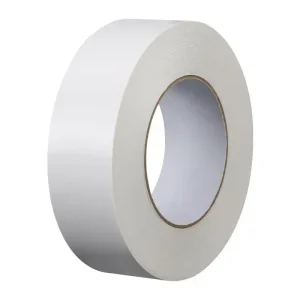
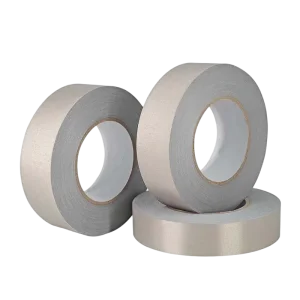
A comprehensive technical analysis of how Polytetrafluoroethylene backing layers interact with specialized silicone and acrylic adhesive chemistries under extreme thermal stress.
Teflon tape derives its extraordinary chemical inertness and thermal threshold from the carbon-fluorine (C-F) covalent bond, one of the strongest bonds in organic chemistry. With a bond dissociation energy of ~485 kJ/mol, the fluorocarbon shell encases the carbon backbone, resisting free radical oxidation, acidic and basic attacks, and molecular degeneration up to 260°C continuously, with transient peaks up to 300°C.
The non-polar nature of symmetrical fluoropolymer chains produces a remarkably low dielectric constant (~2.1 across frequencies from 60 Hz to 3 GHz) and an ultra-low dissipation factor (<0.0002). This enables virgin and skived Teflon films to achieve dielectric breakdown ratings exceeding 8,000 to 12,000 Volts per mil, making them irreplaceable for primary phase wrap in aerospace wire looms, RF matching networks, and inverter busbars.
With an exceptionally low surface energy (~18 mN/m), PTFE exhibits minimal molecular adhesion toward external polymers, molten plastics, and organic compounds. Combined with a static and kinetic coefficient of friction lower than 0.05, Teflon tapes provide superior release properties and non-stick performance on packaging sealing jaws, thermoforming molds, and mechanical sliding guides.
Why leading multinational OEMs transition mission-critical tape procurement to modern, integrated Chinese manufacturing ecosystems.
China hosts complete upstream raw material synthesis networks—from fluorite ore mining and tetrafluoroethylene (TFE) polymerization to specialized dispersion compounding and high-modulus skiving. Chinese tape manufacturers eliminate multi-tier supply friction, guaranteeing stable batch resin quality and direct cost-performance improvements for global distributors.
Modern Chinese tape facilities utilize Class 10,000 and Class 1,000 enclosed cleanrooms equipped with computer-monitored micro-gravure and comma doctor blade coating heads. These lines guarantee adhesive dry-weight variations below ±0.5 g/m² across master web widths of up to 1,300 mm, preventing thickness deltas that cause tension unevenness during high-speed unwind.
Because virgin PTFE is inherently non-stick, bonding an adhesive requires molecular surface preparation. Chinese factories utilize controlled continuous sodium-naphthalene or ammonia-sodium chemical etching systems to strip fluorine atoms from the reverse surface, introducing oxygen- and nitrogen-containing polar groups that achieve permanent anchoring with high-temp cross-linked silicone adhesives.
| Performance Characteristic | Pure Skived PTFE Tape | PTFE Glass Cloth Coated Tape | Polyimide (Kapton Equivalent) Tape | PET Mylar Tape (Class B) |
|---|---|---|---|---|
| Operating Temp Range | -70°C to +260°C | -70°C to +260°C | -50°C to +260°C (300°C peak) | -20°C to +130°C |
| Tensile Strength (N/25mm) | 45 - 80 (Elongation up to 200%) | 350 - 650 (High dimensional stability) | 110 - 150 (Rigid film) | 80 - 120 (Standard film) |
| Dielectric Strength (kV) | > 9.5 kV | > 5.0 kV | > 6.5 kV | > 4.5 kV |
| Adhesive System | Cross-linked Silicone | Cross-linked Silicone | Thermosetting Silicone | Flame-Retardant Acrylic |
| Residue Upon Stripping | Zero silicone transfer | Zero residue at rated temp | Residue-free after reflow | Minimal adhesive ghosting |
| Primary Application Area | Wire wrap, low friction chutes | Heat sealers, vacuum packaging | PCB solder wave, EV battery tabs | Transformer interlayer wrap |
From automated packaging to aerospace avionics, discover where high temperature Teflon and specialty films prevent downtime and electrical failure.
PTFE fiberglass tape is applied directly across heat-sealing bars, L-bar sealers, and form-fill-seal machines. It withstands continuous impulse cycles at 180°C–230°C, preventing molten polyethylene, polypropylene, and laminate film resins from building up on metal sealer jaws.
Skived PTFE and polyimide tapes mask critical connector fingers and components during lead-free solder wave and reflow soldering operations. They prevent flux bleed, resist corrosive chemical atmospheres, and peel cleanly without adhesive transfer or static build-up.
Electric vehicle traction motors and fast-charging battery packs operate at elevated thermal and electrical stress levels. High-temp tapes act as high-breakdown interlayer barriers between copper busbars and cooling cold plates, stopping dielectric arcing under high vibration.
Skived PTFE tapes provide lightweight, abrasion-resistant wrapping for wiring harnesses routed through engine cowlings and wings. In autoclave composite molding, high-temp non-silicone and fluoropolymer release tapes ensure smooth part separation without resin fouling.
Analyzing key structural shifts reshaping high-performance pressure-sensitive tape engineering over the next decade.
Traditional PTFE acts as an effective thermal insulator (~0.25 W/m·K). With increasing power densities in high-power electronics and solid-state transformers, Chinese labs are compounding PTFE backings with micro-dispersed boron nitride (BN) and aluminum oxide (Al₂O₃) ceramic platelets, achieving thermal conductivity ratings above 1.2 W/m·K while maintaining high dielectric breakdown.
Standard PTFE readily generates static charges exceeding 5,000 Volts upon high-speed unwinding due to triboelectric friction. Advanced formulations incorporate conductive carbon black or ionic matrices directly into the etched layer or backing. This controls surface resistivity within the dissipative window (10⁶ to 10⁹ Ω/sq), eliminating ESD risks around sensitive MOSFET and IGBT gates.
Global environmental mandates (including EU REACH Annex XVII and California Prop 65) are driving adoption of 100% solids silicone cross-linking chemistry and water-based acrylic systems. Chinese coaters are upgrading curing ovens to dynamic electron-beam (EB) and UV radiation lines that eliminate hazardous organic solvent emissions during adhesive application.
Explore high-viscosity structural mounting tapes, thermal interface materials, and precision electronic grade tapes.
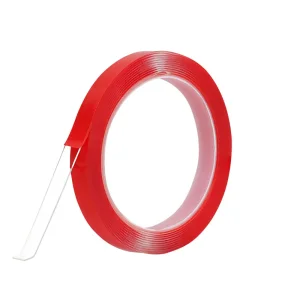
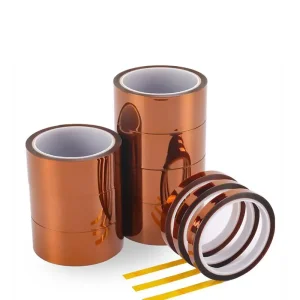
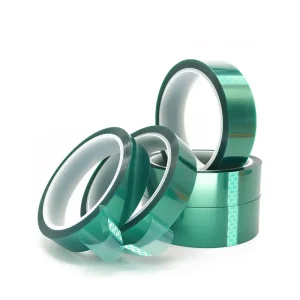
Essential checklist criteria when auditing Chinese pressure-sensitive tape manufacturers for Tier-1 supply chains.
Examine slitting quality on log rolls and slit tapes. Poor edge slitting causes micro-nicks in PTFE backings, leading to web breakage under tension on automated taping machines. Top-tier manufacturers utilize computerized razor and rotary shear slitters, maintaining width tolerances within ±0.1 mm with smooth, burr-free roll edges.
Demand accelerated thermal aging data (168 hours at 200°C). Substandard silicone adhesives undergo cross-link failure, leaving gummy siloxane residue on protected substrates. Certified suppliers verify release stability with post-peel adhesion tests on mirror-finish stainless steel plates per PSTC-101 and ASTM D3330 protocols.
Validate that the plant maintains active ISO 9001 quality management systems and third-party laboratory certifications (UL 510 flame retardance, SGS heavy metal assays, halogen-free reports per IEC 61249-2-21). Batch-level barcode traceability from raw liquid resin blending to individual pallet master cartons is mandatory for industrial compliance.
Expert answers addressing the core mechanical, chemical, and logistics questions faced by procurement managers.
Pure skived PTFE tape is sliced directly from a solid molded fluoropolymer cylinder, offering extreme conformability, high elongation (up to 200%), and smooth sliding properties over curved contours. PTFE-coated glass cloth tape incorporates a woven fiberglass textile core that eliminates stretch, providing high tensile strength and puncture resistance ideal for high-pressure heat-sealing jaws.
Standard acrylic adhesives begin thermal oxidation and depolymerization between 130°C and 150°C, causing them to char, smoke, and leave heavy resin residues. Silicone pressure-sensitive adhesives are synthesized from alternating silicon-oxygen (Si-O) backings, which withstand prolonged exposure up to 260°C without losing viscoelastic cohesion or releasing from substrates.
Edge lifting typically stems from surface contamination or selecting a backing with excessive tensile modulus. Substrates must be degreased with isopropyl alcohol (IPA). For tight radiused surfaces, specify pure skived film rather than fiberglass tape, and apply firm, uniform roll pressure to initiate wetting of the viscoelastic silicone adhesive.
Yes. Leading Chinese adhesive tape factories maintain comprehensive die-cutting facilities equipped with optical CCD rotary die-cutters, flatbed presses, and cleanroom slitting equipment. Custom geometric shapes, split-liners, pull-tabs, roll length slit dimensions, and private-label master cartons can be engineered to exact customer drawings.
Standard export compliance documentation includes the Certificate of Analysis (COA) per production lot, technical data sheets (TDS), safety data sheets (SDS) formatted under GHS standards, and annual third-party testing reports confirming SGS, RoHS, REACH, and UL 510 certification compliance.
Silicone adhesive coated tapes feature excellent resistance to humidity and moisture degradation during maritime container shipping. For optimal performance, store rolls in original protective polyethylene bags between 15°C and 25°C at 50% relative humidity, out of direct sunlight, with an expected shelf-life exceeding 12 to 24 months from coat date.