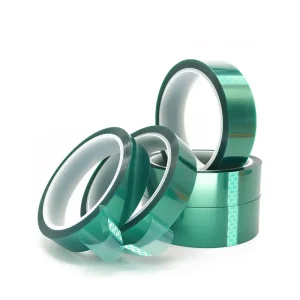
Wholesale High-Quality Green Polyester Heat Silicone Tape - China Suppliers & Factory for High Temperature Resistance Factories, Factory
Technical Data & Quote
Engineered for high dielectric insulation, viscoelastic shear damping, and persistent thermal management across strict industrial test benchmarks.
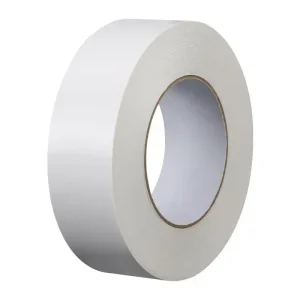
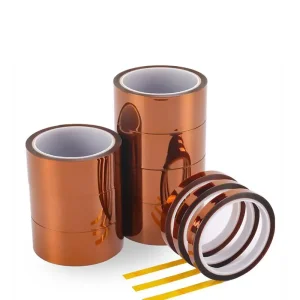
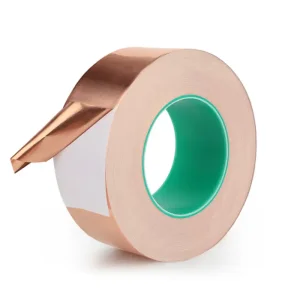
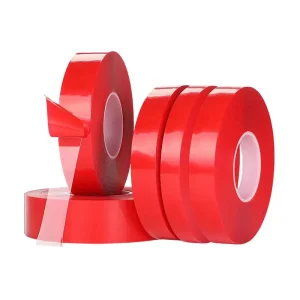
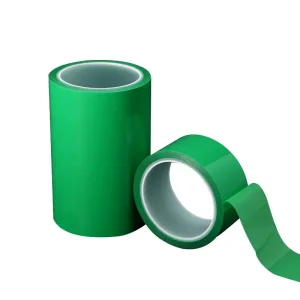
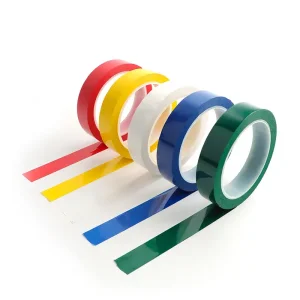
Analyzing procurement paradigms across tier-1 manufacturing clusters in North America, Western Europe, and the Asia-Pacific basin.
Global consumer electronics contract manufacturers demand high-tack, ultra-thin PET double-sided carriers ranging from 5µm to 30µm. Dimensional stability, optical clarity, non-migrating plasticizers, and high shear resistance during thermal cycling (up to 85°C/85% RH) represent critical qualification gates for display lamination and optical touch assemblies.
The transition toward high-density pouch and prismatic lithium-ion battery modules drives exponential demand for electrolyte-resistant termination tapes and viscoelastic VHB acrylic foam tapes. Formulations must offer high breakdown voltages (>6.0 kV/mm), zero electrolyte swelling, and UL94 V-0 flame-retardant performance under thermal runaway stress.
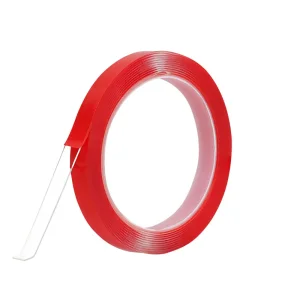
Revising traditional mechanical fastening methods (rivets, spot-welds, liquid polyurethanes) in favor of high-viscosity acrylic foam bonding. Viscoelastic foam cores accommodate divergent thermal expansion coefficients between glass, anodized aluminum, and composite structures while dampening harmonic road vibration.
Understanding the interplay between tack, cohesive strength, crosslinking density, and glass transition temperatures (Tg).
Acrylic foam cores possess unique viscoelastic behavior: under instantaneous impact shock, they deform elastically to dissipate localized stress concentrations, preventing substrate shear failure. Over protracted temporal spans, the fluid-like behavior of the high-tack acrylic polymers permits intimate microscopic wetting across micro-textured metallic profiles.
Modern industrial converting frequently requires differential adhesive coats. Our specialized coating heads allow synthetic rubber or water-based pressure-sensitive tackifiers on one side for immediate initial grip on Low Surface Energy (LSE) polyolefins, coupled with thermally crosslinked solvent acrylics on the reverse to withstand high-temperature paint cure ovens.
Adhesives employed in transformer winding (Class B to Class H) or electrolytic battery containment must survive prolonged exposure to dielectric mineral oils, solvent plasticizers, and lithium hexafluorophosphate (LiPF6) salts without delamination, cohesive dissolution, or copper trace corroding by volatile halogens.
Aligning cleanroom roll-to-roll synthesis with carbon-neutral industrial directives and advanced micro-die-cutting tolerances.
Accelerating migration from solvent-borne acrylics toward UV-curable and solventless hot-melt formulations to drastically minimize total volatile organic compounds (TVOC) in enclosed cabin electronics and green architecture.
Integrating surface-functionalized boron nitride and aluminum oxide ceramics within double-sided acrylic matrices to yield thermal conductivities exceeding 2.0 W/m·K while maintaining high dielectric breakdown protection.
Engineering crosslinkers susceptible to calibrated thermal triggers (120°C heat pulse) or narrow UV spectra, facilitating rapid component disassembly, circular battery cell reclamation, and simplified refurbishing.
Deployment of high-speed rotary die-cutters inside Class 1,000 dust-free environments to supply optical-grade double adhesive gaskets with dimensional tolerances tightly held within ±0.05mm for miniature camera modules.
Ensuring lot-to-lot consistency through state-of-the-art metrology, certified supply chains, and localized technical field service.
Every jumbo master roll and slitted roll features unique digital barcode mapping. Production data points—including online infrared coat-weight tracking, multi-stage drying zone temps, and web tension control—are archived for complete accountability across enterprise aerospace and medical audit regimes.
Every commercial grade undergoes routine laboratory extraction by SGS and TÜV Rheinland to verify strict adherence to EU RoHS Directive (EU) 2015/863, REACH (SVHC substances), and halogen-free restrictions (IEC 61249-2-21). UL recognized file listings ensure seamless electrical apparatus approvals.
Supported by our manufacturing footprint in Nanping Science Park, Zhuhai, and Tanzhou Town, Zhongshan, along with our Hong Kong international hub, our technical sales engineers provide immediate substrate surface energy analysis, dyne testing guidance, and custom pilot trial reels delivered worldwide within 48 to 72 hours.
Direct technical answers addressing substrate preparation, peel shear dynamics, dielectric ratings, and factory customization.
PE foam tapes utilize a closed-cell polyethylene foam carrier coated on either side with an adhesive layer; while excellent for general cushioning and light mounting, the internal foam cell walls can rupture under high cleavage or dynamic shear stress. In contrast, VHB (Very High Bond) tapes consist of a solid, viscoelastic acrylic mass where the adhesive and core form a homogenous, viscoelastic polymer matrix capable of absorbing energy, resisting UV/hydrolysis, and bearing continuous structural loads.
High surface energy (HSE) substrates such as copper, stainless steel, and unpainted aluminum allow acrylic adhesives to wet out rapidly, achieving complete bond strength within 72 hours. Low surface energy (LSE) materials like polypropylene, polyethylene, and powder coatings resist polymer flow. For LSE bonding, China Huayuan factories formulate specialized tackified acrylics or differential modified rubber adhesives that build immediate physical interlock without mandatory primer application.
Yes. Our polyimide (PI) Kapton-equivalent and green polyester (PET) silicone-coated masking tapes utilize proprietary thermosetting crosslinkers. When subjected to wave soldering temperatures up to 260°C or powder coat curing, the silicone polymer retains high elastic cohesion without undergoing chain scission. This guarantees pristine release from gold fingers, connector traces, and polished metal surfaces without leaving oligomeric silicone or ghost residues.
As a direct manufacturer, we offer extreme flexibility. Master rolls are stocked in widths up to 1040mm–1260mm. Using high-precision automated slitters, we supply slit pancake rolls from 3mm up to customized large formats with slit width tolerances within ±0.1mm. Sample trial reels for testing and qualification are prepared within 24–48 hours, while standard container shipments depart from Zhuhai or Shenzhen ports within 7–12 business days.
Complete your supply chain qualification with high-viscosity structural foam, thermal interface tapes, and precision EMI grounding solutions.