Direct-from-factory solutions engineered for high dielectric strength, thermal dissipation, and ultra-precise conductive shielding across advanced electronic assemblies.
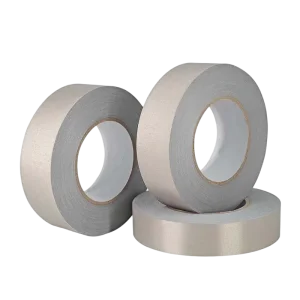
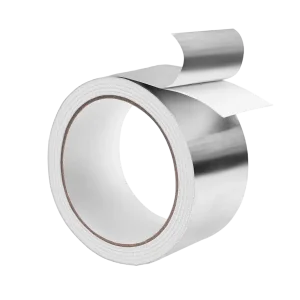
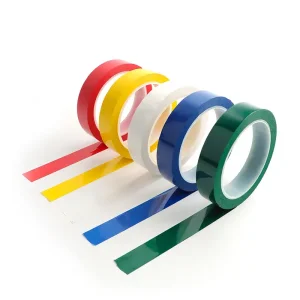
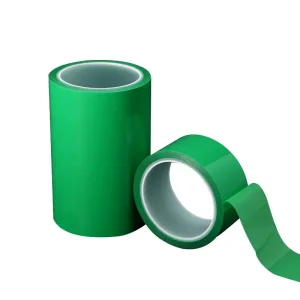
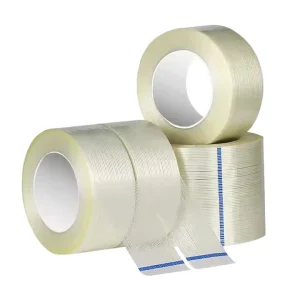
An Engineering Deep-Dive into Electromagnetic Compatibility (EMC), Thermal Dissipation Pathways, and Adhesion Science in Modern Electronics
In the rapidly accelerating landscape of high-frequency electronics, modern printed circuit board (PCB) architectures demand uncompromising performance in signal integrity, thermal dissipation, and electromagnetic interference (EMI) mitigation. As microelectronics transition toward multi-layer High-Density Interconnect (HDI) boards, 5G wireless infrastructure, and automotive power electronics, China copper foil tape PCB suppliers and factories have evolved from commodity converters into critical advanced material co-developers.
Copper foil tape configured for PCB application is fundamentally a composite system comprising ultra-thin rolled-annealed (RA) or electrodeposited (ED) copper foil coated with precision pressure-sensitive adhesives (PSA). These adhesives are formulated with electrically conductive matrix filler materials (nickel, silver, or carbon micro-particles) or high-clarity dielectric acrylics, enabling single-sided or dual-sided conductivity depending on grounding and isolation requirements.
When specified for rigid, flexible (FPC), and rigid-flex printed circuit boards, copper foil tapes serve dual imperatives: providing low-impedance electrical grounding paths to prevent unwanted RF cross-talk, and facilitating localized heat spreading from high-wattage components (such as MOSFETs, CPUs, and power management ICs) directly into ambient heatsinks or chassis ground planes.
Analyzing the macro-shifts in telecommunications, electric mobility, and miniaturized consumer electronics requiring advanced thermal and shielding tapes.
As operating frequencies surpass 28 GHz, signal attenuation and parasitical capacitance become dominant failure modes. Specialized low-profile copper tapes with surface roughness (Rz) below 1.5 µm prevent skin-effect losses while shielding sensitive RF front-end modules on multi-layer PCBs.
Electric Vehicle Electronic Control Units (ECUs) and Battery Management Systems (BMS) operate under intense thermal and high-voltage conditions. Copper foil tapes with high temperature resistance (up to 155°C continuous) are utilized for busbar isolation, sensor lead shielding, and thermal coupling.
Foldable smartphones and wearable medical diagnostic patches incorporate Flexible Printed Circuits (FPCs) subjected to tens of thousands of dynamic bending cycles. Ultra-thin copper foils (9µm–18µm) combined with ductile conductive acrylic adhesives provide fatigue-resistant EMI shielding without mechanical delamination.
Understanding the interplay between substrate foil manufacturing, adhesive conductivity mechanisms, and release liner performance.
Selecting the optimal copper foil tape for PCB manufacturing requires matching electrical, thermal, and mechanical parameters against the operating environment of the finished PCB assembly. The primary trade-off involves selecting between **Single-Sided Conductive** and **Double-Sided Conductive** copper tape configurations.
| Performance Parameter | Single-Sided Conductive Copper Tape | Double-Sided Conductive Copper Tape | Test Standard / Method |
|---|---|---|---|
| Conductive Mechanism | Conductive copper backing; Non-conductive acrylic adhesive | Conductive copper backing; Matrix nickel/silver-particle conductive adhesive | ASTM D1000 / MIL-STD-202 |
| Z-Axis Contact Resistance | High (>100 Ω) through adhesive layer | Ultra-Low (<0.05 Ω) through adhesive layer | MIL-G-83528 Surface Resistance |
| Surface Resistance (X-Y Axis) | <0.01 Ω / sq | <0.03 Ω / sq | Four-Point Probe Method |
| Peel Adhesion Strength | High (>12 N / 25mm) | Moderate to High (>8–10 N / 25mm) | 180° Peel Test (PSTC-101) |
| Shielding Effectiveness | 60 dB to 80 dB (100 MHz – 1 GHz) | 75 dB to >95 dB (100 MHz – 10 GHz) | ASTM D4935 Shielding Attenuation |
| Thermal Conductivity | 1.5 – 2.0 W/m·K (through adhesive) | 2.5 – 4.5 W/m·K (through adhesive) | ASTM E1461 Laser Flash Method |
| Thermal Resistance Range | -20°C to +130°C (Continuous) | -40°C to +155°C (Short term 260°C reflow) | Thermal Cycling Chamber |
When designing PCBs for high-temperature automated wave soldering or SMT reflow procedures, specifying Rolled-Annealed (RA) high-purity copper foil (>99.95% Cu) with cross-linked solvent-acrylic adhesive prevents outgassing, adhesive transfer, and edge lifting under peak thermal exposure of 260°C for 10–15 seconds.
How Tier-1 EMS Contract Manufacturers, Original Design Manufacturers (ODMs), and Enterprise Procurement Officers evaluate Chinese Tape Suppliers.
Global technology corporations and Electronics Manufacturing Services (EMS) giants (such as Foxconn, Flex, Jabil, and Celestica) operate under stringent procurement frameworks. Sourcing copper foil tape for PCB integration is no longer merely a purchasing decision; it is a comprehensive risk management evaluation centered around four critical pillars:
Products must carry certified third-party testing reports (SGS/Intertek) demonstrating full adherence to EU RoHS Directive 2011/65/EU, REACH SVHC chemical regulations, Halogen-Free criteria (IEC 61249-2-21), and UL 510 flame retardancy standards.
Modern high-volume SMT lines utilize automated pick-and-place robotics for tape placement. Chinese factories must offer high-precision rotary die-cut parts on Kiss-Cut pull-tab liners with dimensional tolerances within ±0.05 mm to streamline automated placement.
By leveraging direct vertical integration in China—sourcing raw copper cathode stock, performing inline precision slitting, and synthesizing proprietary pressure-sensitive adhesives—factories deliver 25% to 40% cost reductions compared to Western legacy brands.
Inside the advanced cleanroom manufacturing facilities driving global consistency and lightning-fast scaling.
China's manufacturing ecosystem for specialized technical tapes has undergone a profound structural shift. Leading **China copper foil tape PCB suppliers** have invested millions in Industry 4.0 smart manufacturing technologies, transforming traditional slitting facilities into high-tech precision cleanroom operations.
Particulate contamination during the adhesive coating process can cause micro-voids, dielectric breakdown, and localized conductive failures on high-density PCBs. Modern Chinese factories operate multi-head precision reverse-roll and slot-die coaters enclosed in Class 10,000 cleanrooms, monitored continuously by laser particle counters.
Inline X-ray and gauge sensor systems monitor adhesive coat weight and copper thickness uniformity in real time, automatically adjusting doctor blade gaps across a 1300mm web width. High-speed AOI cameras identify pinpoint pinholes, crease defects, or adhesive slubs, automatically flagging defective roll segments prior to rewinding.
Located in major industrial electronics hubs (such as Guangdong and Jiangsu), factories enjoy immediate access to local high-purity electrolytic copper foil mills, precision release liner manufacturers, and chemical synthesis plants. This localized supply chain cluster yields unprecedented sample lead times (24–48 hours) and production turnaround.
Where and how copper foil tapes solve critical engineering challenges on the assembly line.
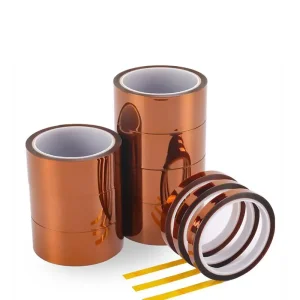
During automated wave soldering and hot-air leveling (HASL), high-temperature polyimide or specialized copper masking tapes isolate edge connectors ("gold fingers") from solder bridging, leaving zero organic residue upon clean removal.
Instead of installing heavy, expensive stamped metal shields over sensitive RF ICs, custom die-cut double-sided conductive copper tapes bond lightweight conductive fabric or copper shields directly onto PCB ground pads, saving vertical Z-height in ultrabooks and smartwatches.
Accumulated electrostatic charge on PCB housing covers can discharge into delicate CMOS logic gates. Conductive copper foil tape establishes a low-impedance bleeding path from internal PCB layers straight to chassis frame ground, neutralizing static build-up.
In dynamic hinge mechanisms, flexible copper tapes reinforce FPC trace transition points while maintaining electrical continuity with main PCB ground planes across dynamic flexing angles.
Expert engineering answers solving key pain points in tape selection, die-cutting precision, compliance, and international shipping.
Rolled-Annealed (RA) copper foil is mechanically rolled from solid copper ingots, resulting in a smooth, horizontally elongated grain structure that offers superior mechanical flexibility and resistance to dynamic fatigue flex cycles (ideal for FPC applications). Electrodeposited (ED) copper foil is electrolytically deposited from a copper sulfate bath, producing a vertical grain structure with higher surface roughness, which enhances mechanical adhesive keying and anchorage for high-tack stationary applications.
Z-axis electrical conductivity through the adhesive layer is achieved by dispersing precision conductive micro-particles—typically silver-plated nickel spheres, conductive carbon black, or microscopic conductive fibers—into the acrylic adhesive matrix at a controlled volume fraction. When pressure is applied during lamination, these conductive particles bridge the physical gap between the copper backing and the PCB substrate pad, creating low-resistance electrical pathways without compromising adhesive tack.
Yes. Leading Chinese factories operate high-speed flatbed and rotary CNC die-cutting presses equipped with optical registration cameras. Tapes can be die-cut into complex geometries, continuous strips, or custom shapes with extended pull-tabs or split-release liners, maintaining tight dimensional tolerances of up to ±0.05 mm for seamless integration into automated SMT feeder systems.
Standard copper foil tapes have a shelf life of 12 to 18 months from the date of manufacture when stored in their original protective polyethylene packaging at temperatures between 15°C to 25°C (59°F to 77°F) and 45% to 65% relative humidity (RH). High-quality tapes feature anti-oxidation surface treatments (passivation) on the copper foil to prevent atmospheric tarnish and verdigris formation over extended storage.
Copper foil tape offers superior electrical conductivity and shielding effectiveness (>85 dB) across high frequencies, along with superior thermal dissipation and solderability, but is less flexible on compound 3D curves. Conductive fabric tape is highly conformable and tear-resistant, ideal for dynamic cable wrapping and tight chassis corners. Aluminum foil tape is lower cost and lighter weight, but exhibits higher contact resistance, lower shielding effectiveness at elevated frequencies, and cannot be directly soldered.
Imports into the EU require verified RoHS (2011/65/EU) and REACH SVHC compliance test reports showing non-detectable levels of heavy metals, phthalates, and PBDEs. For North America, tapes installed inside electrical enclosures frequently require UL 510 certification for flame retardancy and electrical insulation safety, as well as ISO 9001 factory quality management certification.
Direct factory supply of specialized electronic tapes, EMI shielding foils, and high-tack mounting tapes with rapid worldwide dispatch.