How to Choose Double Sided Adhesive Glue Tape?

Time:2026-11-06 Author:Madeline
0%

Choosing Double Sided Adhesive Glue Tape is less about finding the strongest roll and more about matching the tape to the job. A clear tape that holds paper neatly may fail on textured plastic. A foam tape that grips a painted panel may be too thick for a close-fitting device cover. The details matter: surface material, weight, temperature, moisture, and how long the bond must last.

Before comparing products, check the surfaces and conditions where the tape will be used. Dust, skin oil, and uneven contact can weaken adhesion, even when a product looks suitable. Consider tape width, thickness, liner type, and whether the bond needs to be removable. Small samples can reveal problems that a product description will not. They are worth testing. One limitation is easy to overlook: a good result on a clean desk does not guarantee the same result outdoors or on a curved surface.

For transparent attribution, the expert name and quotation below are illustrative, not a verified real-world source: “Choose for the surfaces and conditions, not just the advertised strength,” says fictional adhesive applications specialist Maya Chen. That practical reminder frames this guide. It will help readers compare adhesive types, assess common applications, and test a suitable option before committing to a larger purchase. A careful choice reduces wasted tape and disappointing bonds, though no single product fits every surface.
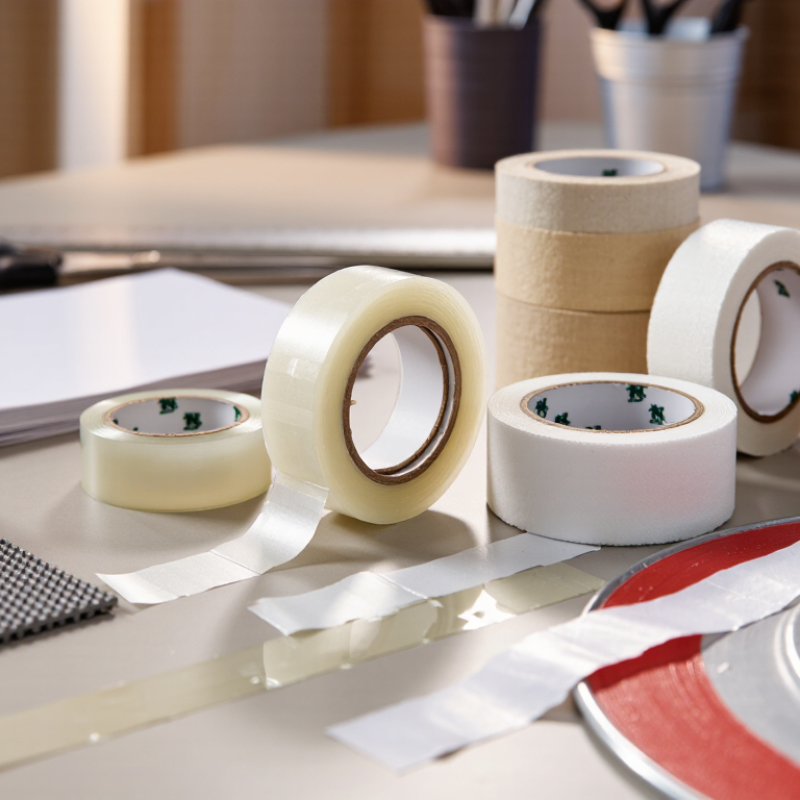
How to Choose Double Sided Adhesive Glue Tape?

Understand the Structure and Bonding Mechanism of Double-Sided Tape

Double-sided tape is a layered system, not simply glue on two sides. Most constructions combine a release liner, two adhesive layers, and a carrier such as tissue, film, or foam. The carrier affects flexibility, thickness, and load distribution. Foam can conform to uneven surfaces; thin film suits smooth, closely matched parts. Small detail, big difference.

Pressure-sensitive adhesive bonds when pressure brings it into close contact with a surface. It must wet the surface’s microscopic texture, then resist peel or shear forces. Clean, dry surfaces help. So do firm, even pressure and enough dwell time. Dust, low temperature, or a textured coating can weaken contact. A tape that feels tacky may still be poorly bonded.

A Grand View Research assessment estimated the global pressure-sensitive adhesives market at about US$12.9 billion in 2023, reflecting their broad use across industries. Market growth does not prove that one tape fits every job. Check the adhesive type, carrier, and tested performance for your materials. For a practical comparison, ASTM D3330 describes peel-adhesion testing; results still depend on the test setup and substrate. I would not choose by thickness alone.

Identify the Surfaces and Conditions the Tape Must Handle

Before selecting double-sided adhesive tape, list every surface it must join. Painted drywall, powder-coated metal, glass, and textured plastic behave differently. Dust, oil, release agents, and fingerprints can weaken contact, even when a surface looks clean. Check whether the paint is fully cured and whether the plastic has low surface energy. A quick test on the actual material is more useful than a confident guess.

Conditions matter as much as materials. Record the expected temperature range, humidity, sunlight, water exposure, vibration, and load direction. A bathroom mirror and a warm vehicle trim panel need different performance. ASTM D3330/D3330M-04(2022) measures peel adhesion, while ASTM D3654/D3654M-06(2022) evaluates holding power under sustained shear. These methods produce different kinds of evidence. Test data matters.

Ask suppliers for results on a comparable substrate, with documented temperature, dwell time, and application pressure. Then make a small trial joint using the same cleaning method and pressing force planned for installation. Leave it under real conditions, and check for edge lift or slow slipping. One limitation is easy to overlook: a short test may miss seasonal changes or aging. A tape that holds a smooth panel overnight may still fail on a dusty, textured surface.

Compare Adhesive Types, Backings, Thicknesses, and Formats

Choosing double-sided adhesive tape starts with the surfaces and conditions, not the roll color. Rubber-based adhesive often grabs quickly on clean, low-stress surfaces. Acrylic types generally handle aging and temperature changes better, but performance varies by formulation. Silicone adhesive can suit certain difficult surfaces or hotter applications. Check the product data for your exact materials. Small details matter.

The backing affects how the tape handles. Tissue is flexible and easy to tear, while PET film offers a thinner, more stable layer. Foam can conform to uneven surfaces and help fill small gaps, but it may compress under load. Thickness is not a simple measure of strength. I still find it easy to overestimate how much a thicker tape can compensate for a poorly matched surface. Clean, dry surfaces usually help; dust and oil can undermine even a promising bond.

Choose the format for the job. Rolls work well for long seams, sheets suit repeatable shapes, and transfer tape leaves adhesive without a separate carrier. Narrow strips can simplify edge placement, while wider tape spreads contact across a panel. Test before committing. Apply a small sample, press it firmly, and allow the recommended bonding time before judging the result. A quick peel test may miss how the bond behaves after heat, handling, or several hours.

How to Choose Double-Sided Adhesive Tape

Typical backing thickness ranges (excluding release liners). Actual ranges vary by product and construction.

How to use this guide: Tissue and film backings suit thin, conformable bonds; foam backings help fill gaps and cushion uneven surfaces. Acrylic adhesives are commonly selected for durability and temperature resistance, rubber adhesives for quick tack, and silicone adhesives for specialized high-temperature or low-surface-energy applications. Choose rolls for continuous application, sheets for broad-area bonding, or die-cuts for shaped parts. Check the specific product’s data sheet for bond strength, temperature limits, and surface compatibility.

Assess Strength, Durability, Temperature, and Environmental Needs

How to Choose Double Sided Adhesive Glue Tape?

Assess Strength, Durability, Temperature, and Environmental Needs

Start with the load and the surfaces. A lightweight paper label needs less holding power than a trim piece that may be pulled or vibrated. Consider whether the bond will face a steady sideways load or repeated peeling; tapes can behave differently under each. Surface texture matters, too. Dust, oil, and roughness can weaken contact. Clean and dry the surfaces, then press the tape firmly across the full bond area. That matters.

Check the tape’s rated service temperature against real conditions, not just room temperature. A part near a sunny window or warm machine may heat up for hours. Cold can also make some adhesives less flexible. Allow for temperature swings, and check the product guidance for application and operating ranges. Do not guess. A quick sample test can reveal early lifting or slipping.

Think about moisture, sunlight, and cleaning chemicals where the item will be used. Indoor office use is not the same as a damp workshop or outdoor fixture. Choose a tape suited to those exposures, and test it on the actual materials when possible. One successful test is not proof; small changes in surface finish or pressure can matter. I would leave time for a longer hold test, even when the first result looks strong.

Test Compatibility and Choose the Right Tape for the Application

How to Choose Double Sided Adhesive Glue Tape?

Test Compatibility and Choose the Right Tape for the Application

Choosing double-sided adhesive tape starts with the surfaces, not the roll. Identify each material, its texture, and any coating, oil, dust, or moisture. A smooth metal panel behaves differently from textured plastic or painted wood. Check the tape’s stated range for temperature, load, and indoor or outdoor exposure. The strongest initial tack is not always the best lasting bond.

Test a small sample on the actual surfaces. Clean them as the tape instructions recommend, apply firm, even pressure, then allow the bond to dwell before checking it. Try peeling slowly and observe where separation occurs: at the surface, within the adhesive, or in the material itself. Test under real conditions too, such as warm sunlight, light vibration, or repeated handling. A neat-looking sample can still fail later, so test more than one piece when the job matters. Results can vary by surface batch.

Tips: Keep a simple test log. Note surface preparation, tape type, temperature, and dwell time. If the bond slips or lifts, change one factor at a time. Small tests save rework.

FAQS

What should I consider before choosing double-sided tape?

Start with the surfaces and conditions, not the roll color. Identify the materials, texture, and any coating, dust, or oil. A small sample helps.

How do rubber, acrylic, and silicone adhesives differ?

Rubber-based adhesive often grabs quickly on clean, low-stress surfaces. Acrylic types generally handle aging and temperature changes better. Silicone may suit certain difficult surfaces or hotter applications. Check the product data for your materials.

Which backing works best for my project?

Tissue is flexible and easy to tear. PET film offers a thin, stable layer. Foam can conform to uneven surfaces and fill small gaps, but may compress under load.

Does thicker tape always hold more strongly?

No. Thickness alone does not measure strength. I still overestimate this sometimes. Surface match, load, and preparation matter too.

Should I use a roll, sheet, or transfer tape?

Rolls suit long seams, while sheets work well for repeated shapes. Transfer tape leaves adhesive without a separate carrier. Narrow strips can help with edges; wider tape spreads contact across a panel.

How should I account for load and handling?

A paper label has different needs from a trim piece exposed to vibration. Consider sideways force and repeated peeling. Clean and dry the surfaces, then press across the full bond area. That matters.

What temperature and environmental conditions should I check?

Compare the tape’s rated range with real conditions. A panel near a sunny window may heat up for hours, while cold can reduce flexibility. Consider moisture, sunlight, and cleaning chemicals. Do not guess.

How can I test whether the tape is compatible?

Apply a small sample to the actual materials with firm, even pressure. Allow the recommended dwell time, then peel slowly and note where separation occurs. Try real conditions, such as warm sunlight or light vibration. A simple log helps. One test may not be enough.

Conclusion

Choosing the right Double Sided Adhesive Glue Tape starts with understanding how its adhesive layers and backing work together to bond two surfaces. Consider the materials being joined, including their texture, porosity, cleanliness, and shape, as well as the conditions the bond will face. Heat, moisture, sunlight, vibration, and exposure to chemicals can all affect performance, so the tape should suit both the surfaces and the environment.

Next, compare adhesive types, backing materials, thicknesses, and available formats to find a practical match for the application. Evaluate the required holding strength, flexibility, durability, and temperature resistance rather than relying on one feature alone. Before committing, test the tape on representative materials under realistic conditions. A small compatibility test can reveal whether the adhesive bonds evenly and remains secure over time, helping you select a tape that meets the needs of the specific project.

Madeline

Madeline

Madeline is a dedicated marketing professional with a wealth of expertise in our company's core offerings. With a keen understanding of the industry, she brings a unique perspective to her role, consistently delivering high-quality content that highlights the superior aspects of our products. As......

SGS on-site verification · Huayuan adhesive tape factory, Guangdong, China

Certificate