Choosing the right Double Sided Tape Glue is less about picking the strongest-looking roll and more about matching the adhesive to the job. A narrow strip may hold a lightweight paper sign, while a mounted panel can place steady stress on every inch of tape. Surface type matters, too. Smooth glass, painted walls, textured plastic, and unfinished wood do not offer the same conditions for bonding.
A dependable choice starts with a few practical questions: What materials are being joined? How much weight must the bond support? Will heat, moisture, or sunlight affect the tape? The adhesive’s stated temperature range, recommended surfaces, and application instructions can help narrow the options. Clean, dry surfaces are often important, but some finishes may be damaged during removal. Test a small, hidden area when appearance or surface condition matters.
Details count. A lot.
The seven tips below explain how to compare tape types, widths, thicknesses, and holding strength without relying on appearance alone. They also cover application pressure, removal needs, and when a small test bond is sensible. There is no single tape that suits every project, and product descriptions can leave questions unanswered. Check the manufacturer’s guidance, then judge the result under realistic conditions before relying on the bond. A careful choice may take an extra minute; guessing can take more effort to fix.
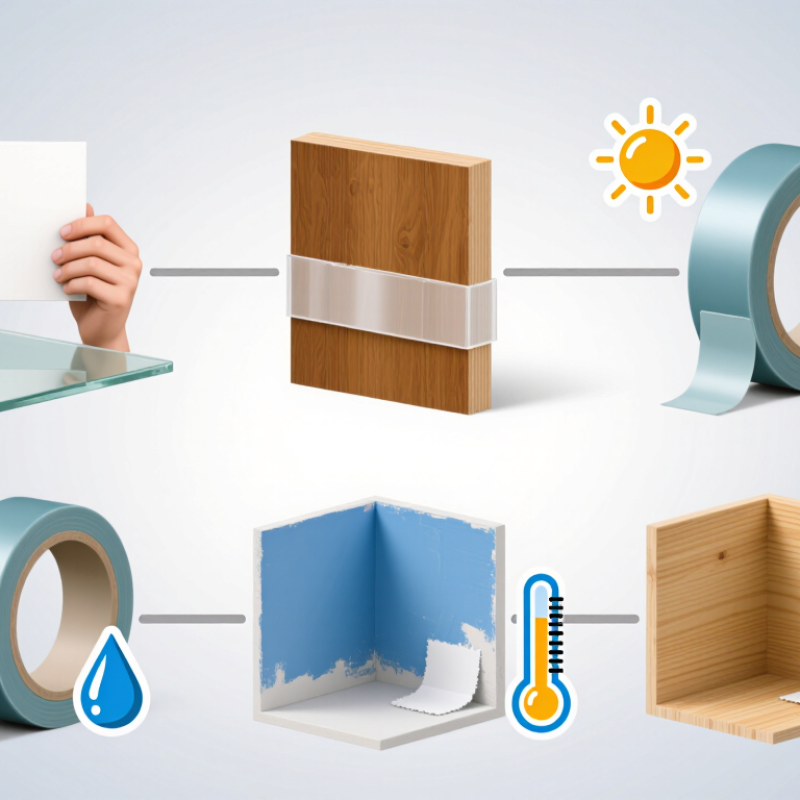
Before selecting double-sided tape, identify both materials and the exact surfaces that will touch. “Metal” could mean smooth, painted, or powder-coated metal, and each finish may hold adhesive differently. Glass and sealed plastic are usually smooth, while unfinished wood and plaster can be porous or dusty. Check for coatings, too. A weak paint layer can peel away even when the tape sticks firmly to it.
Texture matters. Run a clean fingertip over each surface: a rough wall or grainy wood offers less consistent contact than flat glass. Look for seams, curves, and gaps; thicker foam tape may suit uneven surfaces better than a thin film. Note whether either material bends or vibrates. A rigid panel joined to flexible fabric may place extra stress on the bond. Test a patch. Small tests reveal surprises.
Clean the contact area with a method suitable for that material, then let it dry fully. Oil from fingers, dust, and moisture can reduce adhesion. Check the expected conditions as well: a bathroom, sunny window, or warm appliance may expose the bond to humidity or heat. Labels do not tell the whole story; old paint and worn finishes vary from one spot to another. If the surface is uncertain, test the actual materials in an inconspicuous area and observe the bond before relying on it.
| Tip | Materials or Surfaces | What to Check | Tape Selection Guidance | Practical Step |
|---|---|---|---|---|
| 1. Identify both substrates | Examples include glass to metal, painted wall to plastic, and plastic to plastic. | Adhesion depends on both surfaces; a tape that bonds well to one material may not bond as well to the other. | Check the tape maker’s substrate compatibility information for each side of the bond. | Write down the exact materials and, where relevant, the coating or finish before comparing tapes. |
| 2. Assess surface energy | Untreated polyethylene and polypropylene are often harder to bond than metals, glass, or many painted surfaces. | Low-surface-energy plastics can resist wetting by some pressure-sensitive adhesives. | Look for a tape specifically described as suitable for low-surface-energy plastics when bonding these materials. | Test the exact plastic grade and finish; material names alone may not predict adhesion. |
| 3. Check texture and contact area | Smooth panels, lightly textured plastics, rough wood, and uneven surfaces. | Roughness, gaps, and limited contact can reduce the area available for adhesive contact. | Conformable foam tape can help accommodate minor irregularities; thin film tape is generally better suited to close-fitting surfaces. | Make sure the surfaces meet evenly and that the tape can contact the intended bonding area. |
| 4. Consider surface cleanliness | Glass, metal, painted parts, and plastic surfaces that may carry dust, oil, or residue. | Contamination can interfere with adhesive contact, while some cleaners can damage coatings or plastics. | Choose a tape compatible with the substrate and follow its surface-preparation instructions. | Clean with a suitable method, allow the surface to dry fully, and avoid touching the bonding area afterward. |
| 5. Match the tape to the load | Light trim, signs, panels, hooks, or parts subject to vibration or repeated handling. | Consider the part’s weight, bond area, direction of force, and whether the load is continuous or intermittent. | Use a tape rated for the application; thicker foam tapes may distribute stress and accommodate some movement, but suitability depends on the design. | For overhead, safety-critical, or heavy installations, use a tested design and any required mechanical support. |
| 6. Check temperature and environment | Indoor assemblies, exterior fixtures, warm equipment, or areas exposed to moisture. | Temperature changes, water, UV exposure, and condensation can affect adhesive performance over time. | Compare the tape’s published service conditions with the actual environment; ratings vary by product. | Consider both application temperature and the temperatures and exposure expected during use. |
| 7. Decide whether removal matters | Temporary mounting, display materials, removable labels, or permanent assembly. | Removal can leave residue or damage paint, coatings, paper, or delicate surfaces. | For removable uses, select a tape designed for removability from the specific surface; permanent tapes are not necessarily clean-removing. | Test removal on a small, inconspicuous area and follow the tape’s removal instructions. |
Match its strength to the load, surface, and direction of force. Weight alone is not enough.
Shear resists sliding. Peel resists an edge lifting away from the surface.
A clip pulled outward can peel tape from a wall. Dust, textured paint, or oil can weaken the bond.
Clean and dry it. Press firmly across the full contact area.
No. Many adhesives need time to build a stronger bond. Wait before loading it.
Test a small piece on the actual surface, wait, then pull gently. Not a guarantee.
Yes. Cold surfaces may slow bonding, while condensation can prevent even contact. Let the surface dry completely.
Consider rain, sunlight, dust, and temperature changes. Inspect lifted edges, since they can collect water and dirt.
Not always. Seasonal changes may reveal problems later, so check the bond after real exposure.
Choosing the right Double Sided Tape Glue starts with understanding the materials and surfaces you need to bond. Consider whether they are smooth, rough, porous, or delicate, since surface texture and material type can affect adhesion. Then match the tape construction to the task, such as a thin option for discreet mounting or a more conformable tape for uneven surfaces. Comparing adhesive strength with the weight and stress the bond must handle can help prevent lifting or failure.
Also consider the conditions the tape will face, including temperature changes, moisture, and outdoor exposure. Thickness, ease of removal, and the product’s specifications matter too, especially when appearance or clean removal is important. Reviewing these factors together helps you select a tape that suits both the surfaces and the demands of the application.